Timing is the diagnosis
If it only misbehaves between November and March, that is a groundwater story. If it misbehaves in August, that is a system story. Nowhere in the county is that distinction more useful than here.
01On the ground in Lynden
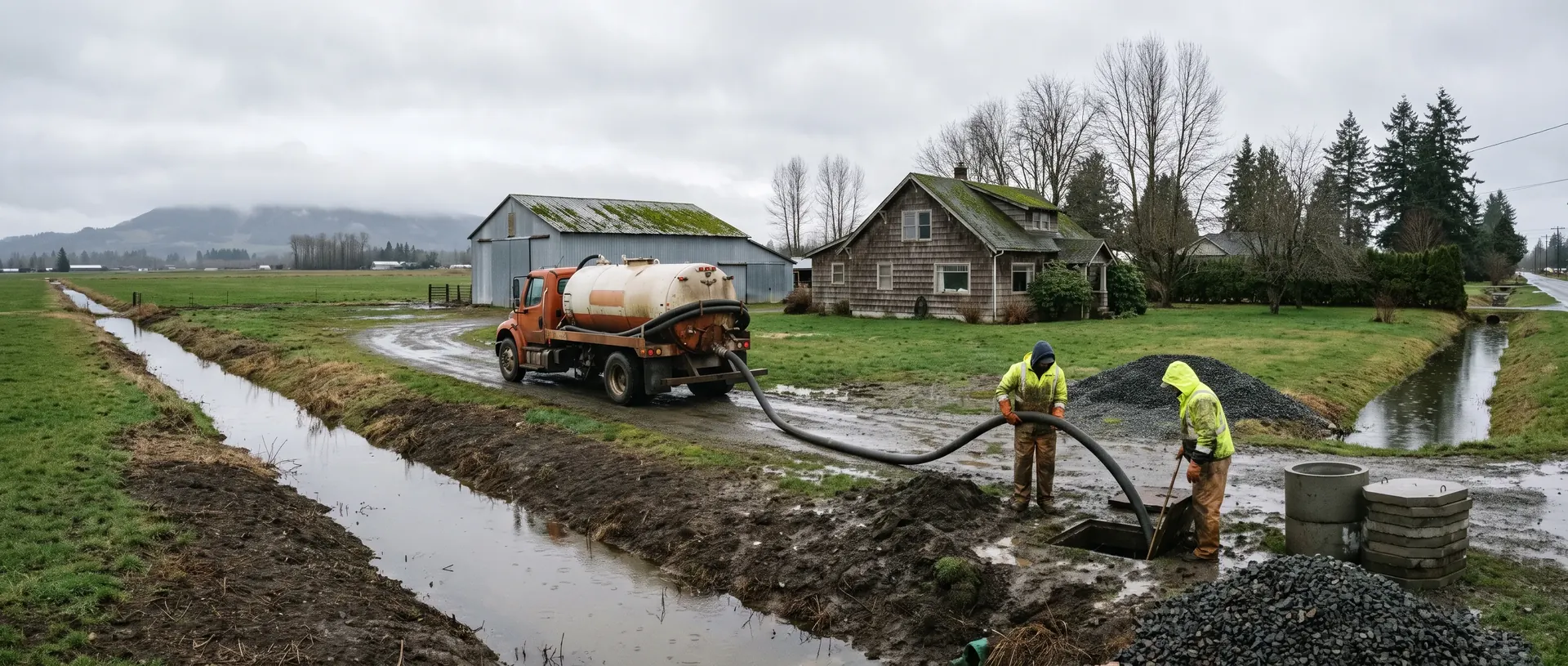
Lynden and the farmland around it sit on some of the flattest, wettest ground in the county. The Nooksack is close, the land barely falls, and from November through March the water table comes up to within a couple of feet of the surface across large areas.
That single fact explains most of the septic work we do here.
A drain field disposes of effluent by letting it soak into unsaturated soil. When the groundwater has risen to meet the bottom of the trenches, there is nowhere for it to go. The field backs up, the ground gets soggy, and the homeowner concludes the system has failed.
Frequently it has not. It is a system with no reserve capacity meeting a season it cannot cope with. Come July the same field works perfectly.
The distinction matters enormously because the fix is different and the price is different. A genuinely clogged field needs replacing. A field being drowned by groundwater sometimes needs drainage work, a rerouted downspout, or simply a household water discipline through the wet months. Those cost a fraction of a replacement.
We ask when the symptoms started before we ask anything else, and around Lynden the answer is usually when the rain came.
02Scope
Septic tank pumping on acreage properties and farms, including the larger tanks that come with them.
Septic Tank PumpingDrain field assessment, which is the core of our Lynden work, separating groundwater saturation from genuine failure.
Drain Field Repair and ReplacementSeptic inspections for property transfers on farmland and rural acreage.
Septic InspectionsRepairs including pumps and alarms, since pressurised and mound systems are common on this ground precisely because gravity fields struggle here.
Pump and Alarm ReplacementDesign and installation for replacements, where an alternative system type is often the only viable answer.
Septic Design and Permitting03Local detail
If it only misbehaves between November and March, that is a groundwater story. If it misbehaves in August, that is a system story. Nowhere in the county is that distinction more useful than here.
On ground this wet, conventional gravity fields often were not permitted in the first place. That means pumps, floats and alarms, which need checking as part of routine maintenance rather than only when something goes wrong.
A household system serving a farmhouse with seasonal workers, or taking more than domestic flow, is being asked for more than it was designed to give. Worth being honest about at inspection time.
Soft ground and long farm drives mean a heavy truck can do damage or get stuck. Tell us about the access, and where a job can reasonably wait for firmer ground, we will say so.
04Questions
Because the water table has risen to meet it. The soil the field relies on is already saturated with groundwater, so effluent has nowhere to soak away. It is extremely common on flat ground around Lynden and it is not automatically a failed system.
Sometimes. If the field is being overwhelmed by groundwater or by an overdue tank rather than clogged by years of solids, removing the cause can bring it back. Our drain field page covers how that gets assessed.
Every two to five years for a typical household, driven mostly by how many people are in the house. On farm properties with variable occupancy the interval can be shorter, and we measure rather than guess.
Washington regulates onsite sewage at state level and Whatcom County runs its own programme on top. Many systems, particularly the pressurised and mound systems common around Lynden, carry ongoing maintenance requirements. Our operation and maintenance guide covers it.
05Nearby
We also cover Everson, Nooksack, Sumas and Ferndale, plus Bellingham, Blaine, Custer, Birch Bay, Deming, Sudden Valley and Point Roberts.
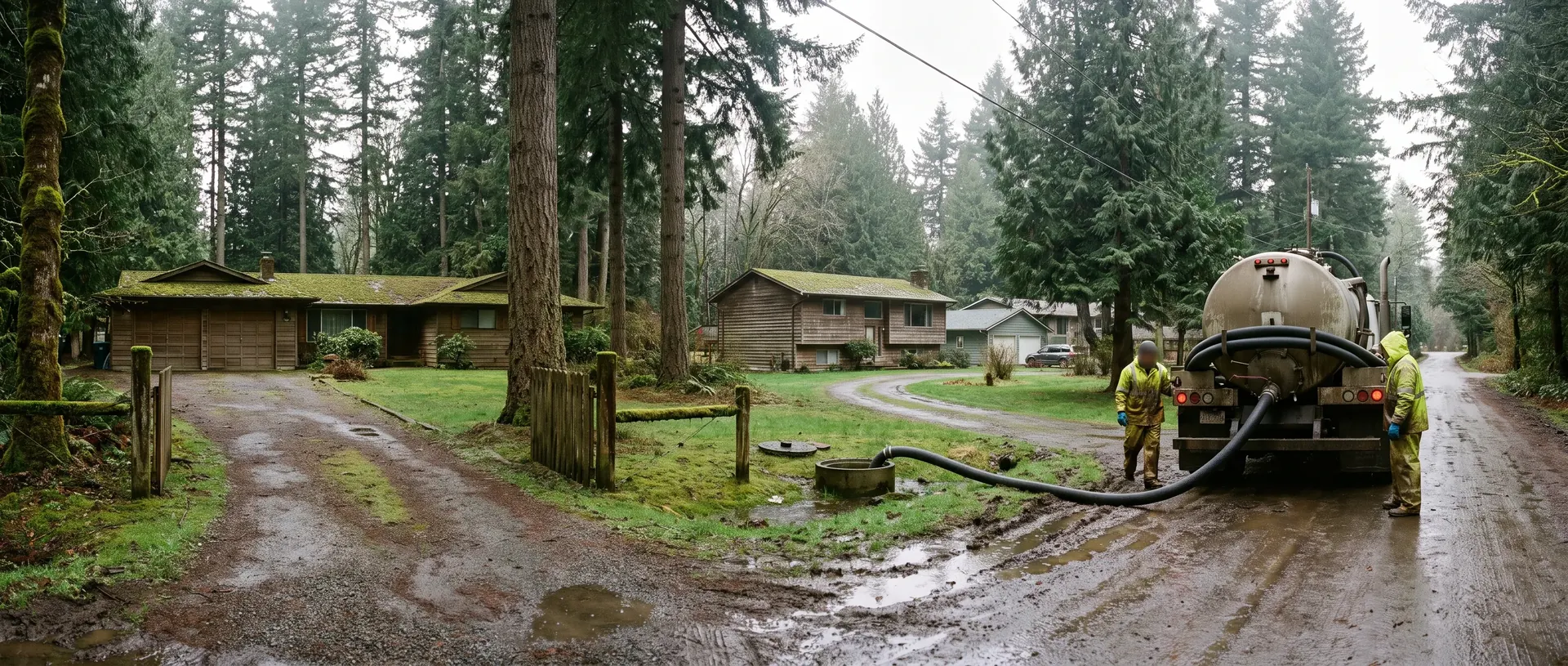
The city is largely on sewer, the edges are not. Yew Street, Chuckanut, Lake Whatcom and out toward the county line.
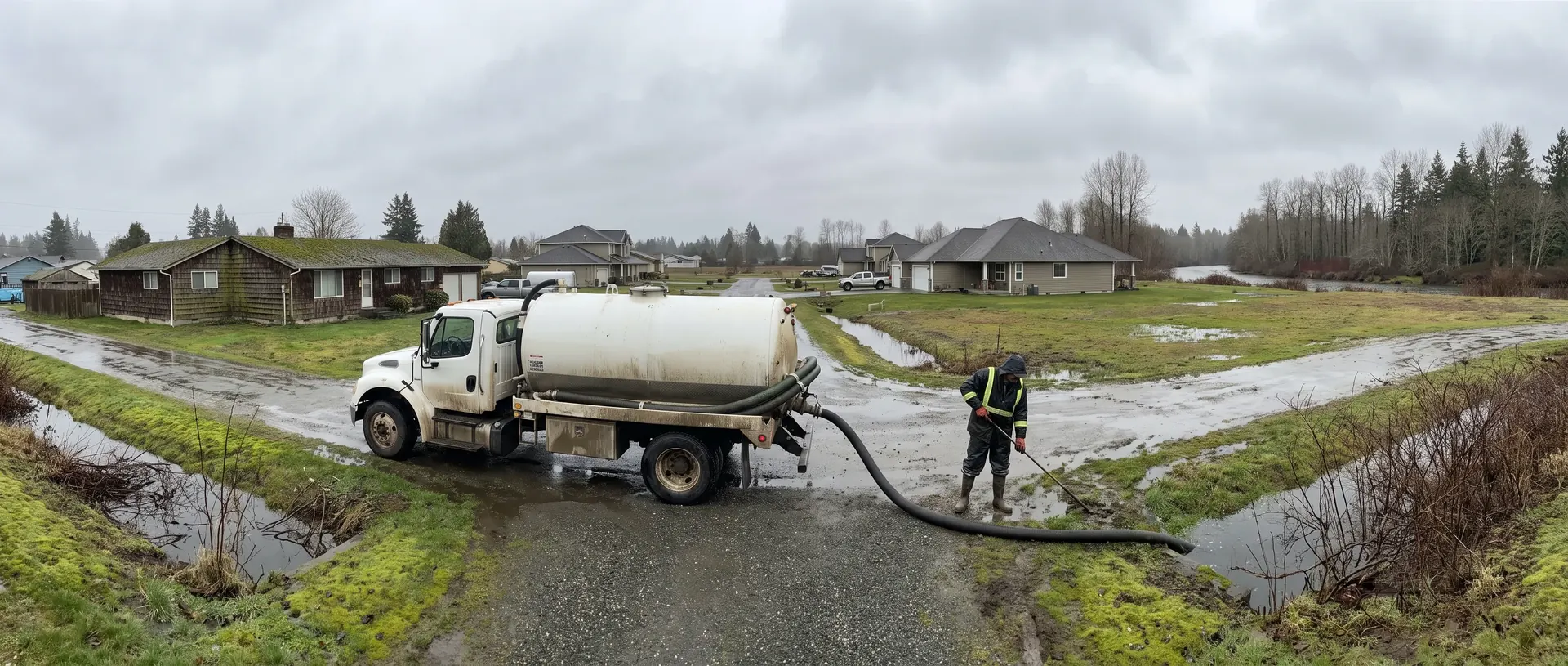
Flat, poorly draining ground close to the river. Systems here are sensitive to how the whole yard drains.
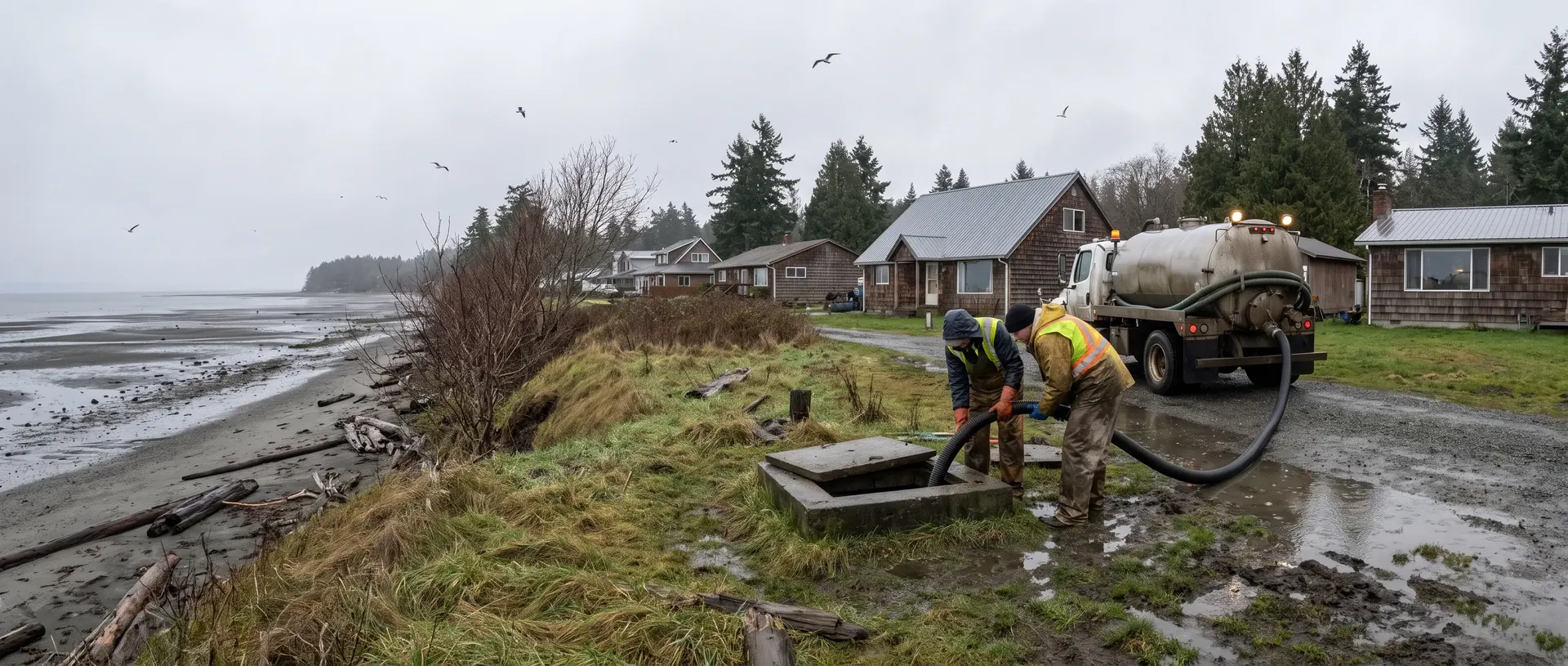
Shoreline and border properties, where systems close to the water face closer scrutiny.
06Book it
Tell us the address, what is happening, and when it started. That last one matters here.