Assessment and diagnosis
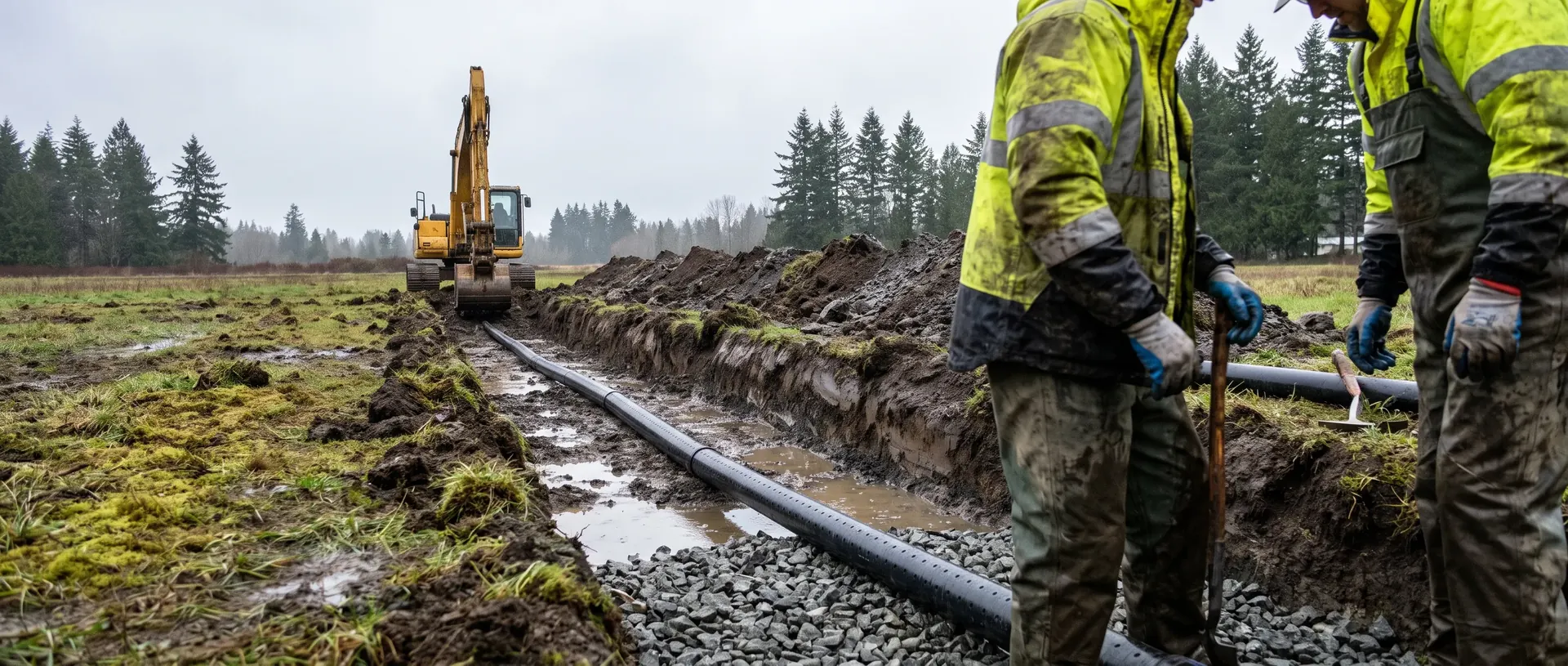
Determining whether the field is clogged, overwhelmed by groundwater, or failing because of an upstream problem in the tank. This is the visit that decides everything else.
Septic service
The most expensive part of a septic system, and the one most often written off too early. We find out whether yours can be recovered.
01Why it matters
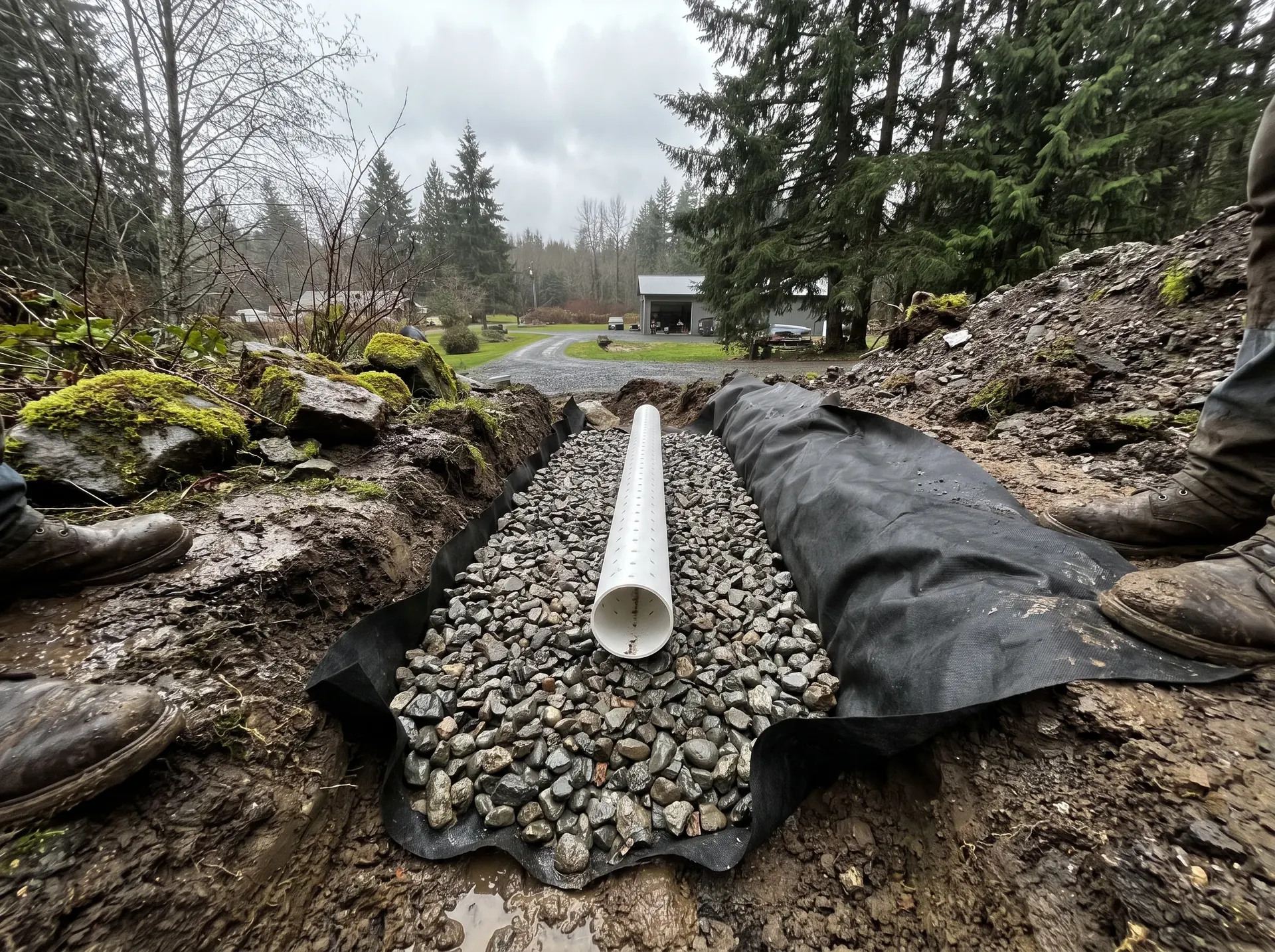
The drain field is where the actual treatment happens. Liquid leaves the tank, spreads through perforated pipe in trenches of drain rock, and soaks into the soil, which does the biological work.
When that stops working you get the classic symptoms: soggy ground over the field, brighter greener grass in stripes, smells outside, slow drains inside, and in bad cases effluent surfacing.
Here is the local complication. Whatcom County gets around thirty five inches of rain a year, much of it between October and March, and large parts of the county are flat with a high winter water table. A drain field cannot discharge into soil that is already saturated with groundwater. So we see fields that look completely failed in January and work perfectly well in July.
That is a genuinely different diagnosis to a field clogged by years of solids carry over, and it has a genuinely different fix. Sometimes the answer is drainage work, redirecting surface water, or fixing the tank problem that was overloading the field, rather than a new field.
Working out which one you have is the whole job.
02Scope
Determining whether the field is clogged, overwhelmed by groundwater, or failing because of an upstream problem in the tank. This is the visit that decides everything else.
Where a field can be saved: clearing the cause, jetting or replacing individual failed lines, fixing distribution so flow spreads evenly instead of overloading one trench, and drainage work to keep surface and groundwater off the field.
When the soil is genuinely clogged, a new field. That means a site evaluation, a design, a county permit and installation, which we handle as one job rather than handing you off.
03Included
Tank condition, sludge levels, effluent filter and baffles. A field being fed solids will keep failing no matter what is done to it, so this comes first every time.
Ground condition over the field, where the wet areas actually are, whether the whole field or one trench is affected, and how the system accepts flow.
Whether the water in the ground is coming from the system or from the weather. In winter this is the single most important distinction on this page.
Recover, partially replace, or fully replace, with the reasoning and the cost difference stated plainly.
04How it runs
Most routine visits follow this exact sequence. If yours will not, we say so when you book rather than on the day.
What you are seeing and when it started. Whether it correlates with heavy rain is the first useful clue.
We open and assess the tank before we look at the field, because an overdue tank is the most common upstream cause.
Surface condition, extent of the wet area, distribution box if there is one, and which trenches are affected.
Recover or replace, with the evidence for the call and the cost difference between them.
Either the recovery work, or a site evaluation and design for a replacement field and the county permit package.
For a replacement: excavation, new trenches, pipe and rock, backfill and reinstatement, then final inspection.
05Why us
We check the tank before we condemn the field. It is the most common reason a field is replaced unnecessarily. A tank that has not been pumped in fifteen years has been feeding solids into that field the entire time, and until that is fixed a new field will go the same way.
We separate weather from failure. A field that surfaces every February and dries out every May is not the same problem as a field that is wet in August, and the distinction is worth thousands. Anyone who quotes a replacement without asking when the symptoms appear is not doing the assessment.
We quote recovery where recovery is real. Not every field can be saved, and we will not pretend otherwise, but the ones that can are worth the attempt because the alternative is the largest bill on this whole site.
And when replacement is the answer, we do the design and permit side rather than leaving you to coordinate a designer, an installer and the county yourself.
Get it assessed before winter rather than after. A field caught early sometimes recovers. A field left another season usually does not.
06What customers say
Placeholder section.No reviews have been collected yet, and nothing here is invented to fill the space. Real customer reviews go in before this section publishes. Until then there is no star rating, no aggregate score and no review markup on this site.
07Questions
Sometimes, and it depends entirely on why it is failing. A field being overwhelmed by an overdue tank, a blocked filter or surface water can often recover once the cause is removed. A field where the soil has been clogged by years of solids usually cannot, because the clogging is in the soil itself.
No. The pipe is shallow and the soil structure is what does the treatment. Vehicle weight crushes pipe and compacts soil, and compacted soil does not recover. This includes delivery trucks, trailers and heavy equipment parked just for a minute.
Soggy ground or standing water over the field, grass that is noticeably greener and faster growing in stripes, smells outdoors, and slow drains indoors that get worse in wet weather.
Highly variable, and the drain field is normally what limits the life of the whole system rather than the tank. Maintenance is the biggest factor. In wet ground, drainage around the field is the second.
It is the largest single septic cost most homeowners will face, and it varies with soil, system type, access and whether a different type of system is required. Our repair or replace guide covers what drives it.
Nothing. They are the same thing under different names, along with drainfield, leachfield and disposal field. You will see all of them used locally and in county paperwork.
No. Additives do not reverse soil clogging and no product removes the accumulated solids that caused it. We do not sell additives and we would not recommend spending money there when a field is failing.
08Coverage
We cover Bellingham, Lynden, Ferndale, Blaine, Birch Bay, Everson, Nooksack, Sumas, Deming, Custer, Sudden Valley and Point Roberts. Drain field problems cluster in the flat, wet ground around Lynden, Ferndale, Everson and Sumas.
09Related
Every other service we run, in case the job you have is not the one you came here for.
Routine and overdue pumping. Both chambers, lids dug out at no extra charge, and the tank inspected while it is open.
Property transfer and routine inspections, with a written report escrow and the county can both act on.
Baffles, lids, risers, pumps, alarms and blocked lines. We diagnose before anyone quotes a replacement.
New systems from site evaluation and soil testing through design, permit and final county inspection.
Full replacement when a system is finished, including decommissioning the old tank properly.
Backing up, alarm sounding, sewage surfacing. Same day response, priced before we start.
Finding a buried system on a property where nobody knows where anything is, and tracking down the as-built.
Lids brought to ground level so future service does not start with an hour of digging.
Effluent and grinder pumps, floats and alarm panels on pressurised, mound and sand filter systems.
Test pits, soil logs, a design the ground will support, and a permit package the county will accept.
10Book it
Tell us what you are seeing, and importantly, what time of year it started.