Property transfer inspections
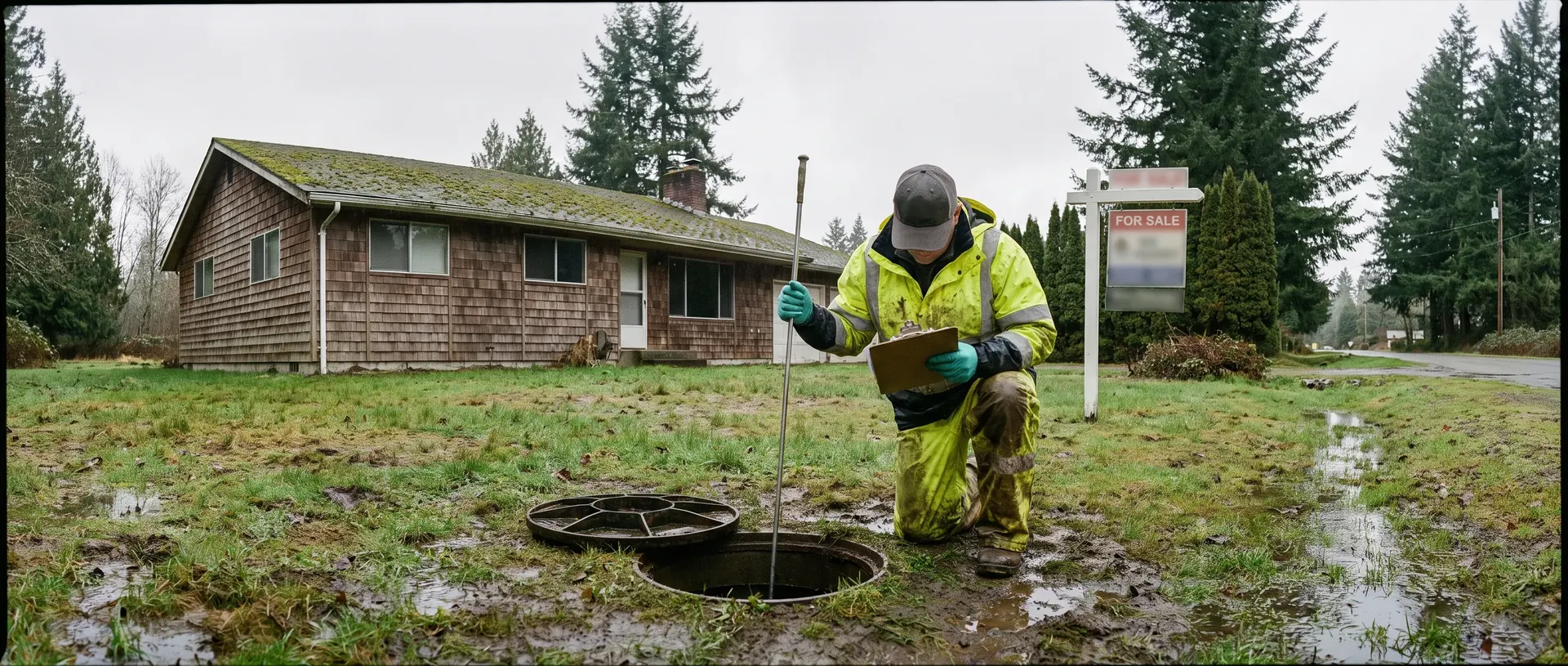
The inspection required in connection with a sale. Includes pumping so the tank interior can be assessed, drain field evaluation, and a written report for escrow and the county.
Septic service
Selling, buying, or dealing with a county letter. We inspect the system and write it up so it holds up with whoever is asking.
01Why it matters
Almost nobody books a septic inspection out of curiosity. They book one because a house is being sold, because a lender or the county has asked for documentation, or because a maintenance requirement has come due and there is a date attached.
That matters, because an inspection with a deadline is not just a technical job. It is a piece of paperwork that has to be right, complete, and delivered to a specific party in time. A report that raises questions two days before closing is a problem regardless of how good the underlying inspection was.
So we do two things: assess the system properly, and write it up so that the person receiving it does not need to call us back.
A real inspection covers more than the tank. The tank is the easy part. What determines whether the system is actually sound is the drain field, and a drain field is assessed by looking at how it accepts water, what the ground above it is doing, and what the tank levels tell you about how it has been behaving.
02Scope
The inspection required in connection with a sale. Includes pumping so the tank interior can be assessed, drain field evaluation, and a written report for escrow and the county.
Periodic inspections for systems under an ongoing operation and maintenance requirement, or simply because an owner wants to know where they stand before something fails.
If you are buying a rural property here, the septic system is one of the largest single risks on it. A buyer side inspection tells you what you are taking on before you own it.
03Included
We look for the existing as-built and maintenance history before we arrive. Knowing what the system is supposed to be saves a lot of guessing on site.
Lids located and opened, tank pumped so the interior is visible, baffles and tees checked, and the structure assessed for cracks and root intrusion.
Condition of the ground above the field, evidence of surfacing or saturation, and how the system accepts flow. This is the part that decides the outcome.
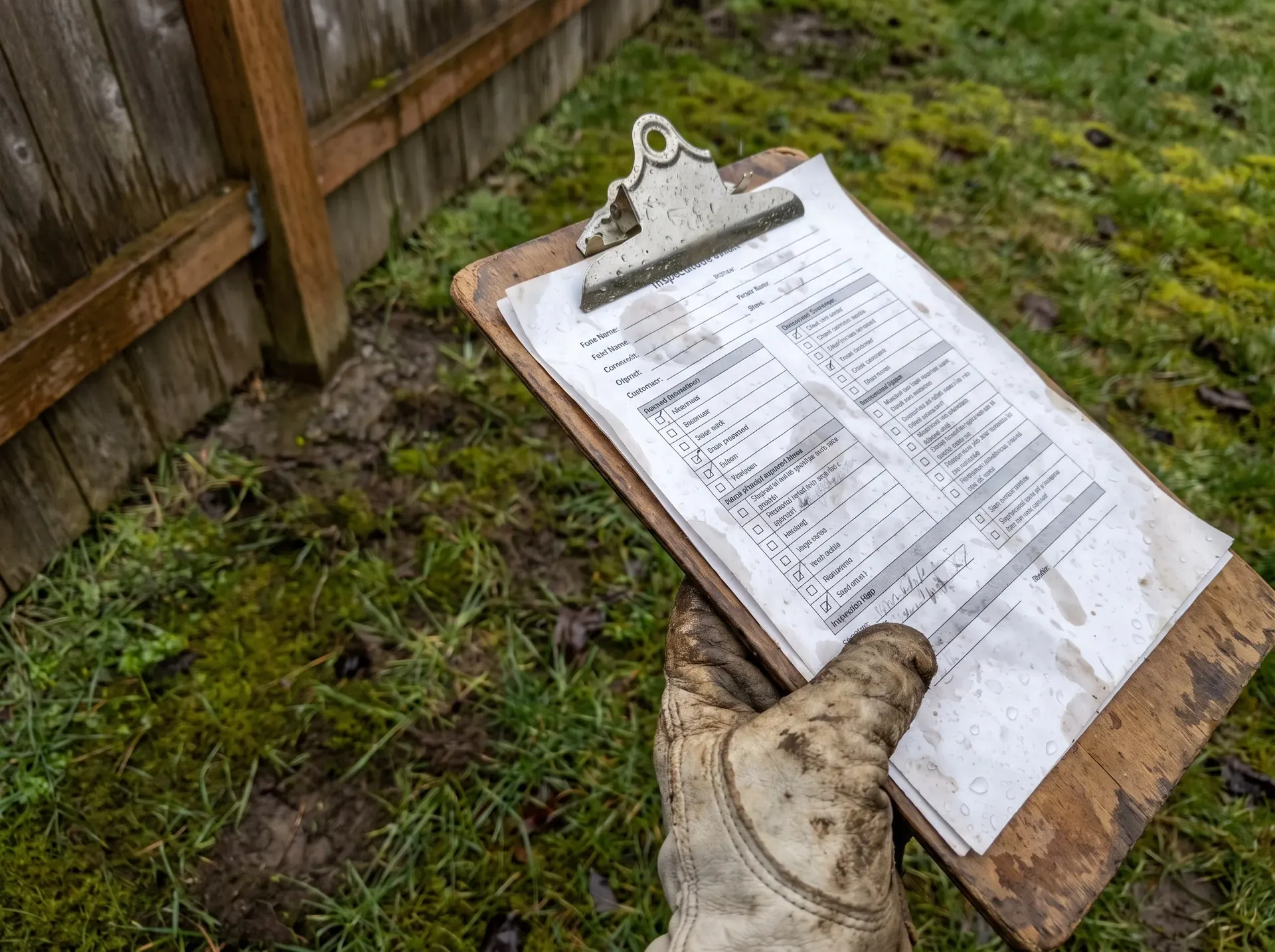
Findings, condition, anything that needs attention, and clear language rather than a checklist that raises more questions than it answers.
04How it runs
Most routine visits follow this exact sequence. If yours will not, we say so when you book rather than on the day.
Closing date, county deadline, or no deadline at all. This is the first question because it decides scheduling.
We look for the as-built and any maintenance history before the visit.
Lids found and opened. On properties with no records this can take a while, which is why the records search happens first.
Tank pumped, interior assessed, components checked, levels and condition recorded.
Ground condition, surfacing, saturation and flow acceptance evaluated.
Written up and sent to you and, if you want, straight to escrow or the county.
05Why us
We do the records search before we come out. Turning up cold to a rural property with no as-built and trying to find a system by probing is slow and expensive, and it is avoidable most of the time.
We pump as part of a transfer inspection rather than treating it as an add on. You cannot meaningfully assess the inside of a tank that is full, so an inspection that skips it is assessing the lid.
We write reports that are readable. A report that a real estate agent, a lender or a county reviewer can act on without a follow up call is worth more than a longer one full of abbreviations.
And we tell buyers the truth. If a system is at the end of its life and the next owner is facing a replacement, that goes in the report plainly. That occasionally costs us the goodwill of somebody trying to sell a house, and it is still the right way round.
Tell us the date when you book. Inspections that are scheduled early are far less stressful than ones squeezed in at the end.
06What customers say
Placeholder section.No reviews have been collected yet, and nothing here is invented to fill the space. Real customer reviews go in before this section publishes. Until then there is no star rating, no aggregate score and no review markup on this site.
07Questions
Washington requires an onsite sewage system to be inspected in connection with a property transfer, and many systems carry an ongoing maintenance and inspection requirement on top of that. Whatcom County operates its own onsite sewage programme, so the local detail matters. Our guide covers it, and the specific current requirements should be confirmed with the county for your property.
In Washington, effectively yes for a property on an onsite system. It is one of the standard items that has to be resolved before a transfer completes, and leaving it late is the single most common reason septic becomes a problem in a sale.
It varies with system type and whether pumping is included, which for a transfer inspection it normally is. Tell us the property and the system type and we will give you a number before we come out.
A straightforward system with accessible lids and existing records is usually a couple of hours including pumping. A property with no records and buried lids can take considerably longer, mostly spent finding things.
A saturated or surfacing drain field, structural failure in the tank, missing or broken baffles, an undersized system for the number of bedrooms, and evidence that the system has been failing and been patched rather than repaired. Missing records alone does not fail a system, but it complicates everything.
You generally cannot complete a transfer with an unresolved failed system, and you certainly cannot conceal one. In practice a failure becomes a negotiation: it is repaired before closing, or the price reflects it and the work is documented. Concealment is the part that creates real liability.
For a meaningful inspection of the tank interior, yes. You cannot assess baffles, walls and outlet condition through a full tank. Some routine inspections on a system with good records can be done without, but a transfer inspection normally includes pumping.
08Coverage
We inspect across Bellingham, Lynden, Ferndale, Blaine, Birch Bay, Everson, Nooksack, Sumas, Deming, Custer, Sudden Valley and Point Roberts.
09Related
Every other service we run, in case the job you have is not the one you came here for.
Routine and overdue pumping. Both chambers, lids dug out at no extra charge, and the tank inspected while it is open.
Baffles, lids, risers, pumps, alarms and blocked lines. We diagnose before anyone quotes a replacement.
Whether a saturated field can be recovered or genuinely needs replacing, and the evidence for the call.
New systems from site evaluation and soil testing through design, permit and final county inspection.
Full replacement when a system is finished, including decommissioning the old tank properly.
Backing up, alarm sounding, sewage surfacing. Same day response, priced before we start.
Finding a buried system on a property where nobody knows where anything is, and tracking down the as-built.
Lids brought to ground level so future service does not start with an hour of digging.
Effluent and grinder pumps, floats and alarm panels on pressurised, mound and sand filter systems.
Test pits, soil logs, a design the ground will support, and a permit package the county will accept.
10Book it
Tell us the property, the system type if you know it, and any deadline you are working to.