Keep people and animals away from it
Untreated sewage carries bacteria and viruses, and children and dogs will walk straight through it. Rope it off or fence it if you can.
Septic service
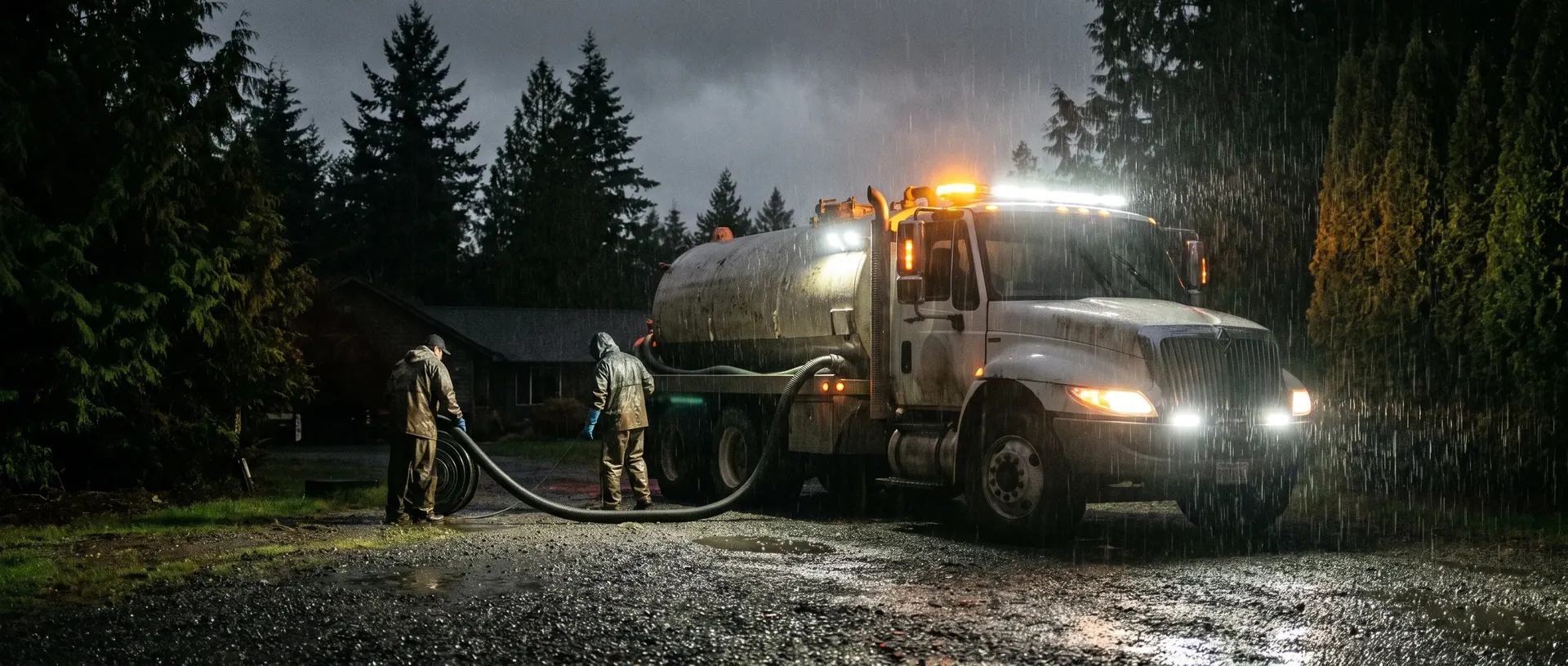
Backing up, alarm going, or sewage on the ground. Call us, do not fill in a form.
Untreated sewage carries bacteria and viruses, and children and dogs will walk straight through it. Rope it off or fence it if you can.
Every flush, shower and load of laundry adds to what is already coming out. This is the single most useful thing you can do before we arrive.
Septic tanks contain gases that can render someone unconscious in seconds, and people die every year trying to help somebody who went in first. There is no situation where entering a tank is the right call for a homeowner.
If a high level alarm is sounding on a pressurised system, overriding it can push effluent somewhere worse.
01Why it matters
Not everything that feels alarming needs an out of hours callout, and we would rather tell you that on the phone than charge you for finding out.
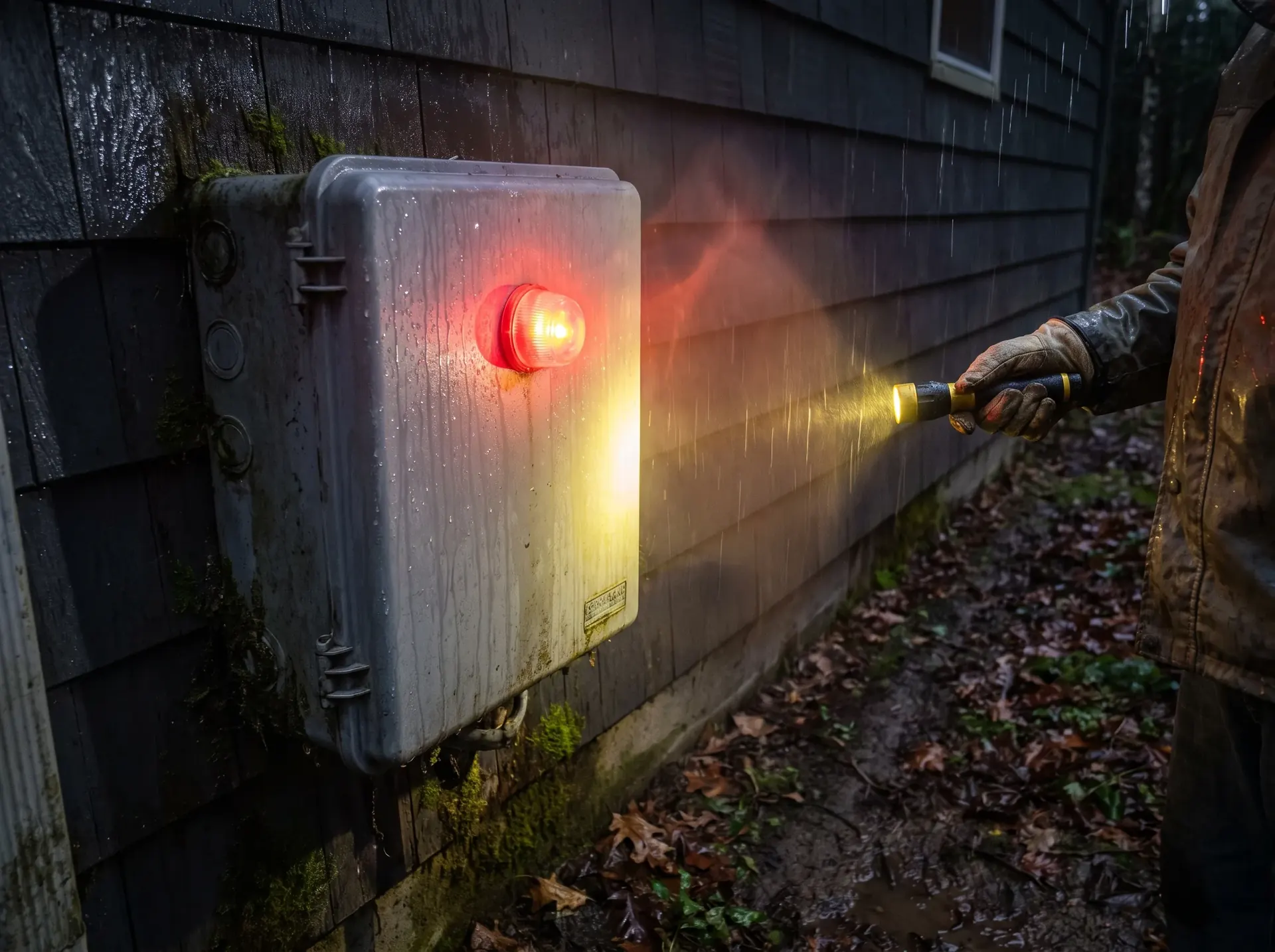
Call now: sewage backing up into the house, effluent surfacing in the yard, a high level alarm sounding, or every drain in the house stopped at once.
Call today, but it is not a middle of the night job: one slow fixture, smells with no visible surfacing, or an alarm that cleared itself and has not come back.
This can wait for a normal booking: grass over the drain field is greener than the rest of the lawn, or you simply cannot remember when the tank was last pumped.
The reason to be clear about this is that emergency work costs more, and paying emergency rates for something that would have been fine on Tuesday is a bad outcome for you and it makes us look opportunistic.
Genuine emergencies here spike in winter, because that is when the ground is already saturated and a system with no reserve capacity finally runs out.
02Scope
Sewage backing up into the house or surfacing outside. First priority is getting the level down and stopping it getting worse, then working out why.
High level alarms on pressurised, mound and sand filter systems. Usually a failed pump, a stuck float or a tripped breaker, and usually fixable the same visit.
A system that was fine yesterday and is not today. Frequently a blocked effluent filter or a blocked outlet, which is a cheap fix and a very alarming symptom.
03Included
We ask what is happening before we dispatch. Sometimes we can tell you to check the breaker for the pump first, and sometimes that solves it without a visit.
Emergency pumping to drop the level and stop the overflow. This is triage, and it buys time to diagnose properly.
Once the immediate problem is contained we find out what caused it, so you are not booking a second visit to answer the obvious question.
Emergency work costs more than scheduled work. You are told what it will cost before we begin, not after.
04How it runs
Most routine visits follow this exact sequence. If yours will not, we say so when you book rather than on the day.
What is happening, how long, how many people in the house, and whether anything is surfacing. This decides urgency and what we bring.
If there is something you can safely check that might solve it, such as a tripped breaker on a pump circuit, we will walk you through it before dispatching a truck.
We give you a realistic window. Rural access, long soft drives and winter conditions all affect it and we will say so rather than promising a time we will miss.
Pump down, stop the overflow, make the site safe.
Work out what failed while we are on site with the system open.
Fix it there if it is fixable on the visit. If it needs parts or excavation, you get a clear plan and a date rather than being left in limbo.
05Why us
We triage on the phone. Some emergency calls are solved by a homeowner flipping a breaker, and we would rather tell you that than drive out and charge you for it. It costs us a callout and it is obviously the right thing to do.
We tell you the price before we start. Emergency work priced after the fact is where this trade gets its worst reputation, and a stressed homeowner with sewage on the lawn is in no position to negotiate. Nobody should be quoted in that moment.
We contain first and diagnose second. Getting the overflow stopped is the priority. Working out the root cause matters, and it matters after the immediate mess is under control.
And we cover the awkward properties. Long gravel drives, soft ground, Point Roberts, up the Mount Baker Highway. Tell us the access when you call and we will bring what is needed.
Call. The form is for jobs that can wait.
06What customers say
Placeholder section.No reviews have been collected yet, and nothing here is invented to fill the space. Real customer reviews go in before this section publishes. Until then there is no star rating, no aggregate score and no review markup on this site.
07Questions
Slow drains across the whole house, gurgling, smells around the tank or drain field, and soggy or unusually green grass over the field. Backing up indoors means you are well past full.
Overdue pumping, blocked effluent filters, failed baffles, and pump or float failure on pressurised systems. Blocked filters cause a disproportionate share of emergency calls and are among the cheapest things to fix.
Usually a high liquid level, which normally means the pump has failed, a float is stuck, or a breaker has tripped. Occasionally it means the drain field has stopped accepting flow. Check the breaker first, then call.
Yes. Stop using water immediately, keep people and animals away from it, and call. Continuing to use water makes it worse quickly.
Usually not for wear, age or lack of maintenance. Sudden accidental damage is sometimes covered. Check your policy, and expect any claim to turn on maintenance history.
No. It requires the right equipment and the waste has to be transported and disposed of properly. It is also genuinely dangerous, because the gases in a tank can incapacitate someone within seconds.
08Coverage
Same day emergency response across Bellingham, Lynden, Ferndale, Blaine, Birch Bay, Everson, Nooksack, Sumas, Deming, Custer, Sudden Valley and Point Roberts.
09Related
Every other service we run, in case the job you have is not the one you came here for.
Routine and overdue pumping. Both chambers, lids dug out at no extra charge, and the tank inspected while it is open.
Property transfer and routine inspections, with a written report escrow and the county can both act on.
Baffles, lids, risers, pumps, alarms and blocked lines. We diagnose before anyone quotes a replacement.
Whether a saturated field can be recovered or genuinely needs replacing, and the evidence for the call.
New systems from site evaluation and soil testing through design, permit and final county inspection.
Full replacement when a system is finished, including decommissioning the old tank properly.
Finding a buried system on a property where nobody knows where anything is, and tracking down the as-built.
Lids brought to ground level so future service does not start with an hour of digging.
Effluent and grinder pumps, floats and alarm panels on pressurised, mound and sand filter systems.
Test pits, soil logs, a design the ground will support, and a permit package the county will accept.
10Book it
If it can wait, use the form and we will fit it into the schedule. If it cannot, call.