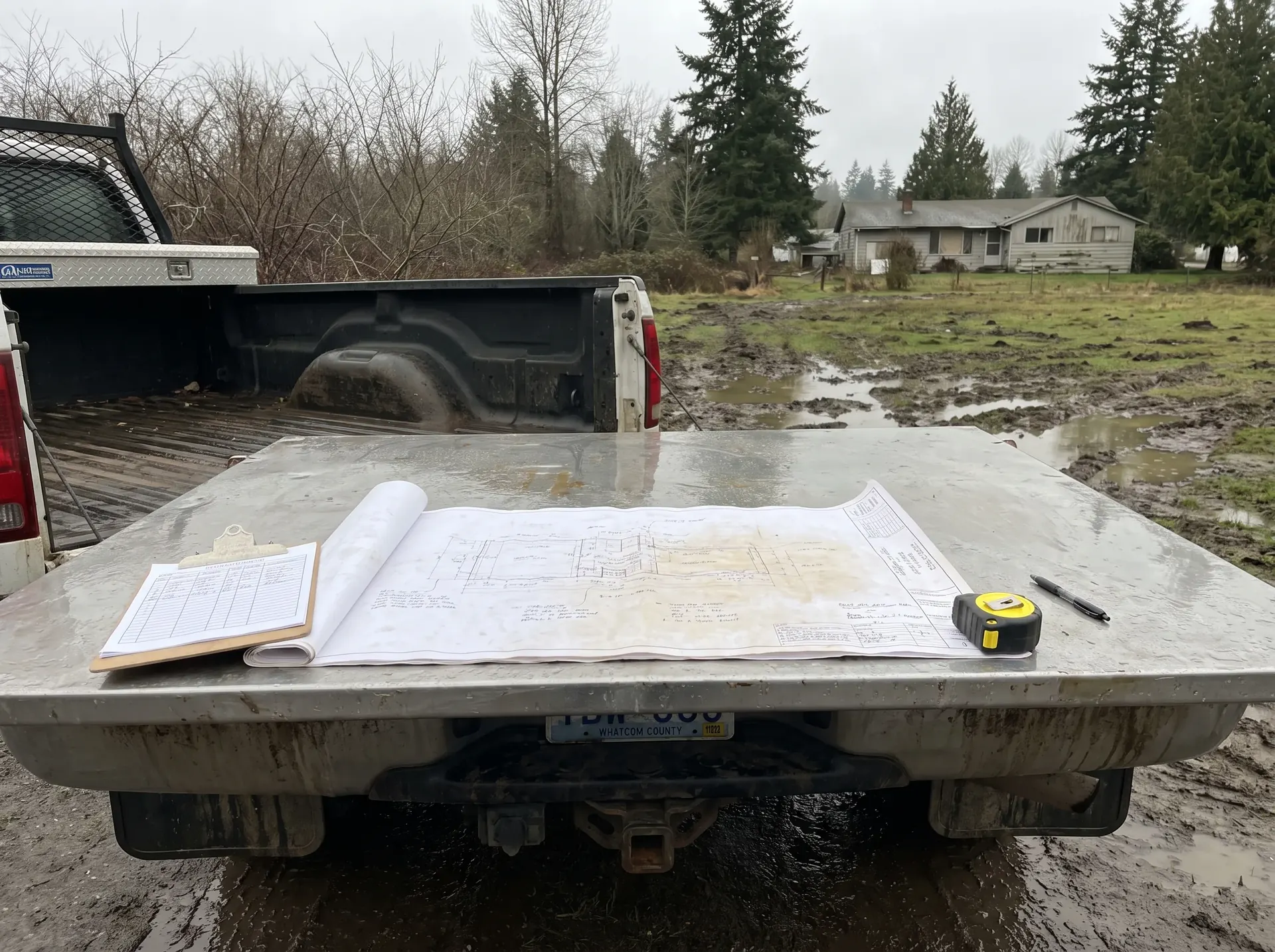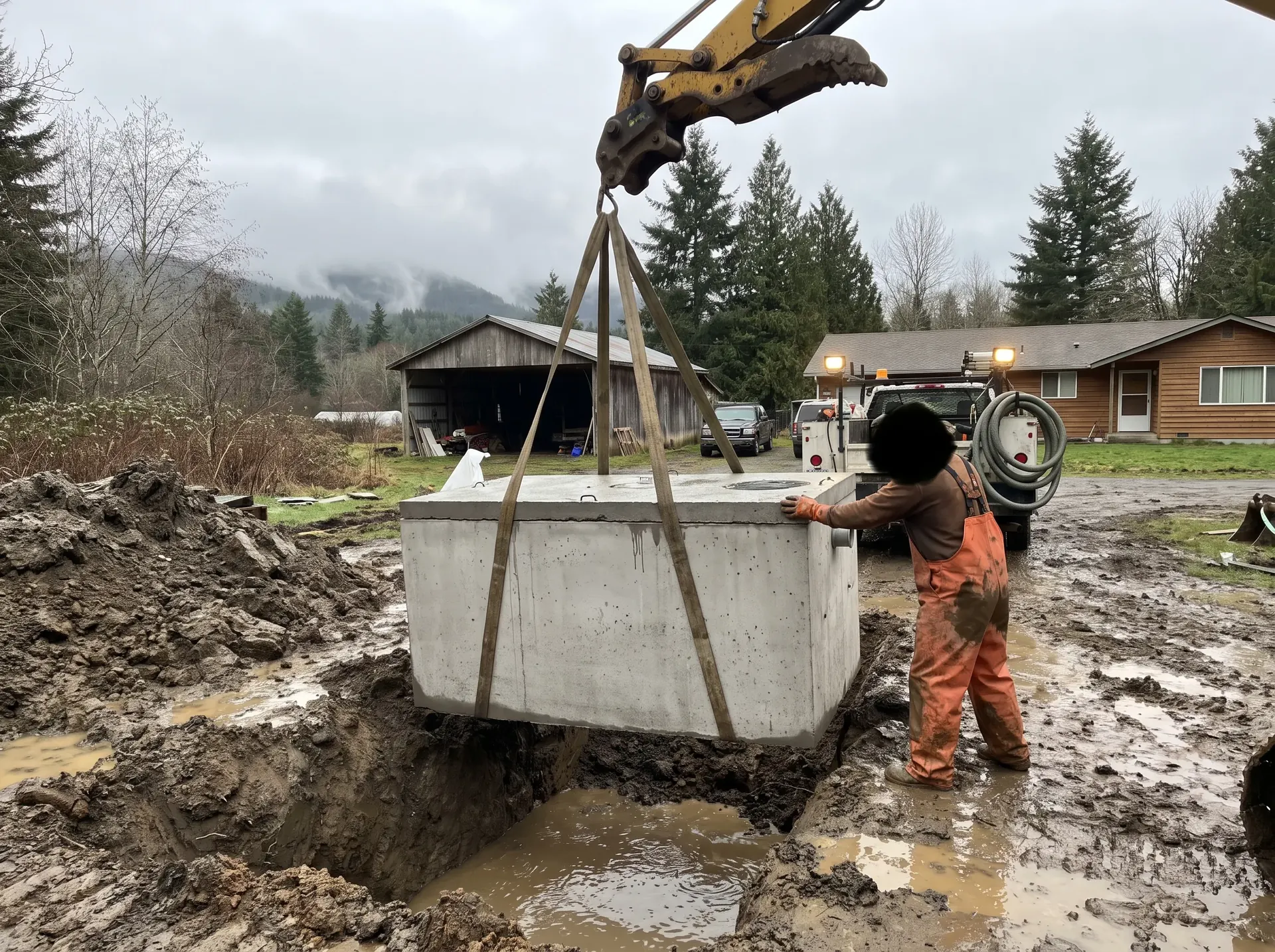
The honest answer is that the soil decides, and until somebody digs test pits on your specific lot, any number is a guess.
That is not evasion. It is the actual mechanism. A conventional gravity system on well drained ground and an engineered system on a wet, tight lot are different projects with different equipment, different materials and different amounts of work, and they can differ by a multiple rather than a percentage.
Here is what determines which one you are getting.
What you might end up with, cheapest to most expensive
Conventional gravity system
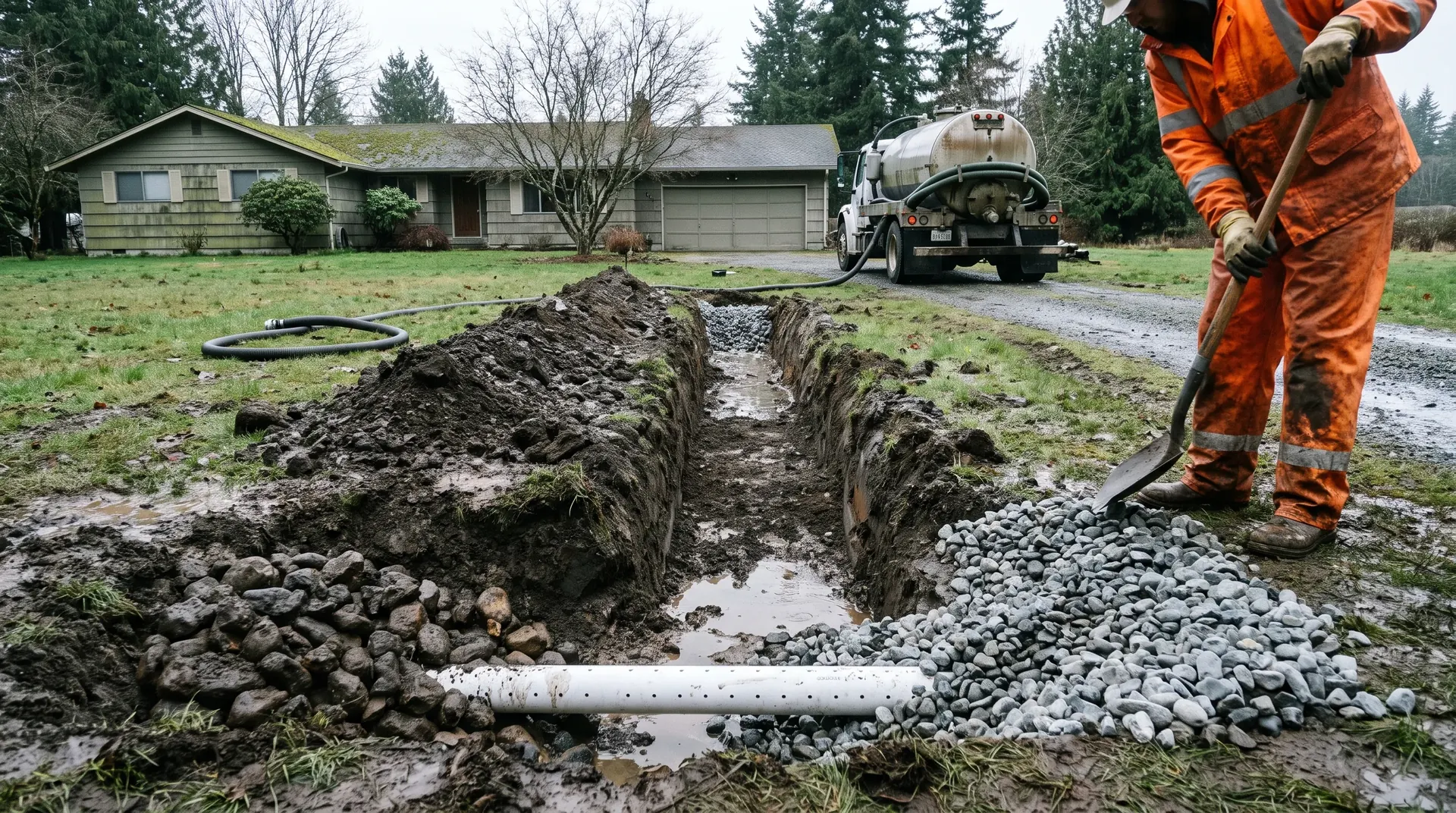
Tank and a drain field, with gravity moving everything. No pump, no electrical, least to go wrong and least to maintain. Requires soil that drains well enough and enough depth above the water table. The cheapest outcome, and on a lot of Whatcom County ground it is simply not permitted.
Pressure distribution
Tank, pump chamber and a drain field dosed by a pump so effluent is distributed evenly rather than running to the nearest low point. Common here because it works on ground that will not take gravity. Adds a pump, floats and an alarm, so it adds maintenance.
Sand filter
Effluent is treated through a constructed sand medium before it reaches the drain field. Used where soil conditions or site constraints require additional treatment. More construction, more cost, more to maintain.
Mound system
The drain field is built up above the natural ground level, which is how you deal with a water table that is too high for anything below grade. Very common on the flat wet ground in the north of the county. It is the most visible option in a yard and among the most expensive.
The other factors
Site evaluation and design
The test pits, the soil logging and the design work. Modest against the total, and it determines everything else. Never worth cutting.
Permit and review
County permit fees and the review process. Where a submission goes back and forth for missing information, the cost shows up as time rather than fees.
Access
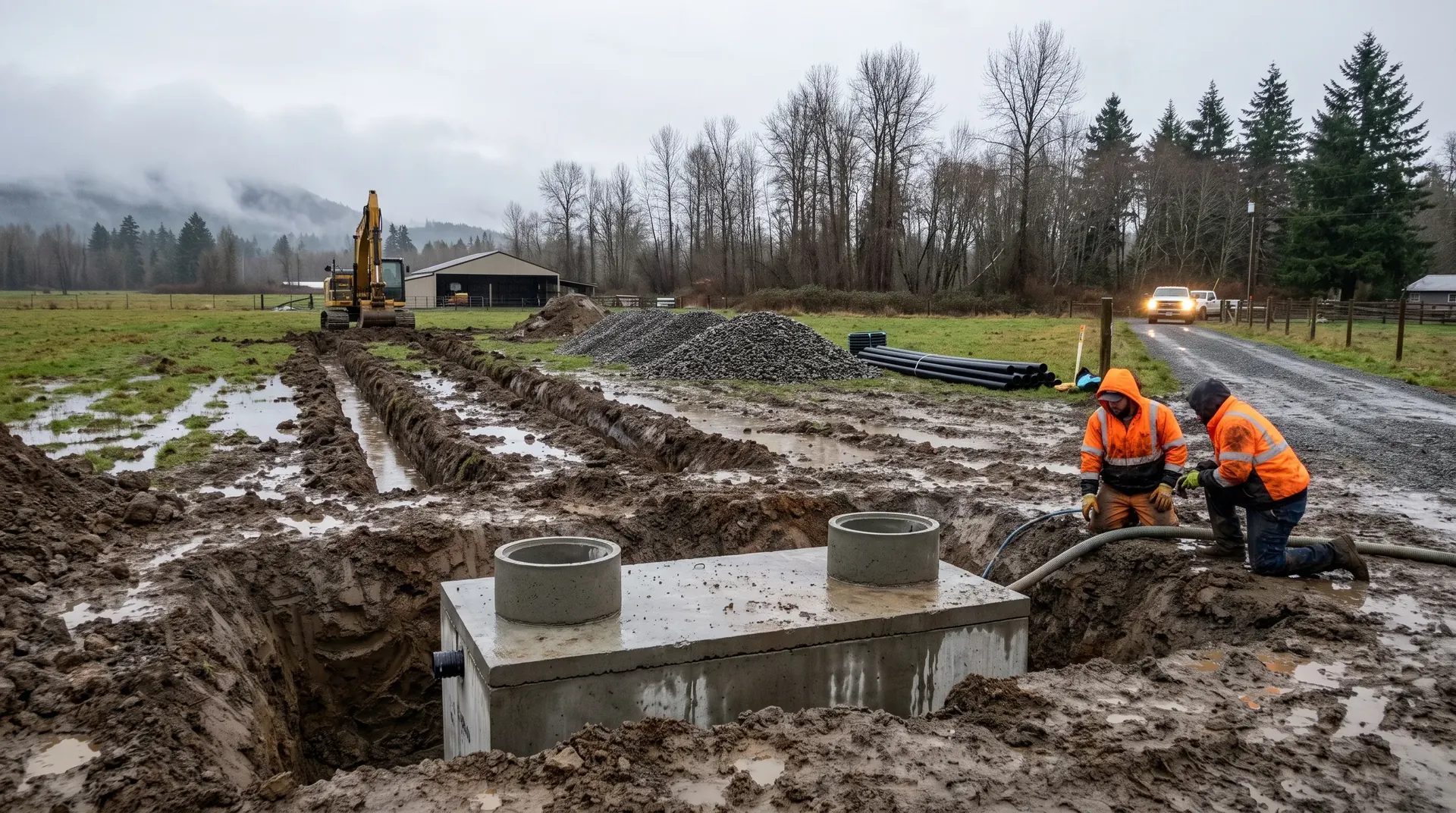
A drive that will take an excavator and a truck is straightforward. A tight lot, mature landscaping, steep ground or a long soft approach all add time and sometimes require smaller and slower equipment.
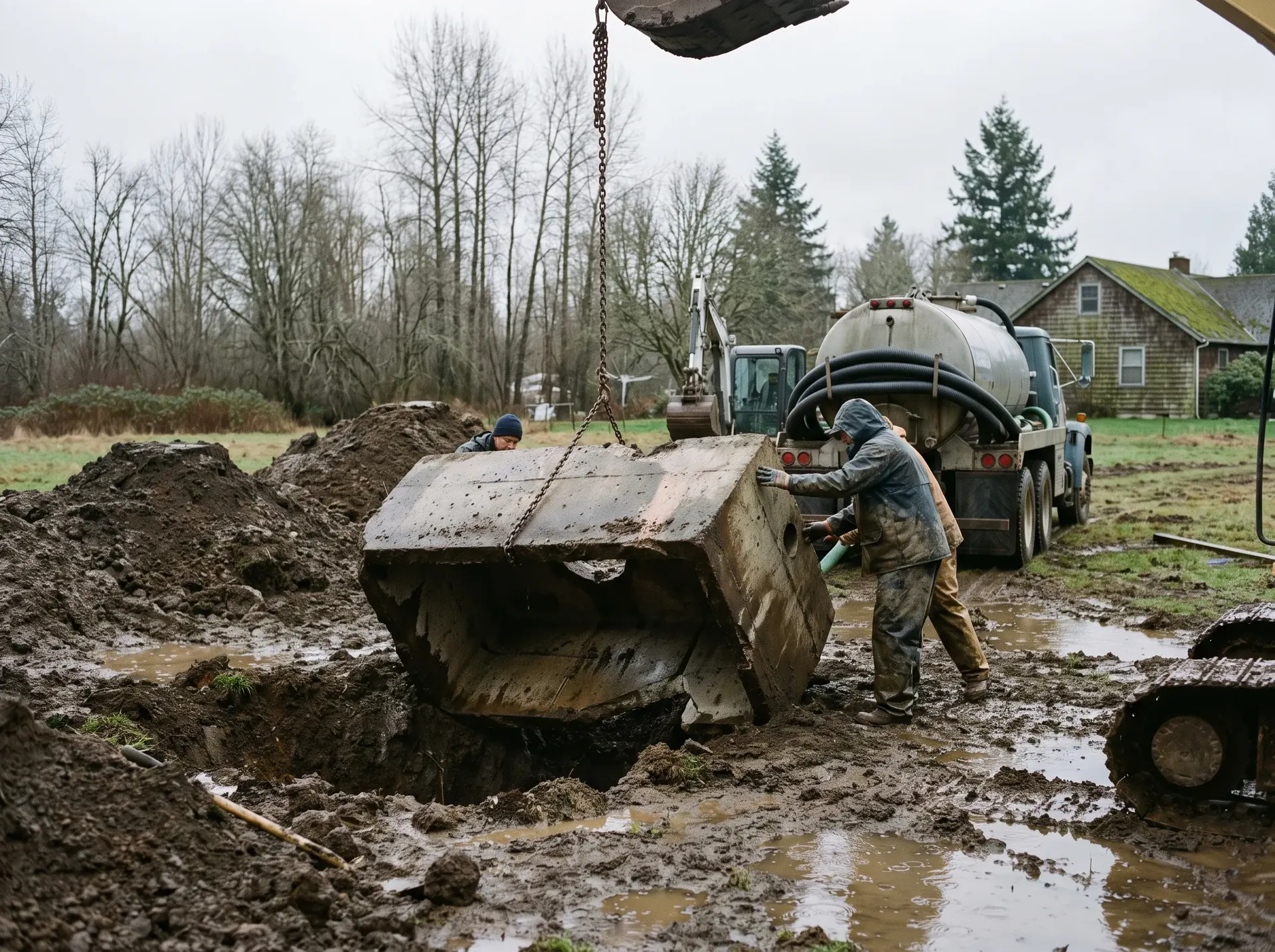
Whether an old system has to come out
Replacement work includes decommissioning the old tank properly, which is a real line item and not optional.
Reinstatement
Putting a yard back after a system goes in. Sometimes this is a fresh building lot with nothing to restore. Sometimes it is an established garden.
Season
Winter excavation on saturated ground is slower, messier and occasionally has to stop. Where a job can wait for firmer conditions, it is usually cheaper as well as better.
Why nobody can quote this over the phone
Two neighbouring properties can need completely different systems.
The variables are how quickly the soil accepts water, how deep the water table comes up in winter, how much usable area exists once wells, boundaries, buildings and surface water are all set back from, and how many bedrooms the house has.
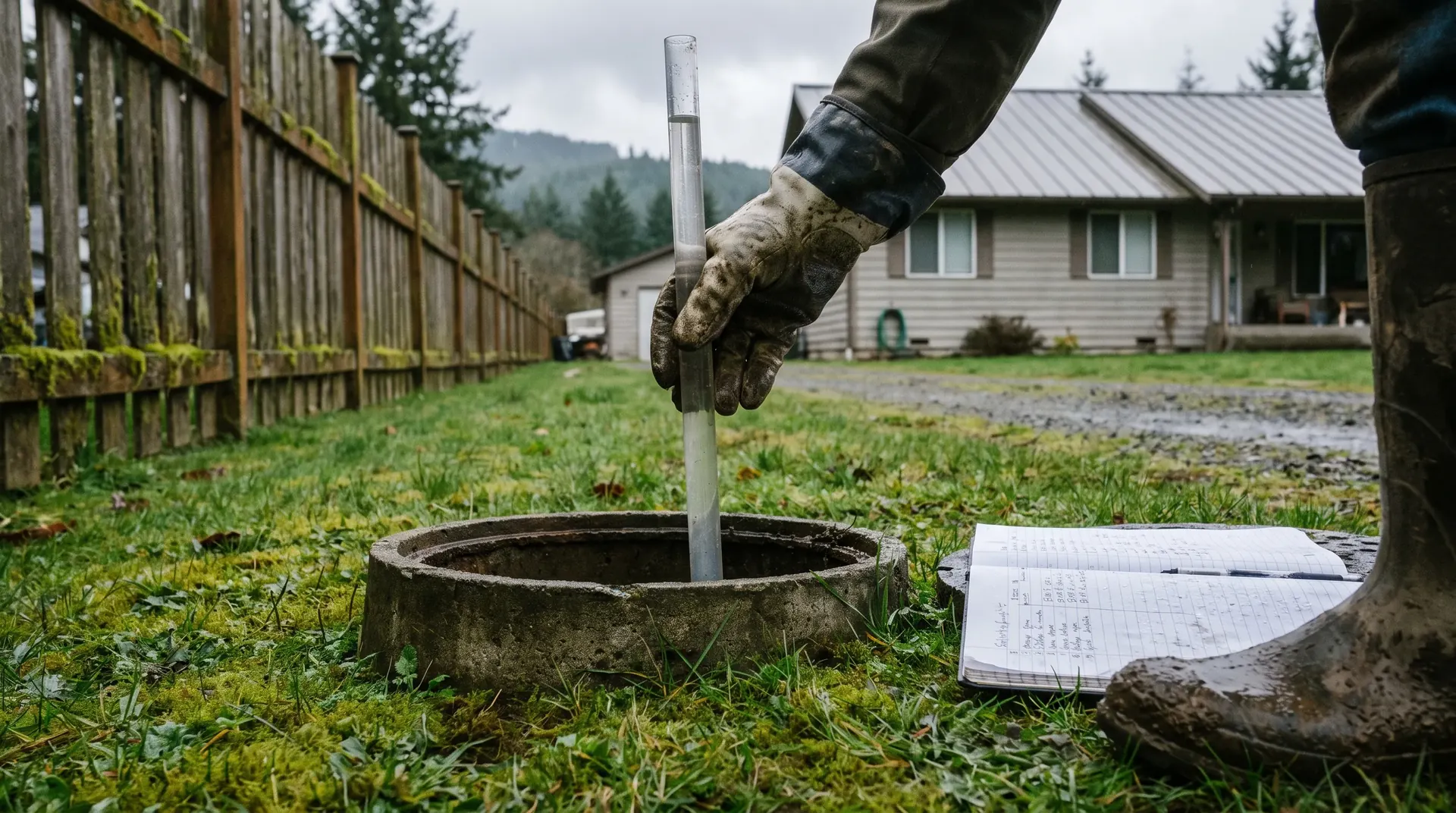
None of those can be established from an address. They come from test pits and a soil log.
This is why anyone quoting a new system without having dug on your lot is quoting a hope. It is also why the site evaluation is the first thing to do rather than the last, including if you are still deciding whether to buy the property at all. On a bare lot, the septic answer occasionally changes whether the build is viable.
Where to start
Start with a site evaluation. It gives you the system type, which gives you the budget, and it does so before you have committed to anything.
If you are buying a bare lot, do it before you close if you possibly can. If you are replacing a failed system, get the assessment done first, because sometimes only the drain field needs replacing and the tank is fine, which is a very different bill.
Our septic design and permitting page covers the site evaluation, septic system installation covers the build, and septic system replacement covers what changes when an old system has to come out.