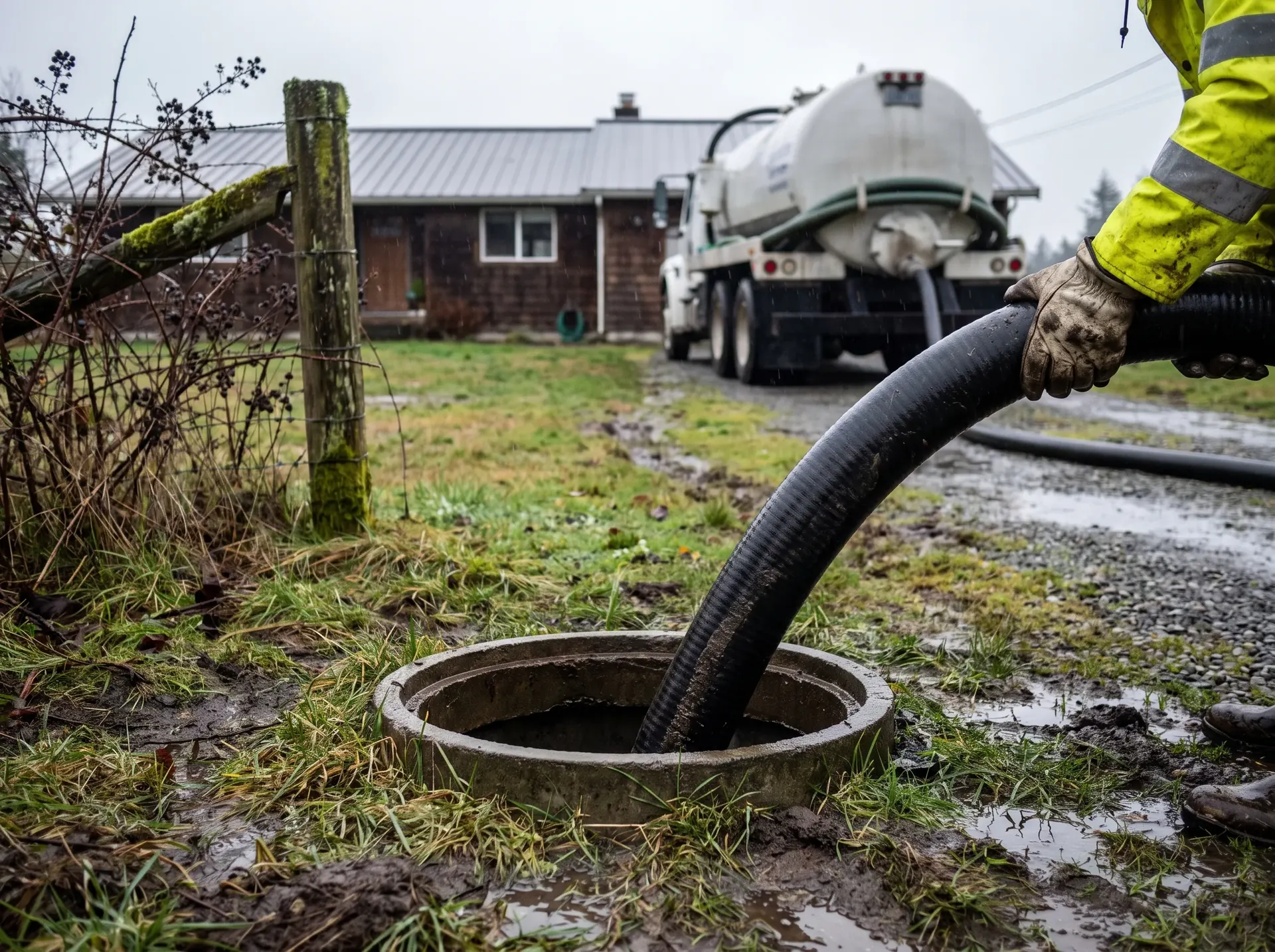
For a typical household the answer is somewhere between every two and every five years, and that range is wide because the number of people in the house matters more than anything else.
The rule of thumb everyone repeats is three years. It is a reasonable default and it is wrong for a lot of households in both directions. Two retired people in a house with a 1500 gallon tank may genuinely be fine at five. A family of six on a 1000 gallon tank probably needs it at two.
The good news is that you do not have to guess, because the tank can be measured.
The four things that set your interval
How many people live there
The single biggest factor. Solids accumulate roughly in proportion to how many people are contributing, so doubling the household roughly halves the interval.
Tank size
A 1500 gallon tank has more room for accumulation than a 1000 gallon one, so it goes longer at the same household size. Bigger tanks were not always fitted, particularly on older systems.
What goes down the drain
A household that puts everything through a garbage disposal, cooks with a lot of grease, and uses wipes will fill a tank considerably faster than one that does not. This is the factor you actually control.
Whether the system has an effluent filter
A filter protects the drain field by catching carryover, and it needs cleaning roughly annually. Systems with one are more forgiving of a slightly longer pumping interval, but the filter itself becomes a maintenance item.
How the interval is actually determined
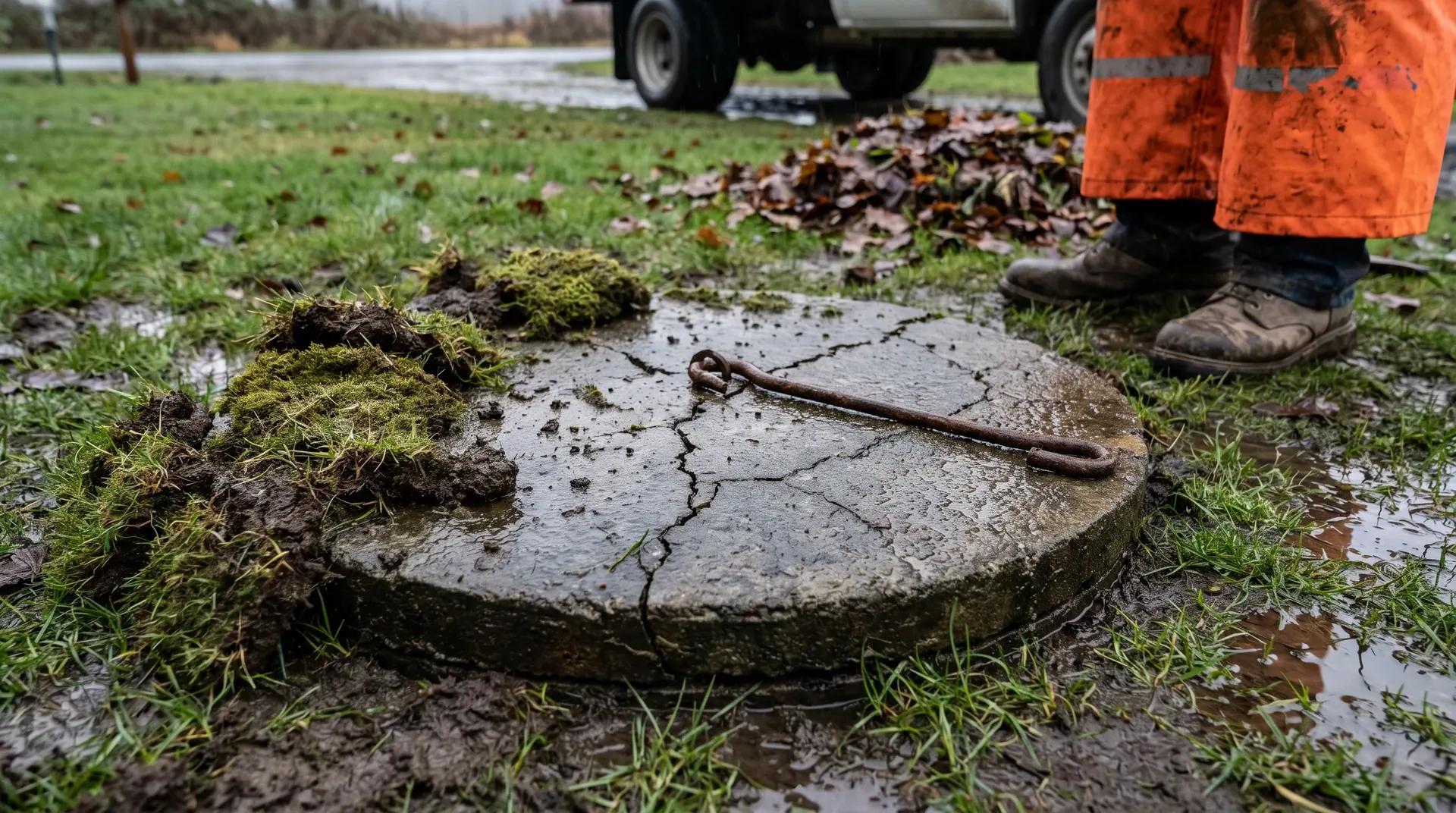
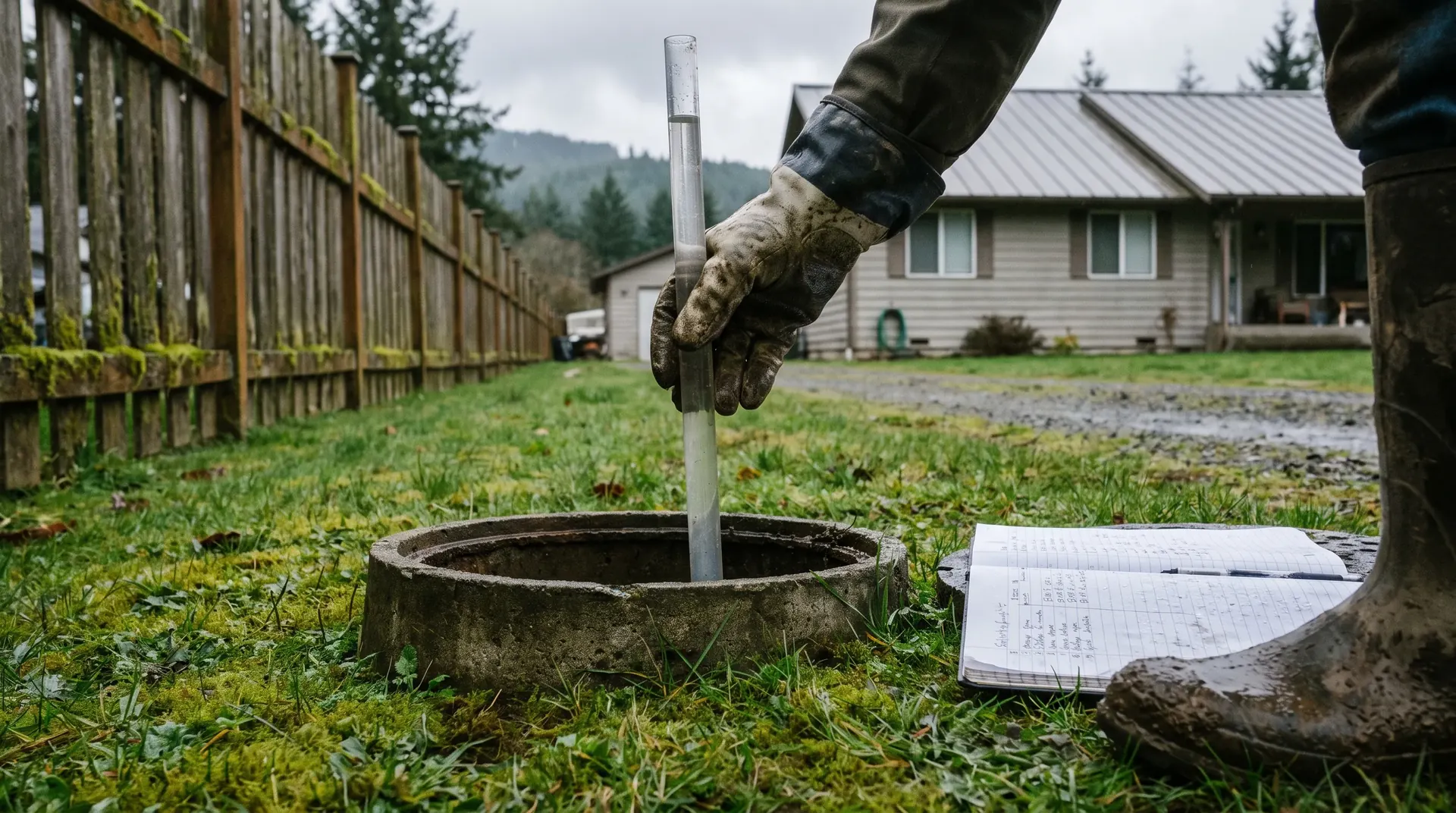
Inside the tank there are three layers: scum floating on top, relatively clear liquid in the middle, and sludge settled on the bottom. The middle layer is what should be flowing out to the drain field.
Pumping is due when the combined scum and sludge take up too much of the tank, because at that point solids start carrying over into the field instead of staying behind.
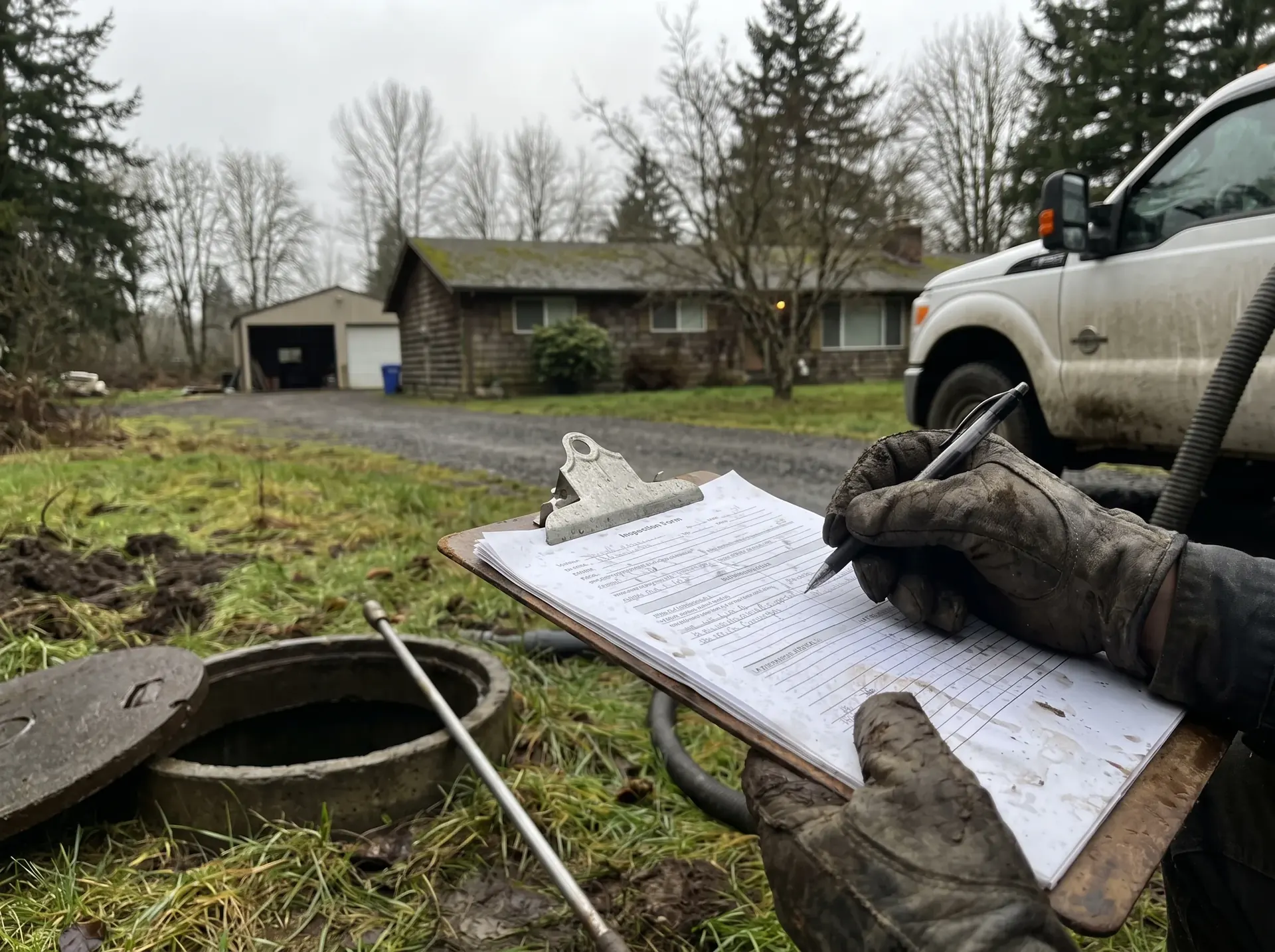
Those layers can be measured, and when we pump we measure them. If your tank was only a third full of solids after four years, you did not need us at three, and we will tell you so and set the next visit further out. If it was near capacity at two years, you need us more often than you thought.
That measurement is why a pump out where nobody looks in the tank is a wasted opportunity. It is the only moment anyone can gather this information.
What actually happens if you skip it
Nothing, for a while. That is the trap.
Once the solid layers grow past the point where the tank can hold them, solids start leaving with the liquid and entering the drain field. The field is soil, and soil clogged with solids does not recover. The clogging is gradual and silent, and by the time you see symptoms at the surface, the damage is done.
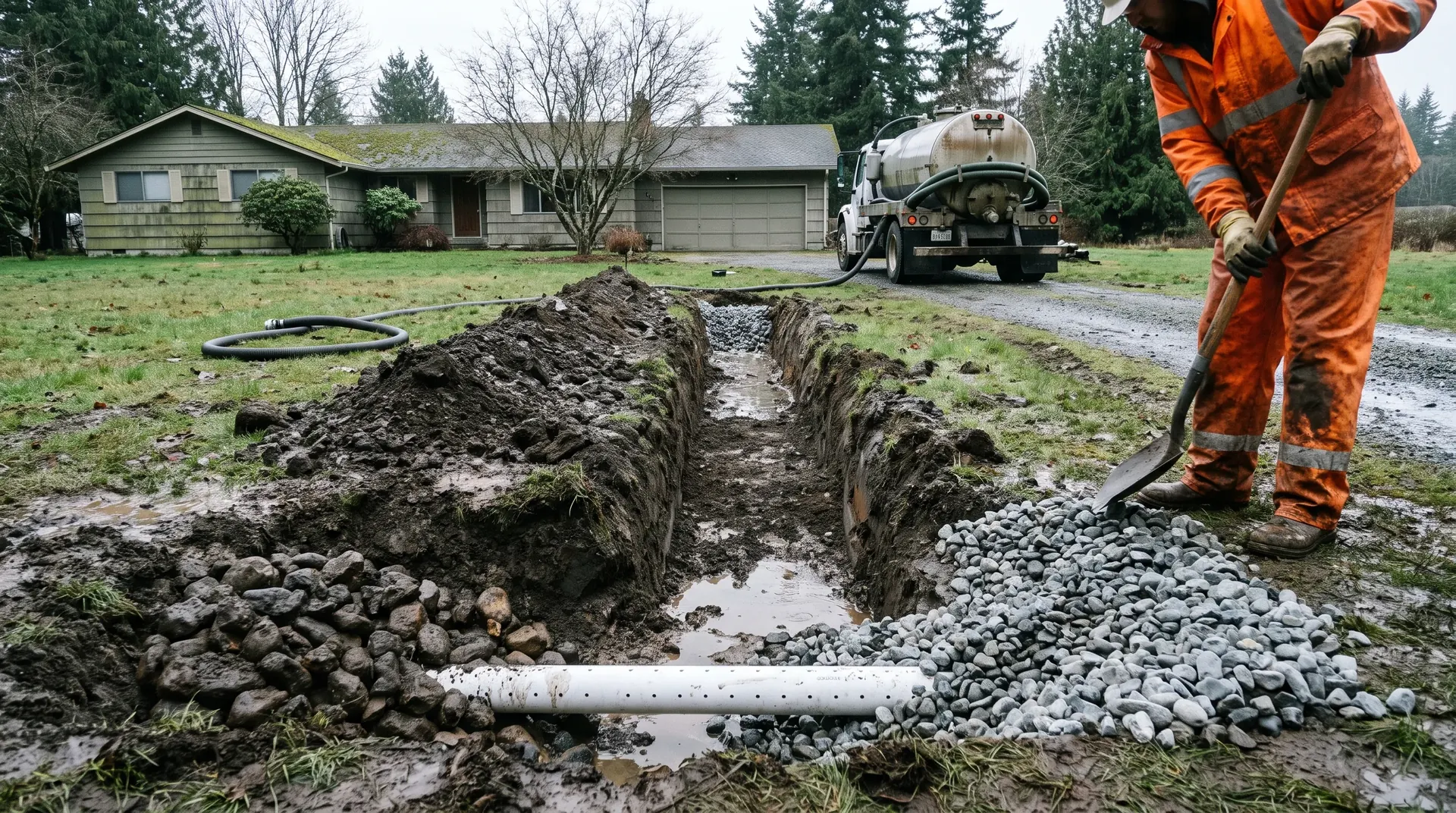
That is the actual economics of septic maintenance. Pumping is a few hundred dollars on a schedule. A drain field is the largest single bill on this whole site. Skipping the first to save money is how people end up paying the second.
In this county there is an additional reason not to run it close. A drain field here is already dealing with a high winter water table, so it has less spare capacity than a field in dry ground. It has less tolerance for solids carryover on top.
When to book
Book if you cannot remember the last time, if you just bought the property, if the household size has changed significantly, or if your measured interval says it is time.
Book sooner than that if drains are slowing throughout the house, if there are smells around the tank or field, or if the grass over the field has started looking different from the rest of the lawn.
If your system carries a county operation and maintenance requirement, the required frequency comes from that rather than from preference, and our operation and maintenance guide covers it. What a pump out itself involves is on our septic tank pumping page.