If a letter from the county turned up about your septic system and used the words operation and maintenance, this is what it means.
It is not an enforcement action and it is usually not because anything is wrong. It is a routine requirement: certain types of septic system have to be inspected periodically by someone qualified, and the results reported to the county. The letter is telling you an inspection is due.
It is worth taking seriously, and it is not worth panicking about.
What an operation and maintenance requirement actually is
Washington regulates onsite sewage systems at state level, and counties run their own programmes on top. Whatcom County operates an onsite sewage programme covering the systems in the county.
The underlying logic is straightforward. A conventional gravity system has no moving parts and mostly looks after itself between pump outs. A pressurised, mound or sand filter system has pumps, floats, alarms and treatment components that need checking, and if one fails silently the system can be discharging inadequately treated effluent for a long time before anyone notices.
So systems with more to go wrong get inspected on a schedule, and the results are reported so the county knows the system is functioning.
Given how much of this county is on the kind of wet, flat ground that requires exactly those system types, a lot of properties here fall under it.
To be verified before launch. Insert which system types carry the requirement in Whatcom County specifically, and the required frequency for each.
Do you have to do this?
To be verified before launch. The framing below is safe in general terms. The specifics must be confirmed with the county.
Broadly, it depends on the type of system you have rather than on where you live or how old the property is. If you have a pump, floats and an alarm panel, you are more likely to fall under it than someone on a simple gravity system.
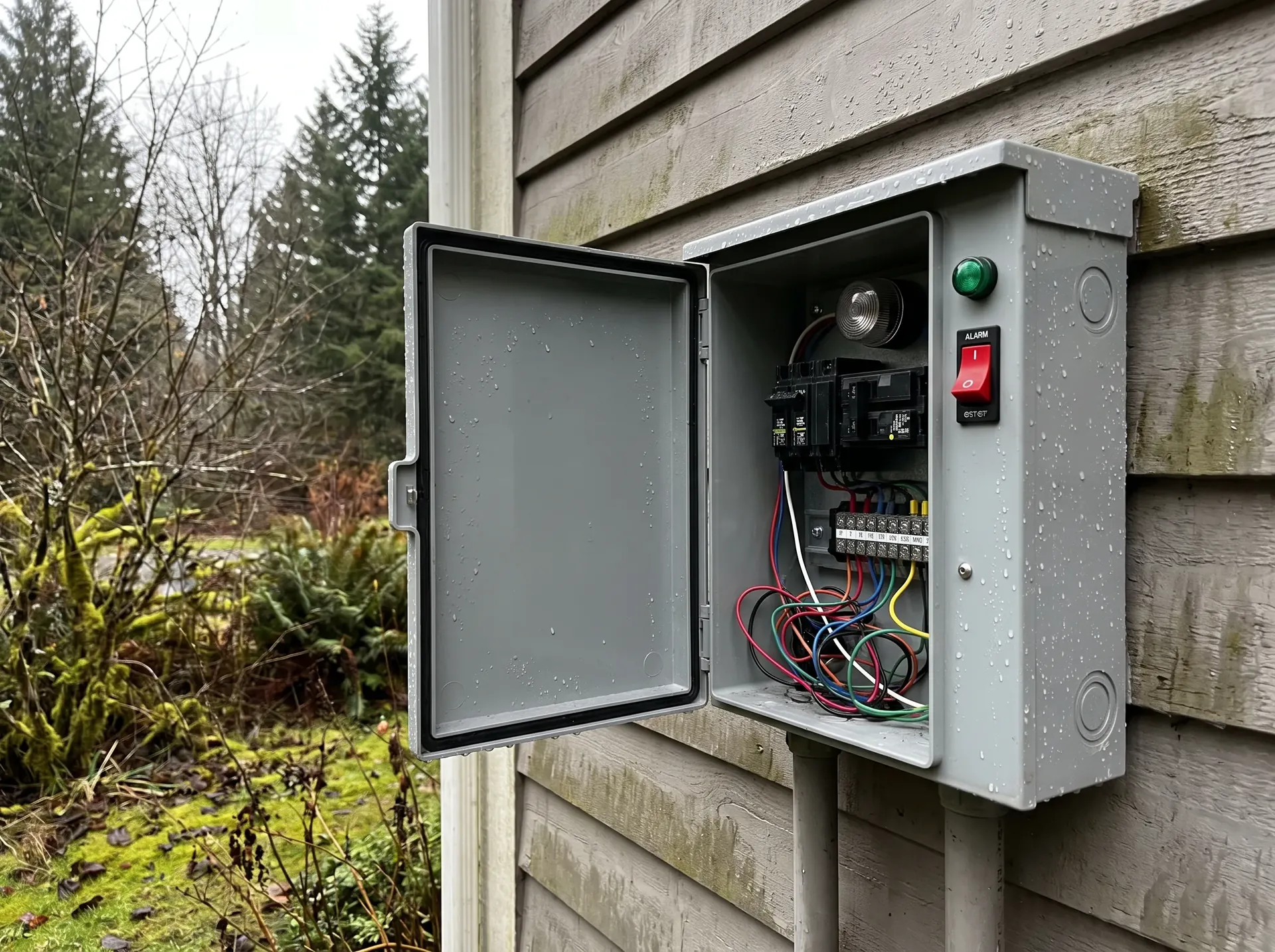
If you are not sure what type of system you have, the as-built will tell you, and our records guide covers how to find it. Failing that, the presence of an alarm panel on the outside of the house is a strong clue.
Some areas carry enhanced requirements beyond the baseline.
To be verified before launch. Confirm whether Whatcom County designates any areas with enhanced requirements, where they are, and what the difference is. Do not name an area or a programme until confirmed.
What actually happens at an O and M inspection
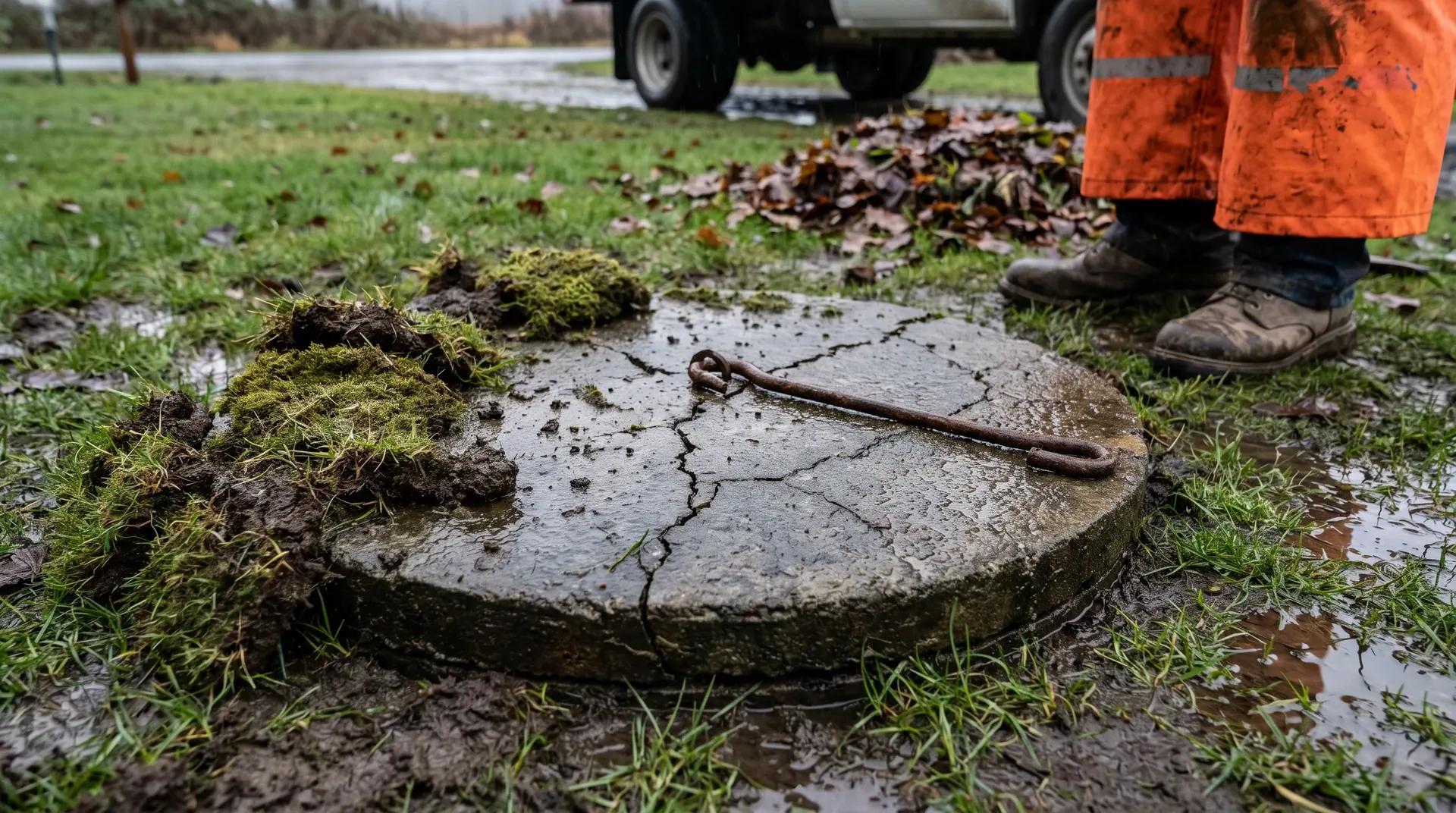
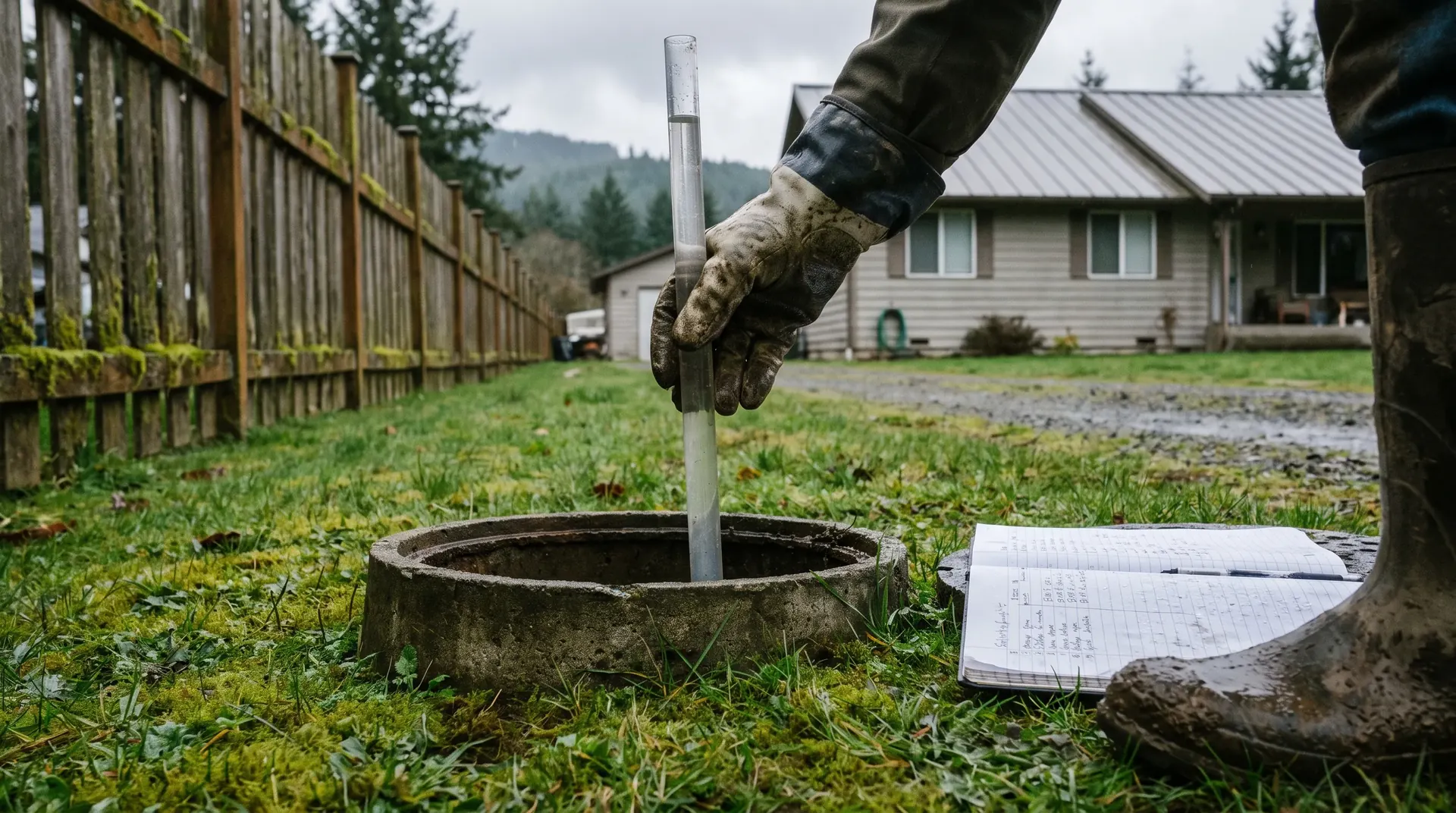
The tank. Levels measured, baffles and effluent filter checked, and pumping recommended if it is due.
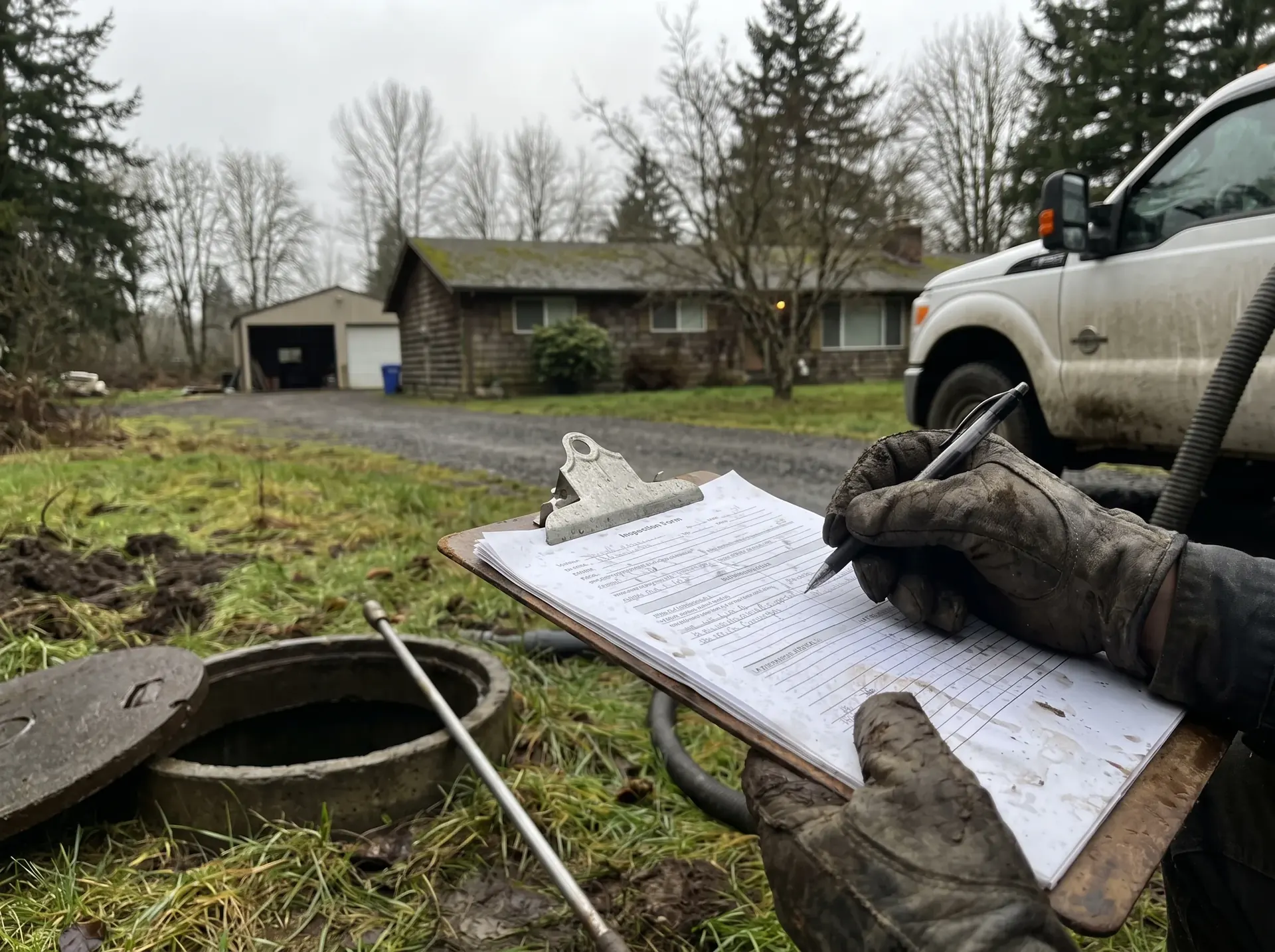
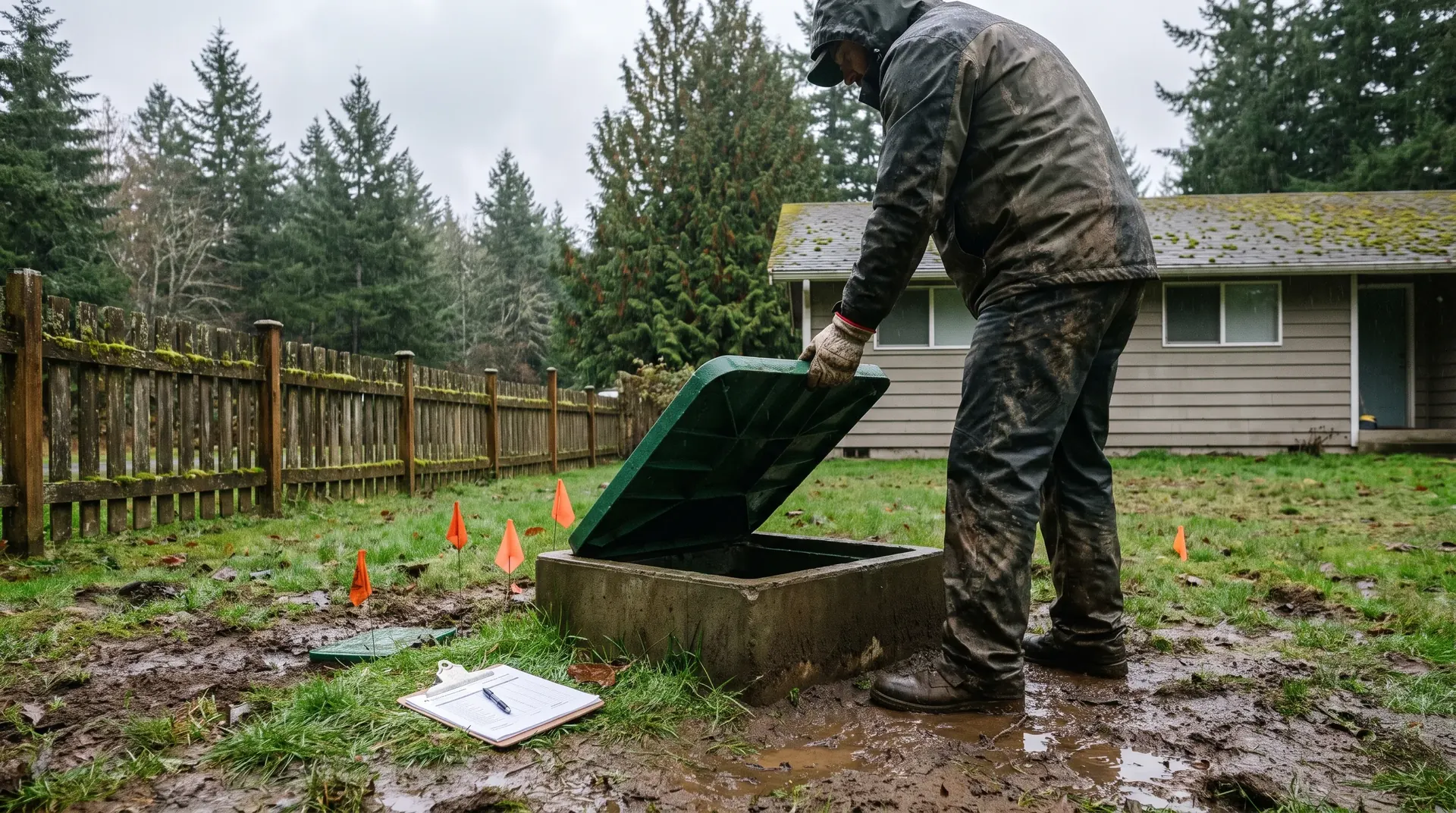
The components. On a pressurised system: pump operation, float settings and positions, alarm function, and the control panel. The alarm is deliberately triggered and cleared, because an untested alarm is not a warning system.
The distribution. Whether effluent is going where it should, evenly.
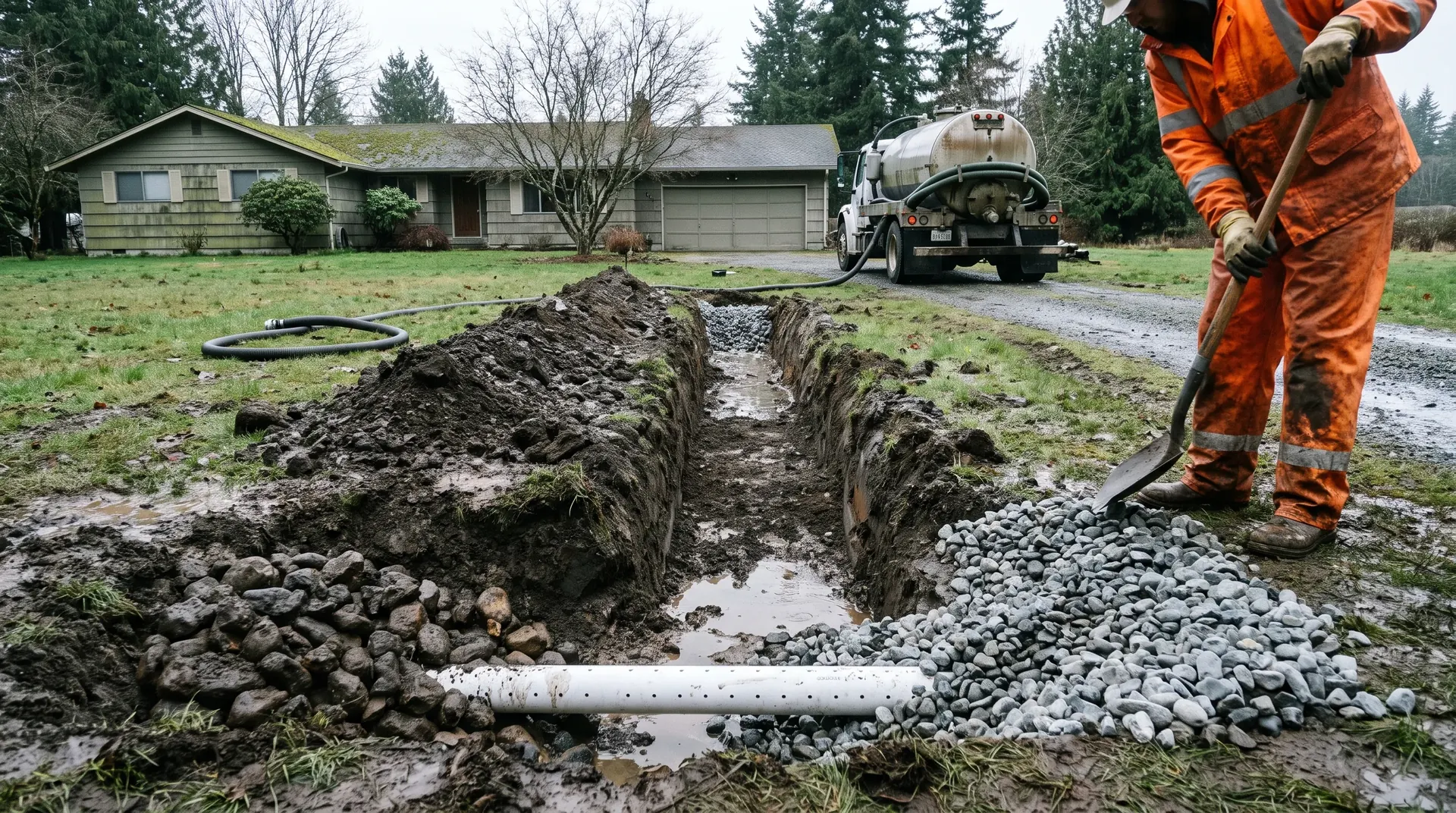
The field. Surface condition, evidence of surfacing or saturation, and whether anything has been built, parked or planted on it.
The report. Written up and submitted as required.
It is not an invasive process and on an accessible system it does not take long.
What happens if you do nothing
To be verified before launch. Insert the actual consequences and their order. Do not describe an enforcement process, a penalty or a timescale until confirmed with the county.
What is safe to say without verification: an outstanding requirement does not go away, it surfaces when the property is sold, and an unmonitored system that develops a fault can go on discharging inadequately treated effluent for a long time. In a county with private wells, salmon streams and shellfish beds, that is a real consequence rather than a paperwork one.
The practical point is that compliance is a short, inexpensive, scheduled job and non compliance eventually becomes an expensive, urgent one.
Getting it done
If you have had a letter, bring it with you to the conversation. It will say what is required and by when, which tells us what to schedule.
If you have a pressurised, mound or sand filter system and you have never had an O and M inspection, it is worth finding out whether you should have.
And if you are buying a property with one of these systems, ask to see the maintenance history. A well documented one is a good sign, and a complete absence of records is worth pricing in.
Our septic inspections page covers the inspection itself, and pump and alarm replacement covers what happens when an inspection finds a component at the end of its life.