If you are on septic in Whatcom County, there is a reasonable chance the county holds a drawing showing exactly where your tank and drain field are, and a decent chance nobody has ever looked for it.
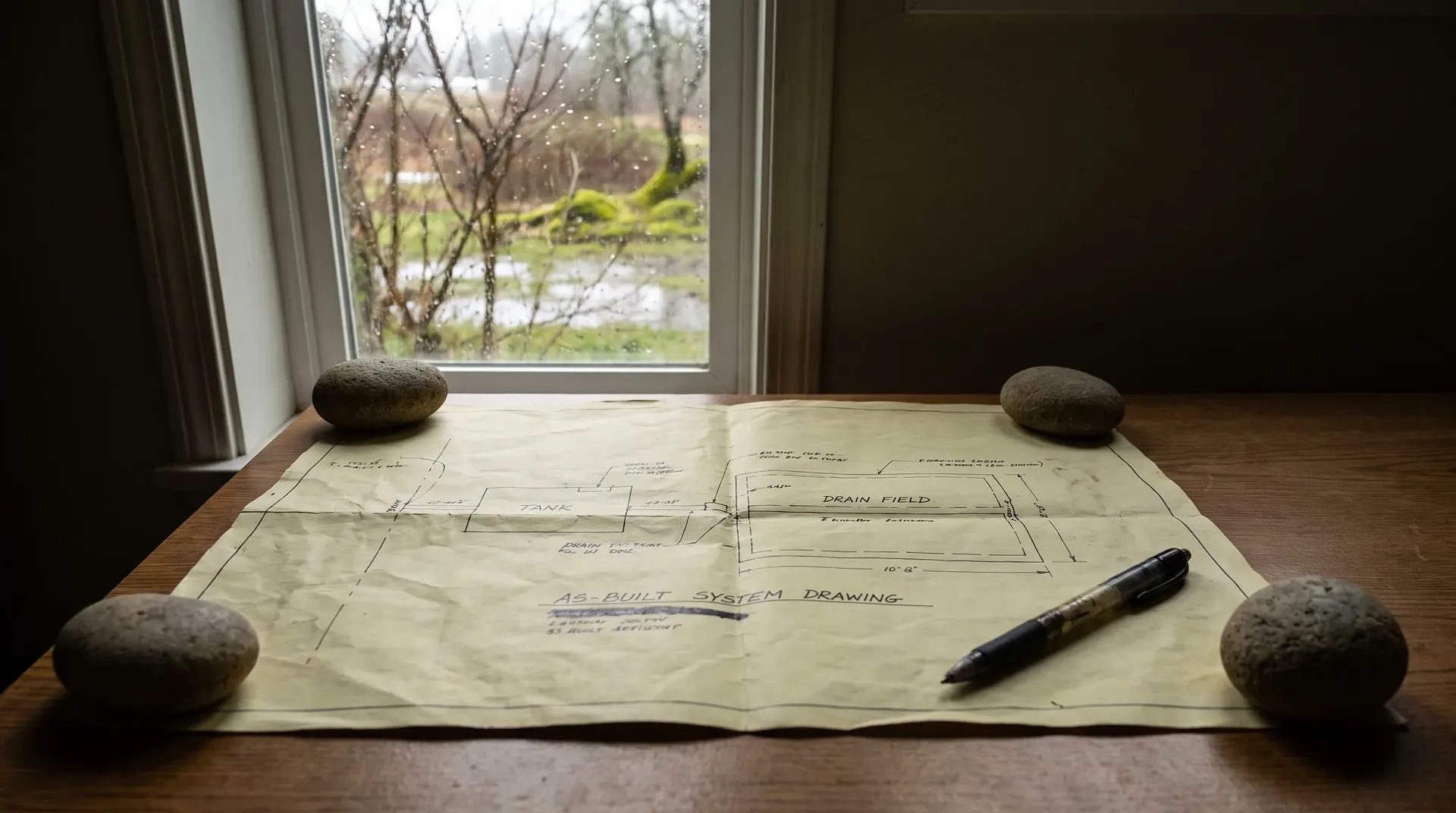
That drawing is called an as-built. It is the record of what was actually installed, and it is the single most useful piece of paper you can have as a septic owner. It saves money on every pump out, it makes an inspection quicker, and it removes a genuine obstacle when you sell.
Here is how to find yours, what it will and will not tell you, and what to do if there is nothing on file.
What the county actually holds
The as-built
A drawing showing the tank location, the drain field layout and the system type, tied to measurements from fixed points on the property. This is the one you want.
The permit record
The original installation permit and the approvals that went with it. Confirms the system was permitted, when, and what it was approved for, including the bedroom count it was sized for.
Maintenance and inspection history
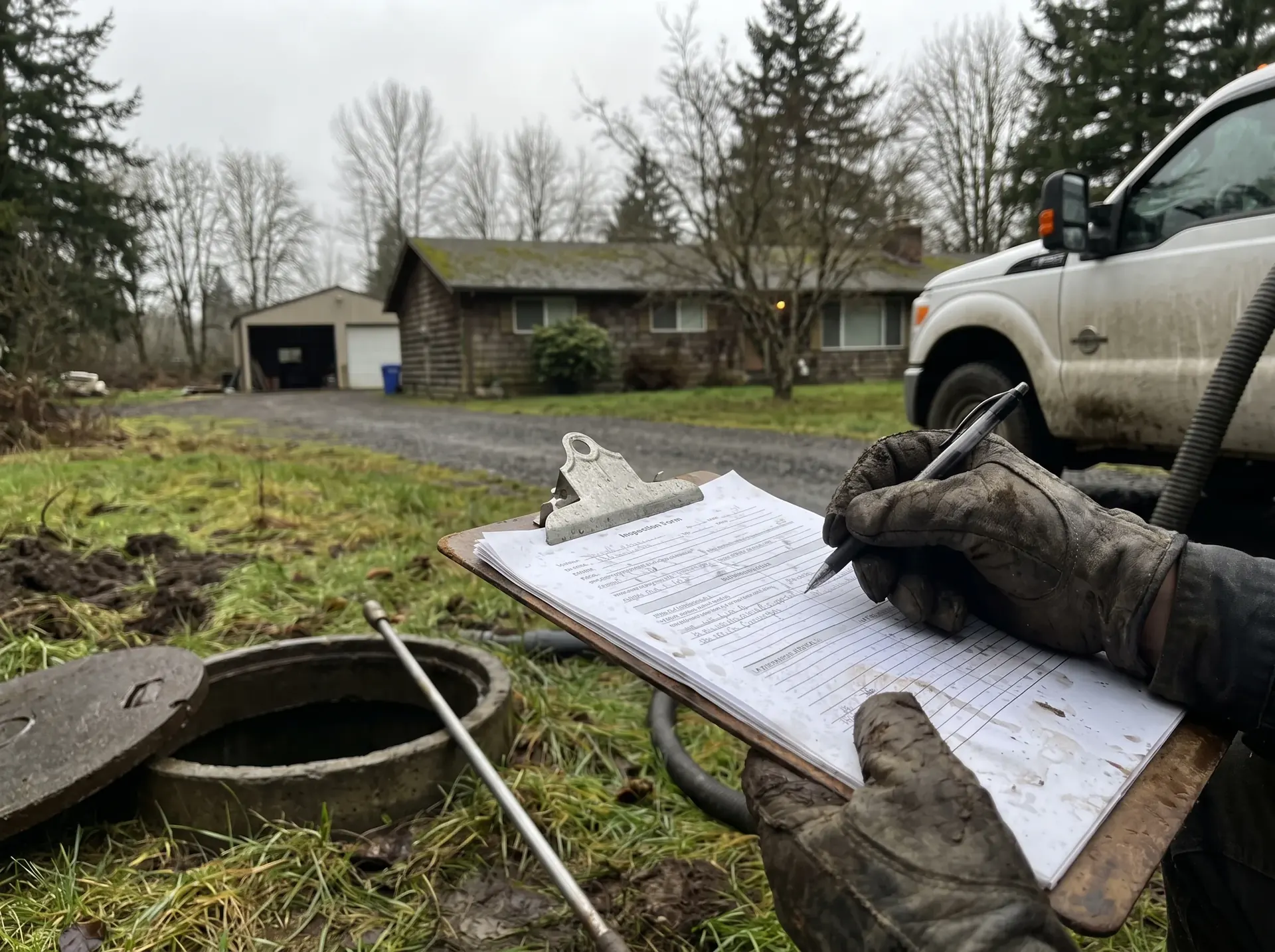
Reports from pumping, inspections and any operation and maintenance activity that has been submitted over the years. How complete this is varies enormously by property.
Repair and alteration records
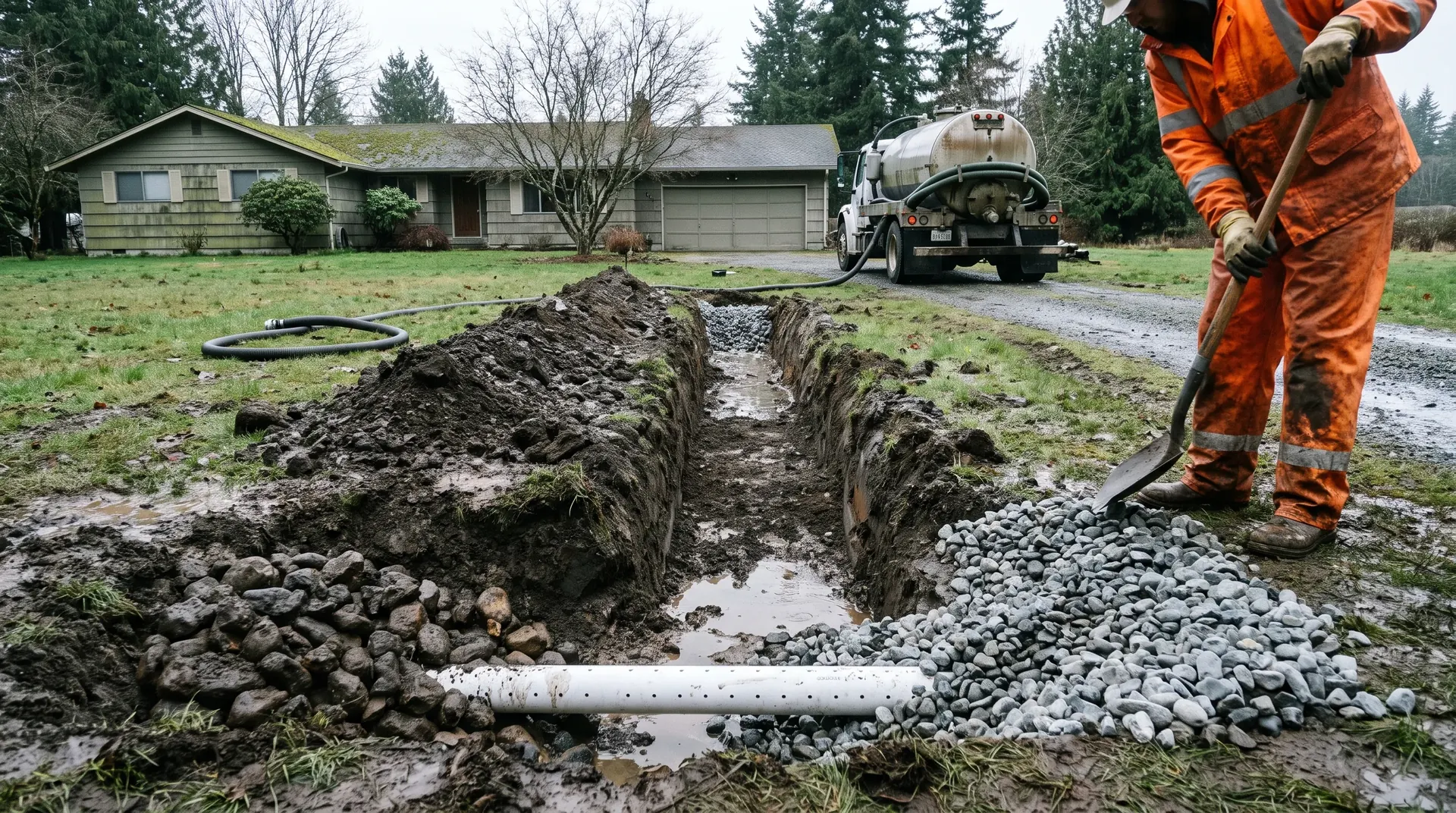
Anything permitted since the original install, such as a replacement drain field or a system upgrade.
To be verified before launch. Confirm which of these are actually held and publicly available in Whatcom County, and correct this list if it differs.
How to pull your own records
To be verified before launch. The step structure below is the right shape. The specifics must be confirmed at source, and these steps must not publish as though they were already real.
1. Get your parcel number
Records are usually filed against the parcel rather than the street address, and parcel number is the more reliable search key. Your property tax statement has it.
2. Search the county records
To be verified: insert the confirmed portal name and URL, and what you search by.
3. Request anything not available online
To be verified: insert the confirmed process for records not online, including the form, the request type, any fee, and the turnaround.
4. Save it somewhere you will find it again
Once you have the as-built, save a copy digitally and put a printed copy with the house paperwork. The next owner will thank you, and so will whoever pumps the tank next.
What the drawing is telling you
An as-built is usually a simple sketch rather than a precision survey, and it locates things by measurement from fixed reference points: a house corner, a well casing, a power pole.
Three things to look for.
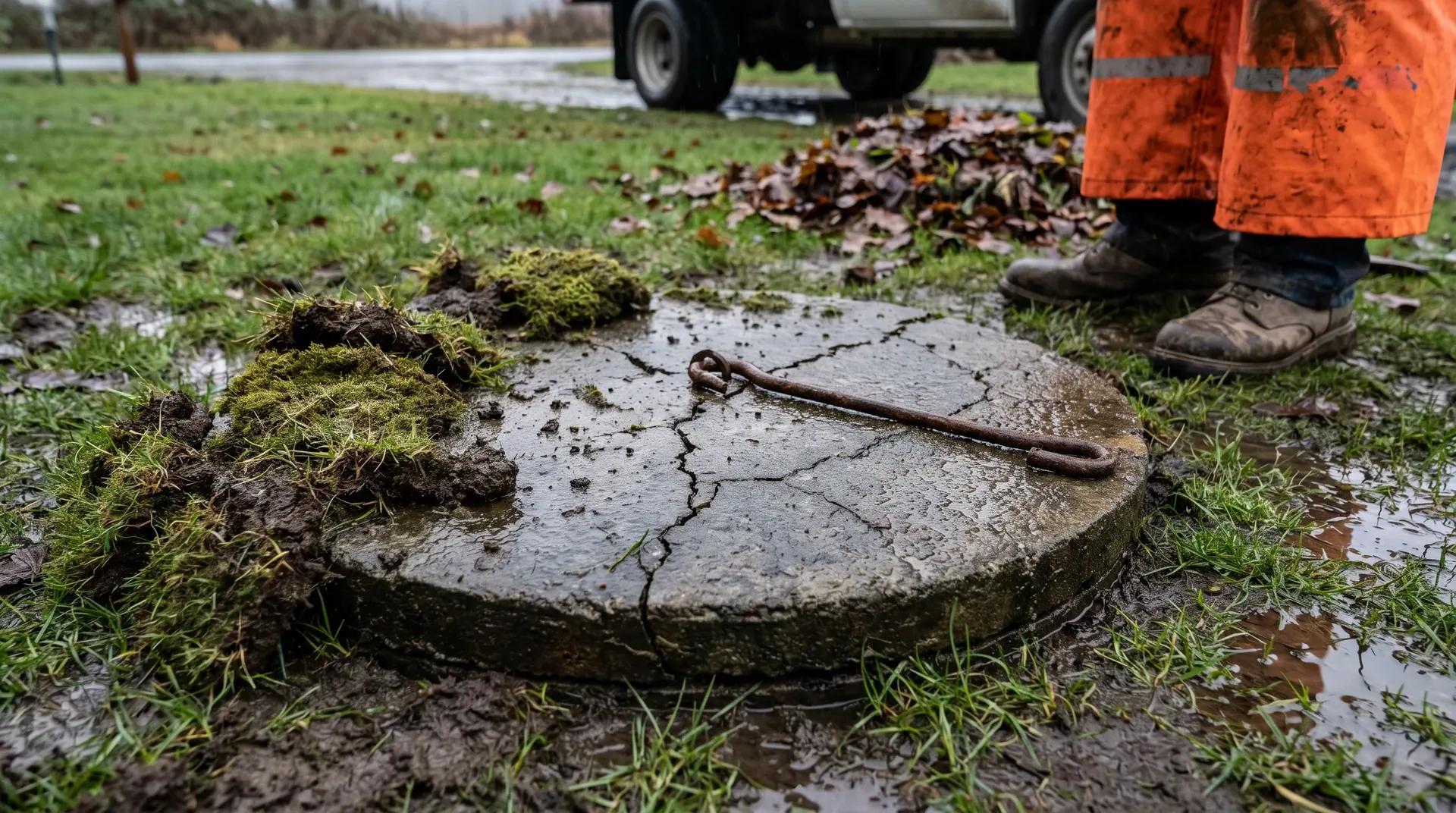
Where the tank is. Usually shown as a rectangle with dimensions taken from two fixed points, so you can measure it out yourself with a tape.
Where the drain field is. Shown as a series of parallel lines. This is the area you must not build on, park on or plant trees over, and knowing where it is prevents expensive mistakes.
What the system is. Conventional gravity, pressure distribution, sand filter or mound. This determines whether your system has a pump and alarm, and therefore what maintenance it needs.
Bear in mind that an as-built shows what was installed then, not what is there now. Systems get repaired, extended and replaced, sometimes without a record. Treat it as a very good starting point rather than a guarantee.
What if there is nothing on file
It happens, particularly on older rural properties and on systems that went in before permitting was applied consistently.
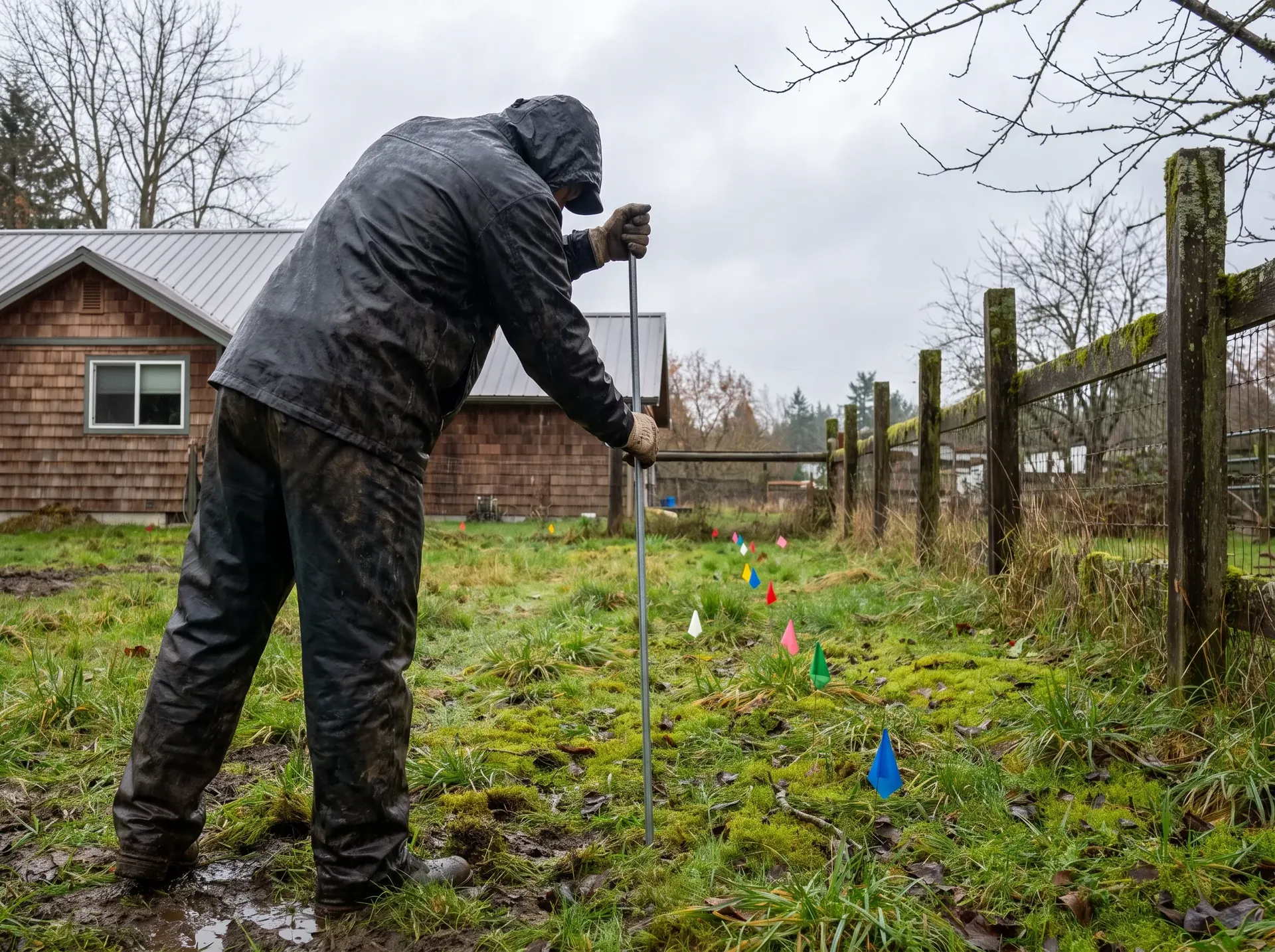
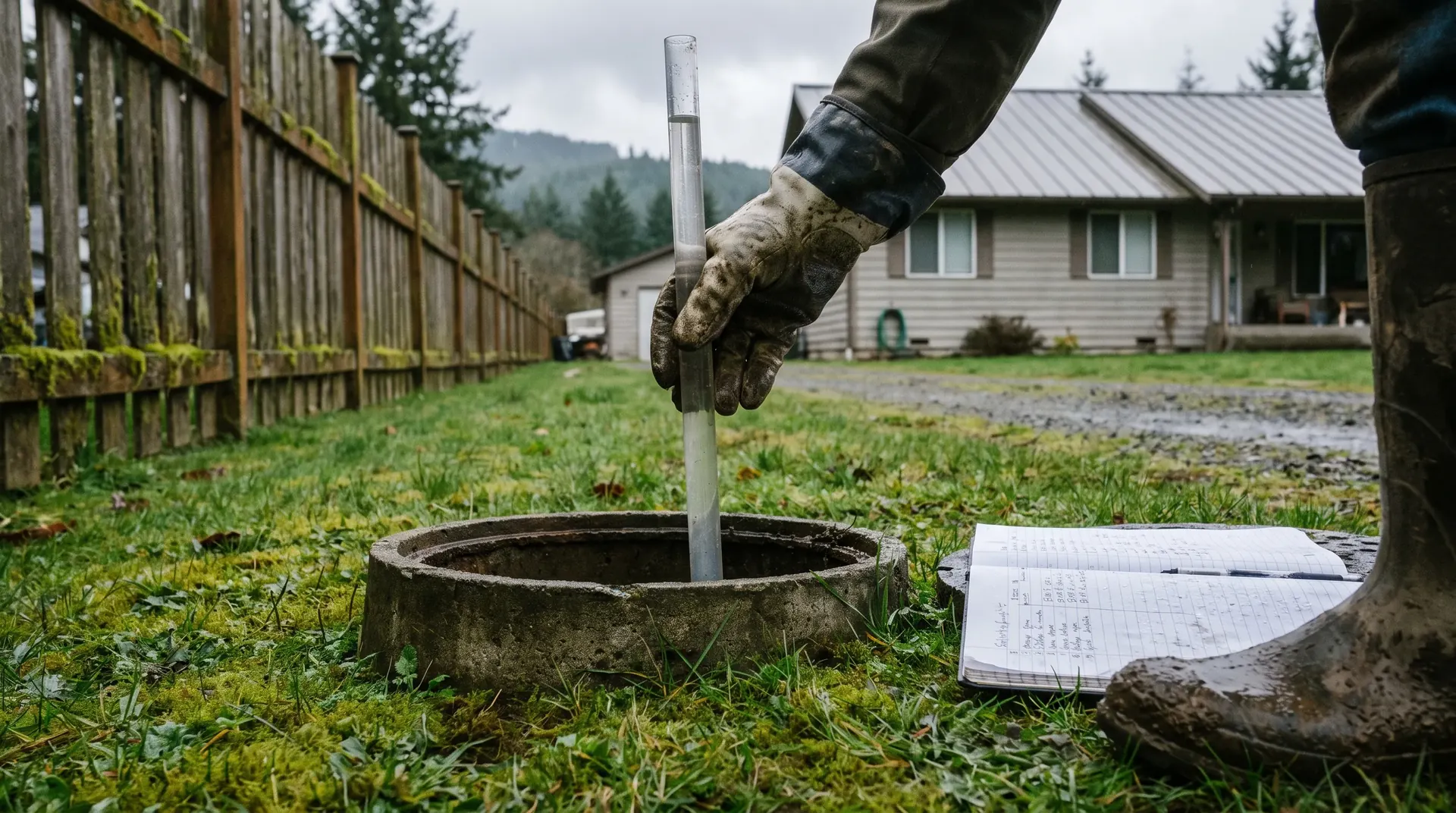
It does not automatically mean the system is illegal or that you have a problem. It means the location has to be established physically instead, by probing outward from where the drain leaves the house.
It does become a complication when you sell, because a buyer, a lender and the county all prefer documentation to a verbal assurance. If you know you will sell in the next few years and you have no records, sorting that out early is far less stressful than doing it against a closing date.
We locate systems on properties with no records regularly. It is routine work rather than a crisis.
When to get us involved
Call us if the records search comes up empty and you need the system located, if you have an as-built but the measurements do not lead anywhere, or if you are heading into a sale and want the whole thing documented properly before it becomes urgent.
We search the records as part of a locating job anyway, so if you would rather not do it yourself, that is fine too. If a sale is what is driving this, our septic inspections page covers what a transfer inspection involves.