Septic systems rarely fail without warning. They fail after months of small signals that were easy to explain away, and the difference between a cheap fix and an expensive one is usually how early somebody paid attention.
Here is what to watch for, roughly in the order it tends to appear, and what each symptom actually means.
The signs that show up first
Drains getting slower across the whole house
One slow fixture is a plumbing problem. Every drain in the house getting sluggish is a septic problem, because the common factor is what they all drain into.
Gurgling
Air displacing awkwardly because liquid is not moving away as freely as it should. Often the earliest signal of all, and the easiest to ignore.
Toilets that flush weakly or need a second flush
Same cause. The system is not accepting flow as quickly as it used to.
Smells indoors near drains
Usually a venting or trap issue rather than the tank itself, and worth checking either way.
The signs that mean act now
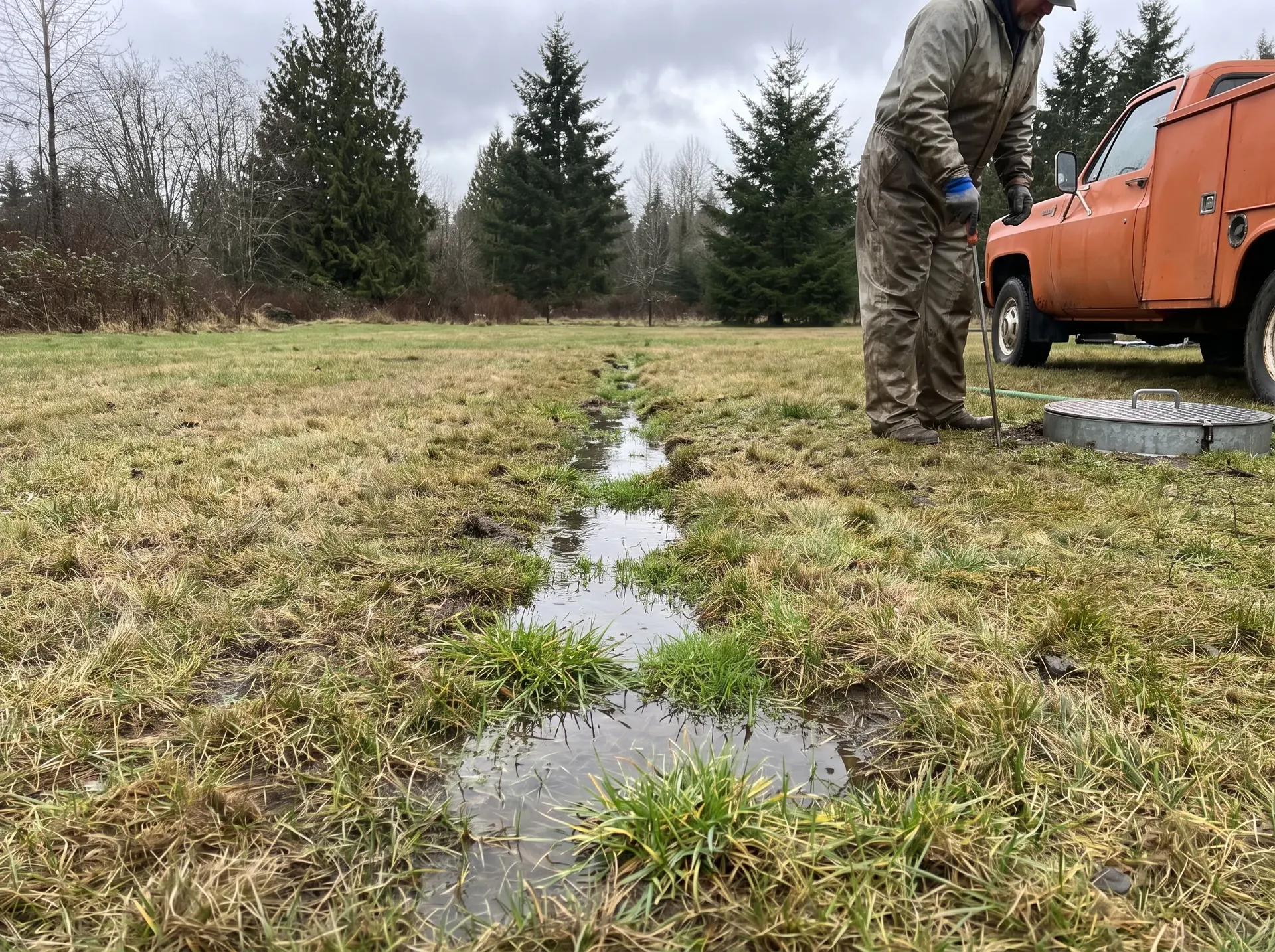
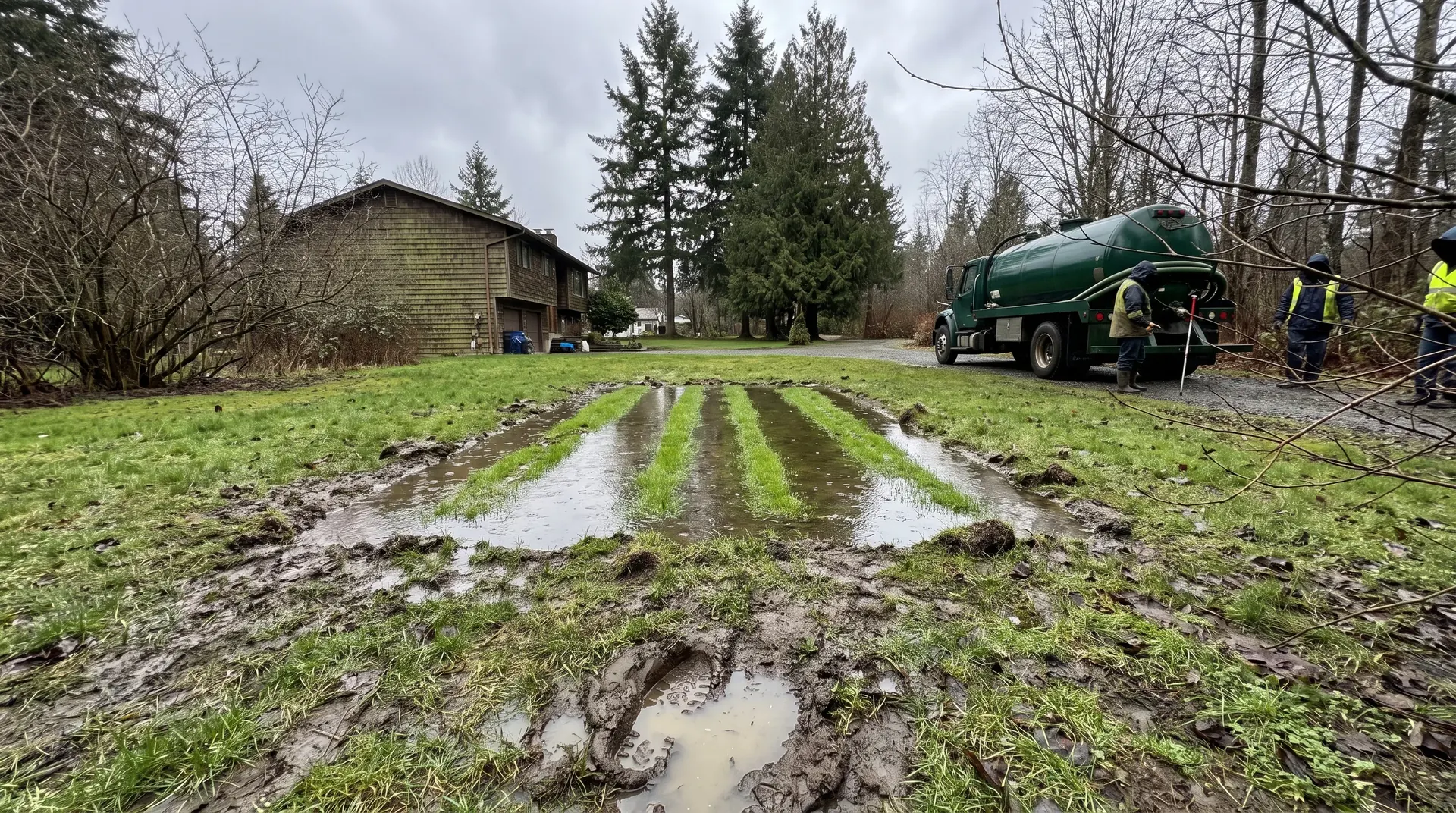
Soggy ground or standing water over the drain field
Effluent is not soaking away. In this county, timing matters enormously: if this appears only in the wet months it may be groundwater rather than failure, and our drain field page covers how that gets distinguished.
Grass over the field that is greener and growing faster
Effluent is fertilising the surface, which means it is reaching much closer to the top than it should.
Smells outdoors around the tank or field
Effluent at or near the surface. Not an emergency on its own, and it is not going to improve by itself.
The alarm is sounding
On a pressurised, mound or sand filter system, this means liquid has risen past the alarm float. Check the pump breaker, then call the same day. Do not just silence it.
Sewage backing up indoors or surfacing outside
Emergency. Stop using water and call.
What is usually behind it
Most people assume the worst symptom means the worst cause. Usually it does not.
An overdue tank is the most common cause of every symptom on this page. Solids build up, the tank stops separating properly, and the whole system starts behaving badly. This is the cheapest possible answer.
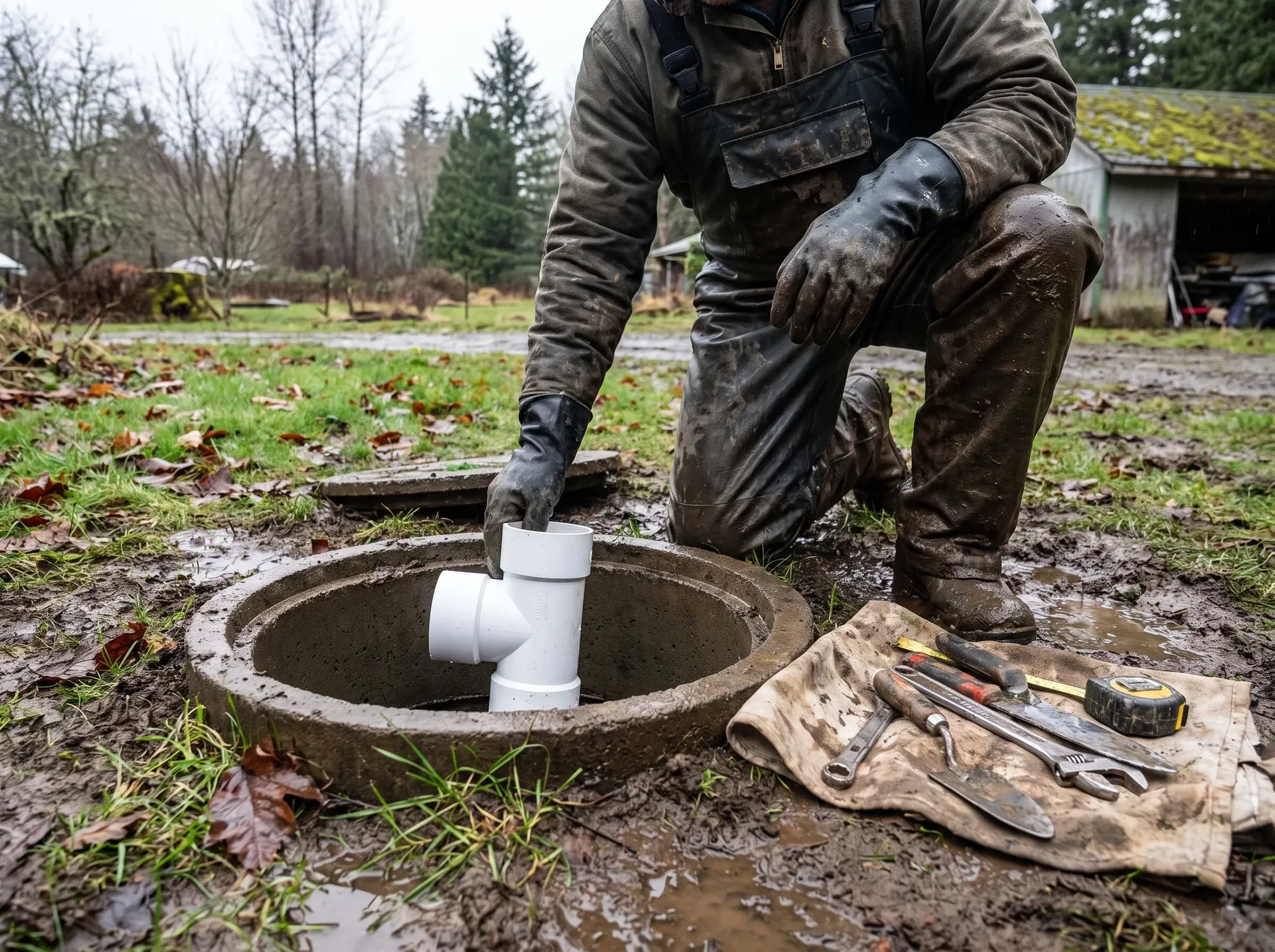
A blocked effluent filter produces dramatic symptoms for a very small cost. It is the first thing worth checking on any system that has one.
A failed pump or stuck float on a pressurised system stops effluent moving at all. Cheap to fix, alarming while it is happening.
Roots in lines and tank components, particularly on wooded lots around Bellingham and Sudden Valley.
Groundwater overwhelming a field that would otherwise cope. Seasonal, specific to wet ground, and it is why we always ask when the symptoms started.
A genuinely failed drain field, where soil has been clogged by years of solids. This is the expensive one, and it is the least common of the six.
That order matters. A company that quotes a drain field replacement without ruling out the first five has not done the work.
What to do now
Call today if anything is surfacing, backing up, or the alarm is on.
Book this week if drains are slowing across the house, if there are smells outside, or if the grass over the field has changed.
Book a routine pump out if the only thing you have noticed is that you cannot remember when it was last done. That may well be the entire problem.
Whatever the symptom, tell us when it started and whether it tracks with rain. In Whatcom County that single detail narrows the diagnosis more than anything else you can tell us.
If you want us to work out which of the six causes you have, that is our septic system repair diagnosis visit. If something is surfacing right now, go to emergency septic service instead.