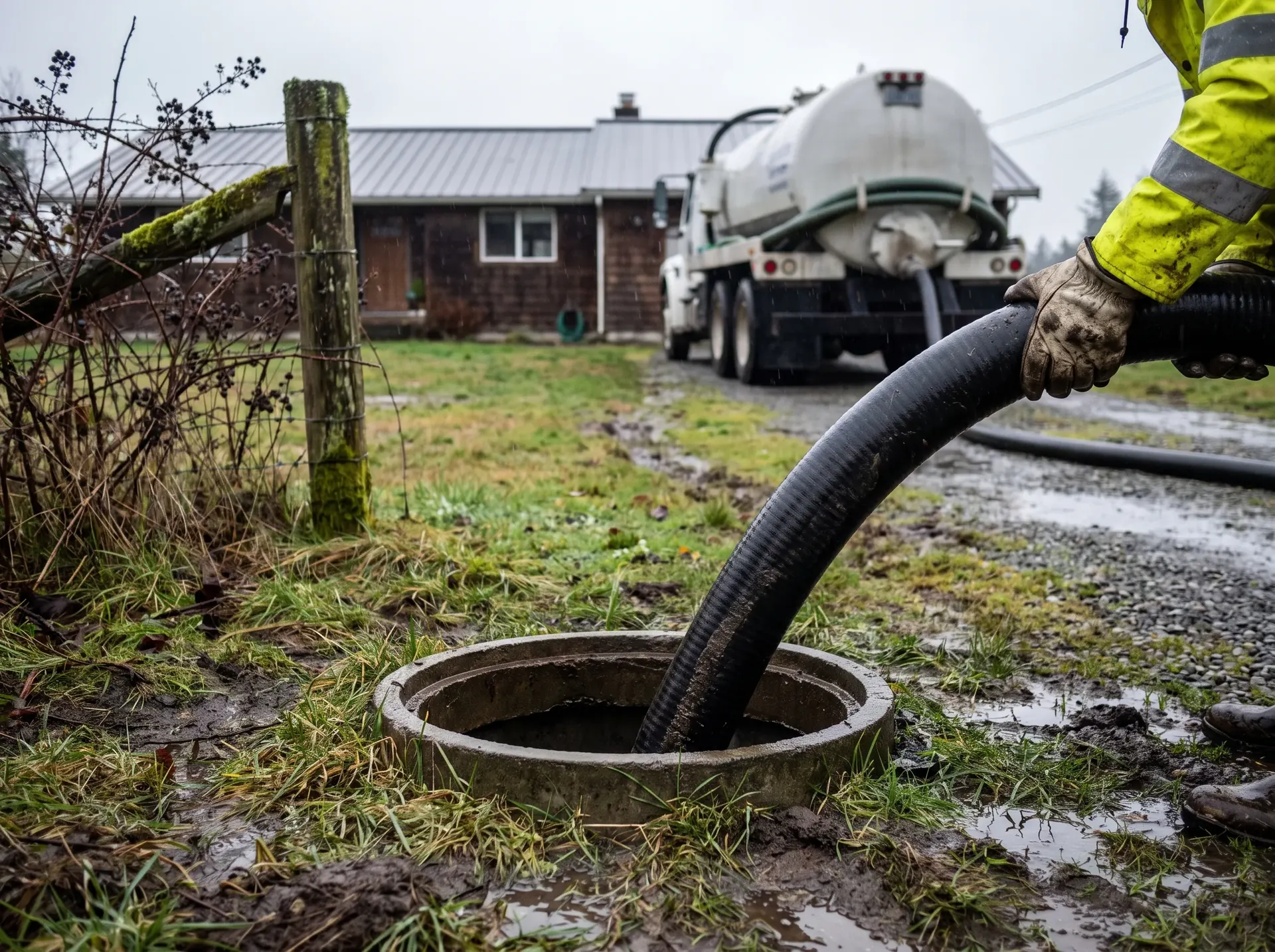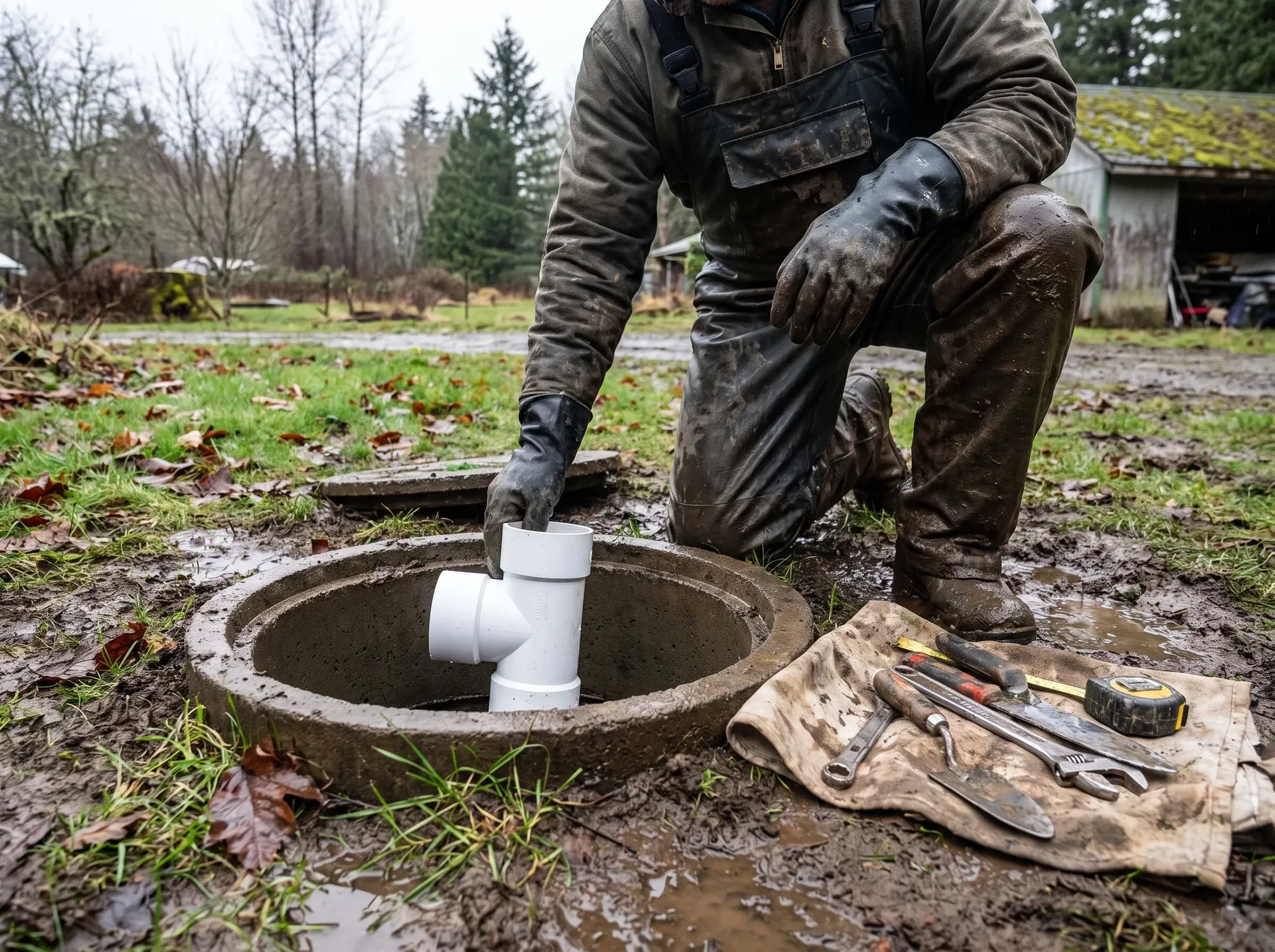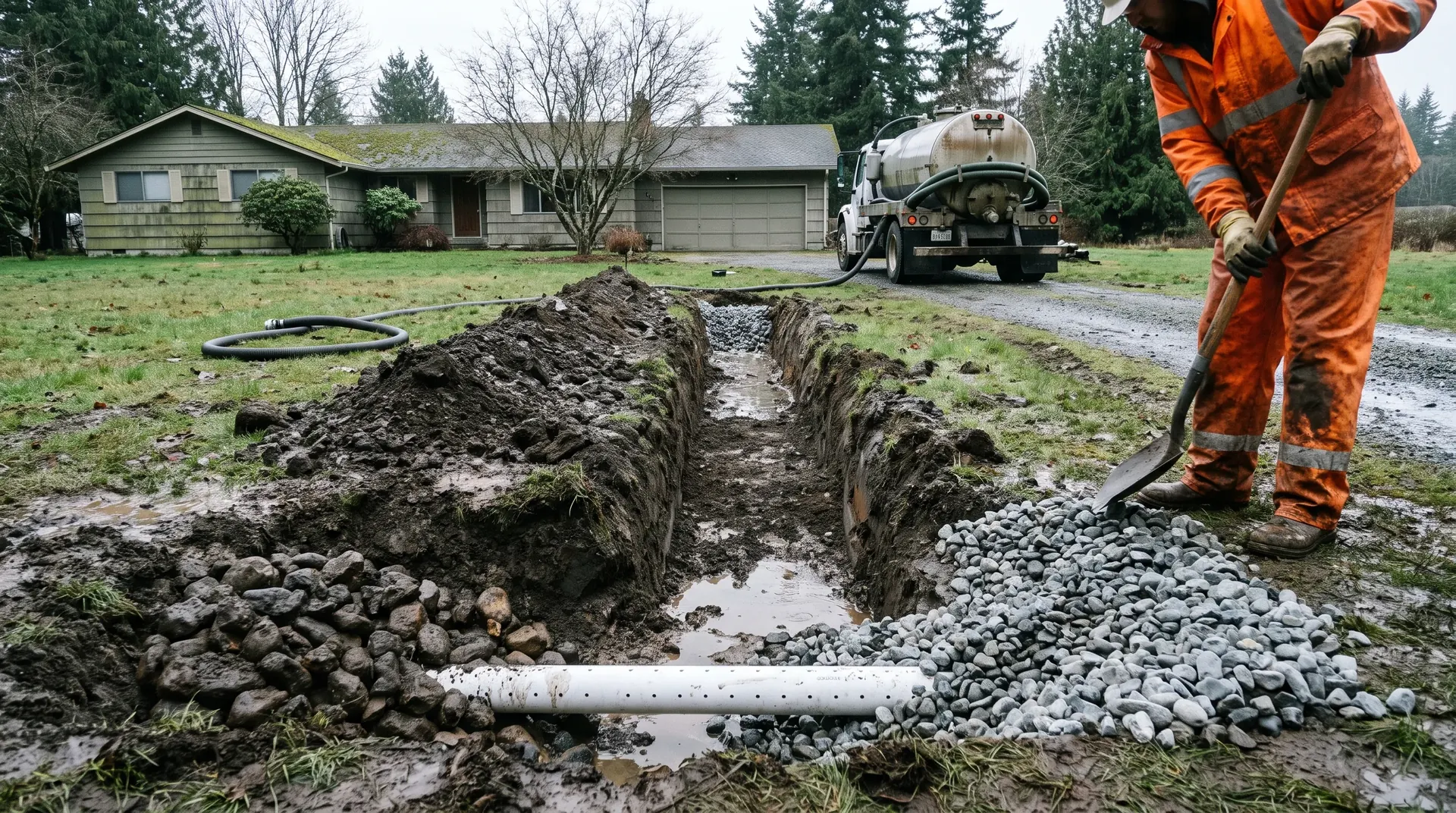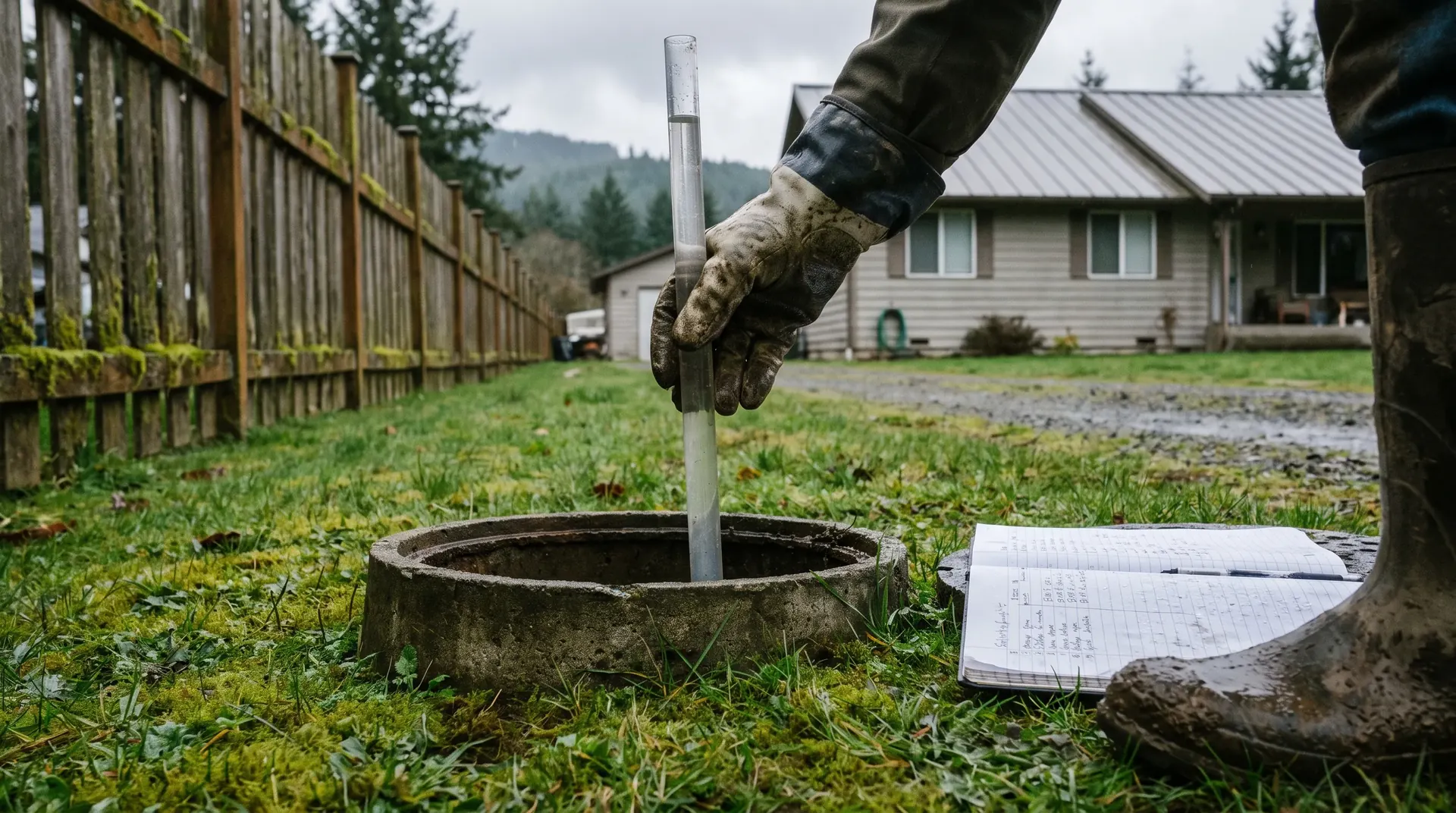
A septic tank works because bacteria break down organic material and because solids settle out instead of travelling to the drain field. Almost everything that harms a system does so by interfering with one of those two things.
That gives you a simple test. Will it break down, and will it settle or float harmlessly? If the answer to both is no, it does not belong in the system.
There is also a lot of folklore on this topic, some of it repeated confidently. Here is what actually matters and what does not.
The things that genuinely cause damage
Wipes, including flushable ones
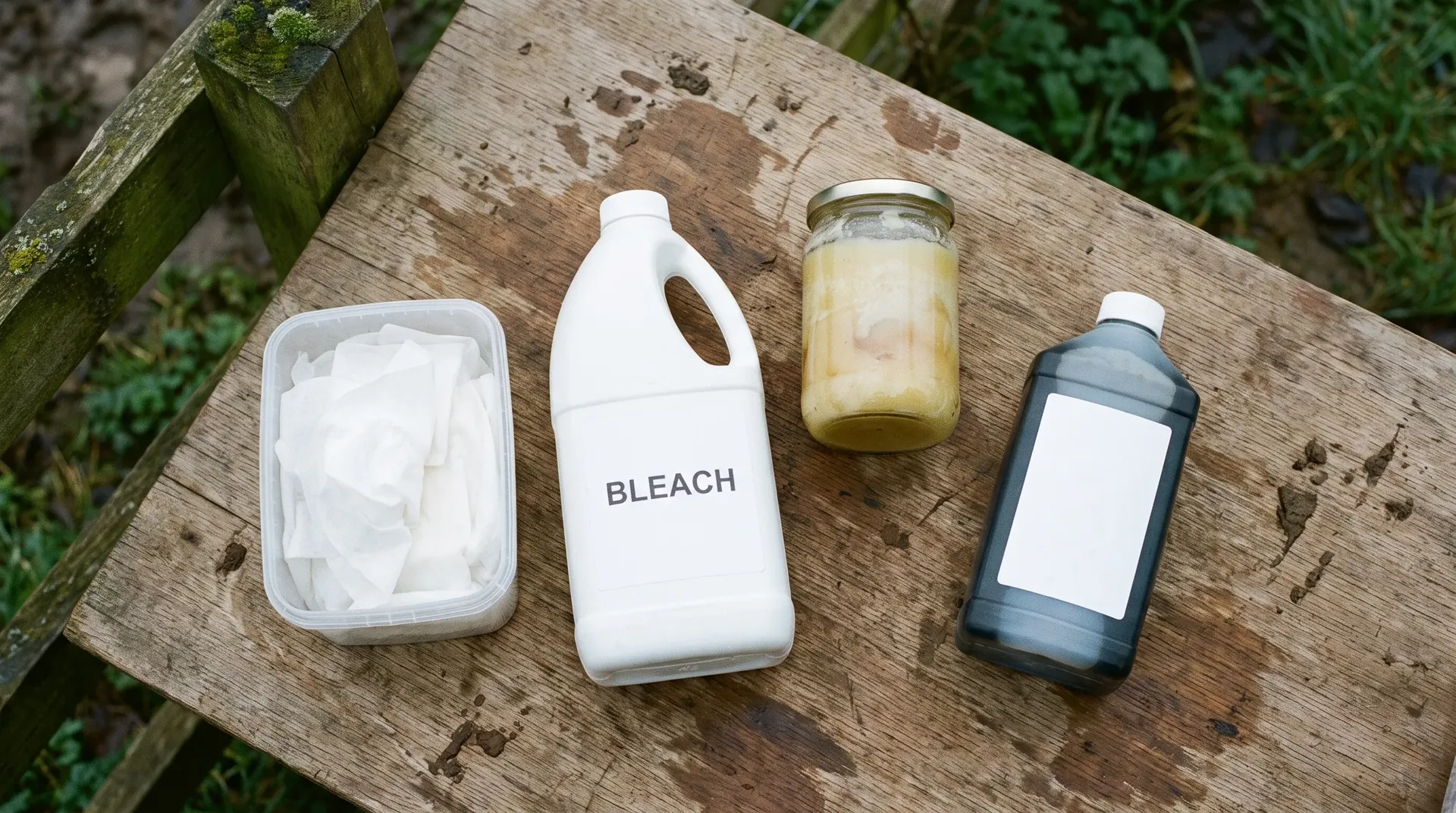
The worst offender by a clear margin, and it is not close. Wipes do not break down. They accumulate, they tangle, and they block pumps and filters. The word flushable on the packet describes what a toilet can move, not what a septic system can process. Nothing marketed as a flushable wipe should go into a septic tank.
Grease and cooking fat
Congeals, floats, thickens the scum layer, and eventually finds its way into the outlet. Scrape pans into the bin rather than rinsing them into the drain.
Anything else that does not break down
Sanitary products, cotton buds, dental floss, cat litter, paper towel and condoms. All of them stay in the tank until somebody pumps them out.
Heavy repeated use of bleach and antibacterial cleaner
Normal household cleaning is fine. What causes problems is a heavy, sustained volume of disinfectant, because the system runs on bacteria and disinfectant kills bacteria. Occasional bleach is not a crisis. Pouring it through daily is.
Paint, solvents, fuel and pesticide
Never. These kill the biology outright and contaminate groundwater, which in a county with private wells and shellfish beds is a serious matter rather than a technicality.
Garbage disposals used heavily
Not banned, and they meaningfully increase the solid load. Systems serving a heavily used disposal need pumping noticeably more often.
The things people worry about that mostly do not matter
Dish soap
Ordinary dish soap in ordinary quantities is fine. It is a mild surfactant, it is used in small volumes, and it is diluted heavily. This question comes up constantly and the honest answer is that it is not a problem.
Vinegar and baking soda
Fine, and used in the quantities people actually use for cleaning, they have essentially no effect on the tank one way or the other. They will not damage the system and they will not improve it.
Laundry detergent
Fine in normal use. What matters more is timing than product: spreading loads across the week rather than running six on a Saturday, because a large surge stirs settled solids toward the outlet.
Toilet paper
Ordinary toilet paper breaks down fine. Septic safe branded paper is not necessary, though very thick quilted paper takes longer. This is a much smaller factor than the internet suggests.
The additive question, answered plainly
This comes up more than anything else, so it deserves a direct answer.
Additives do not remove the solids that pumping exists to remove. A tank accumulates an inorganic component that nothing digests, and no product changes that. It has to be physically taken out.
A healthy septic tank already contains the bacteria it needs, continuously replenished. It does not need seeding under normal conditions.
Additives are not usually harmful. The problem is what people do with the belief: they buy the product and skip the pump out, which is the single most expensive substitution available in septic ownership.
We do not sell additives and we have no interest in whether you use one. What we would say is that money spent on additives instead of pumping is money spent buying a drain field replacement on instalments.
If something has already gone down
If wipes have been going down for years, they are still in the tank and they are worth pumping out before they reach the filter or the pump.
If a large volume of chemical has gone in, tell us. It is worth an assessment rather than waiting to see.
And if drains have started slowing, it does not matter much what caused it. The diagnosis is the same visit either way.
A pump out will show you exactly what has accumulated, and septic system repair covers what happens if something has already blocked.