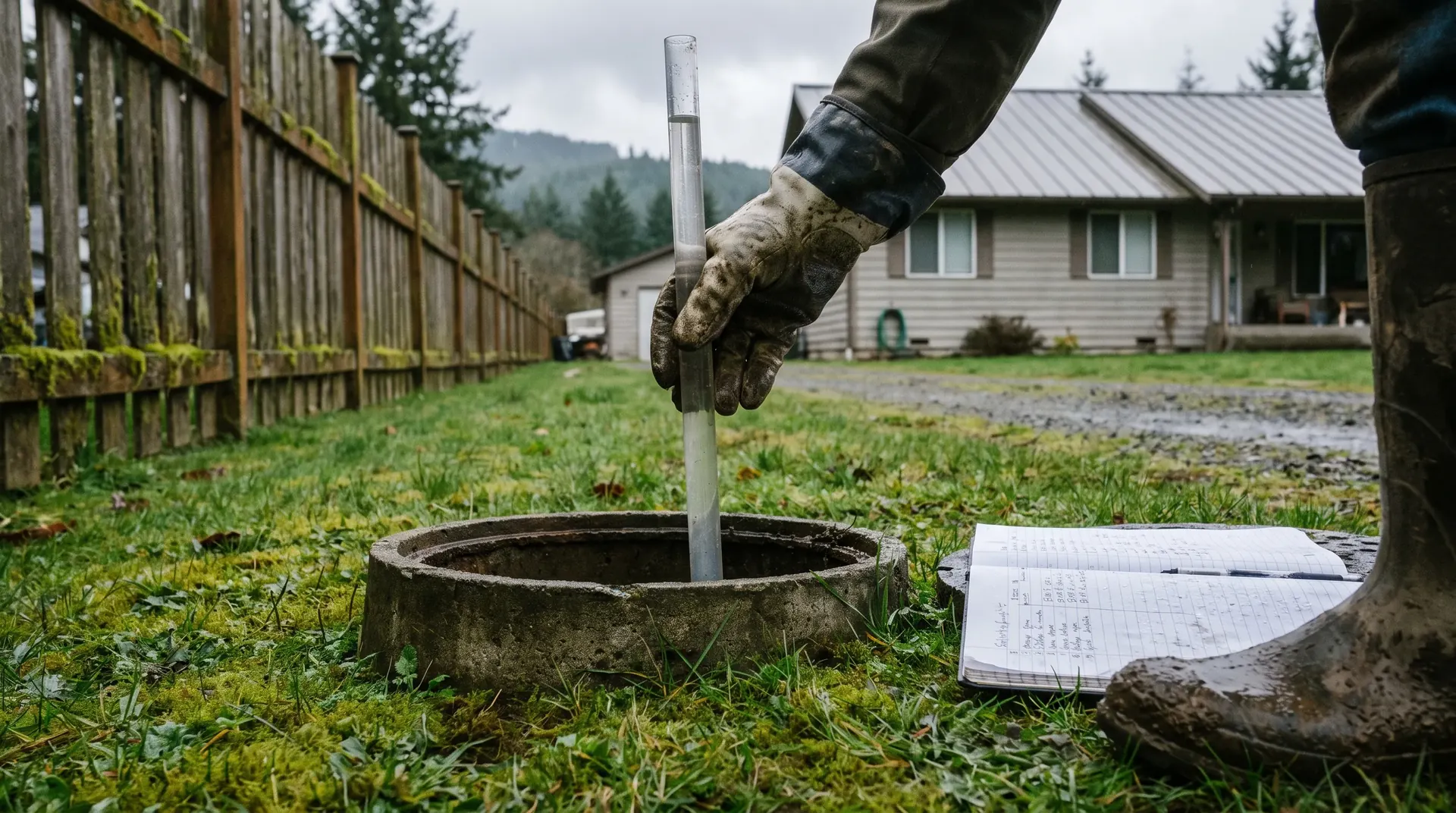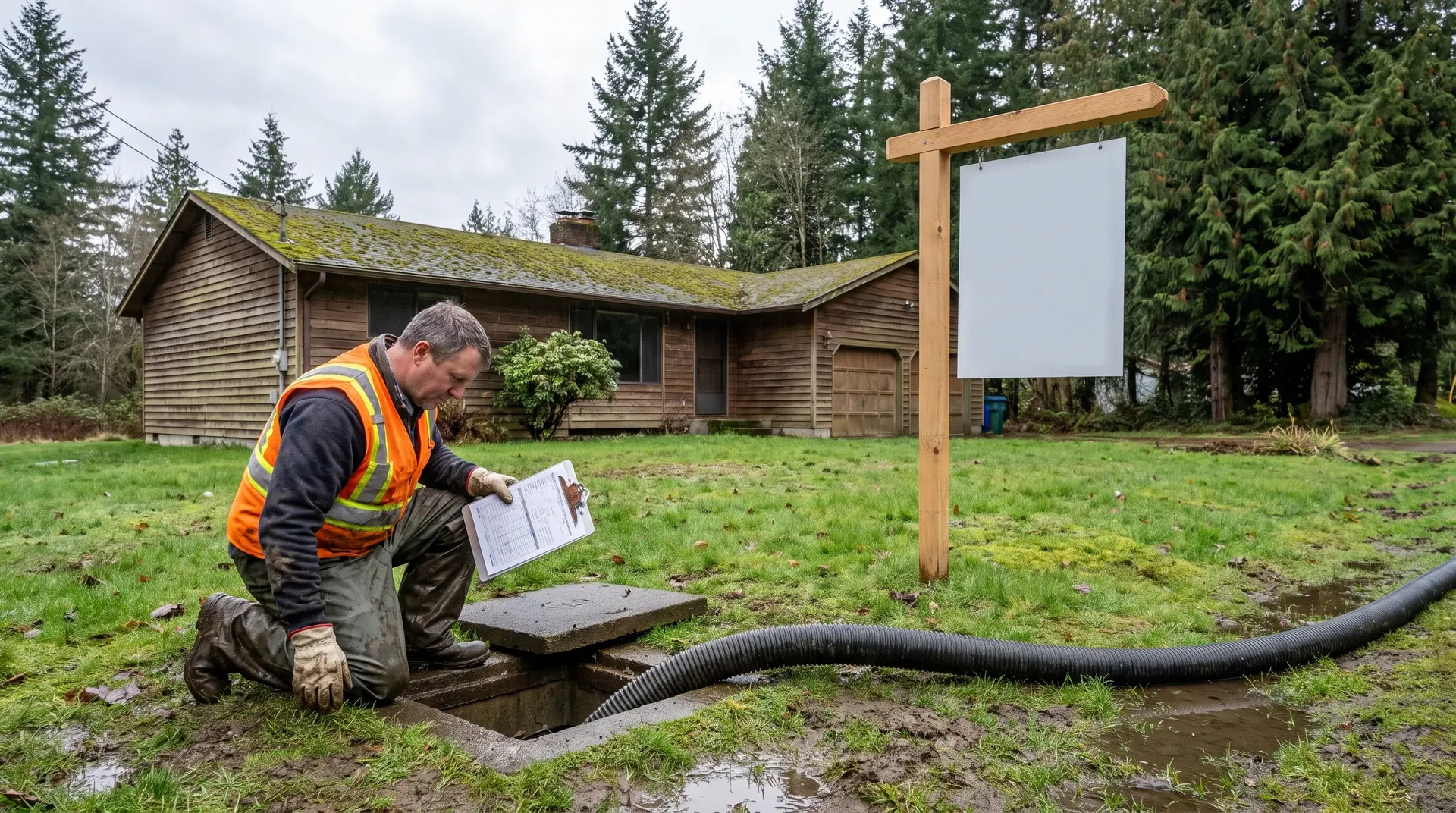
If you are selling a property on an onsite septic system in Washington, the system has to be inspected as part of the transfer. It is a standard item, it is not optional, and it is one of the most common reasons a rural sale runs late.
The good news is that it is entirely predictable, which means it is entirely plannable. Almost every septic problem in a property sale comes from leaving it too late rather than from the inspection itself.
Here is what is involved, what actually causes trouble, and when to start.
What the requirement actually is
To be verified before launch. The framing below is safe and correct in general terms. The precise wording, who may inspect, the validity window and the filing process must all come from the county and the state.
In broad terms, Washington treats an onsite sewage system as something that must be assessed and documented when a property changes hands, so that the buyer knows what they are taking on and the county knows the system is functioning.
Whatcom County administers its own onsite sewage programme, so the local process is what applies to your property rather than a generic state summary.
Two practical points hold regardless of the detail. The inspection has to be done by someone appropriately certified, not by a general home inspector. And there is a window: an inspection done too far ahead of closing may not be accepted.
What actually happens
The records check
The as-built and permit history are pulled, so the inspector knows what is supposed to be there. Missing records complicate the process without automatically failing it.
The tank
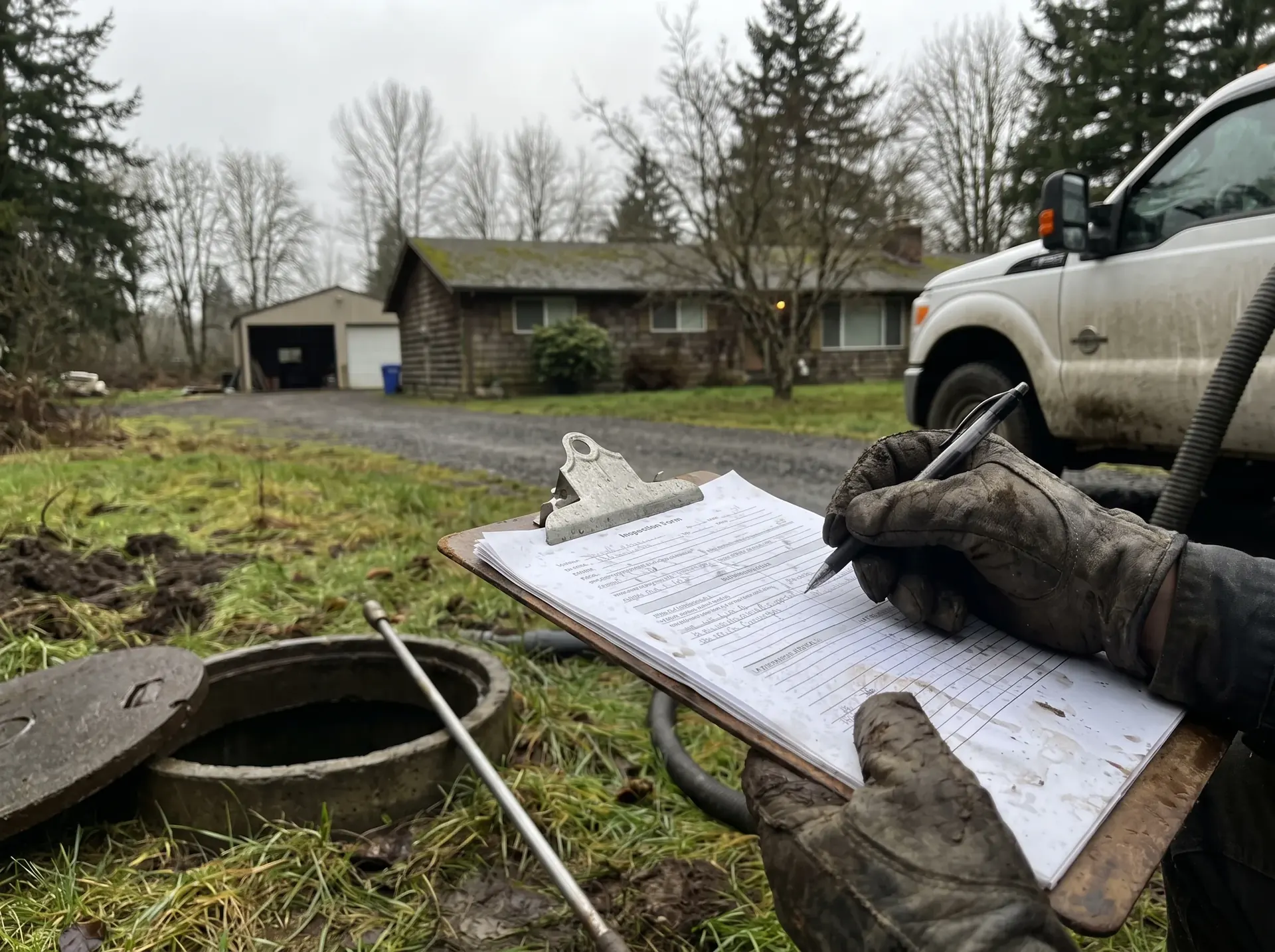
Located, opened, and normally pumped so the interior can actually be assessed. Baffles, tees, structural condition and levels are all checked. You cannot meaningfully assess a full tank.
The drain field
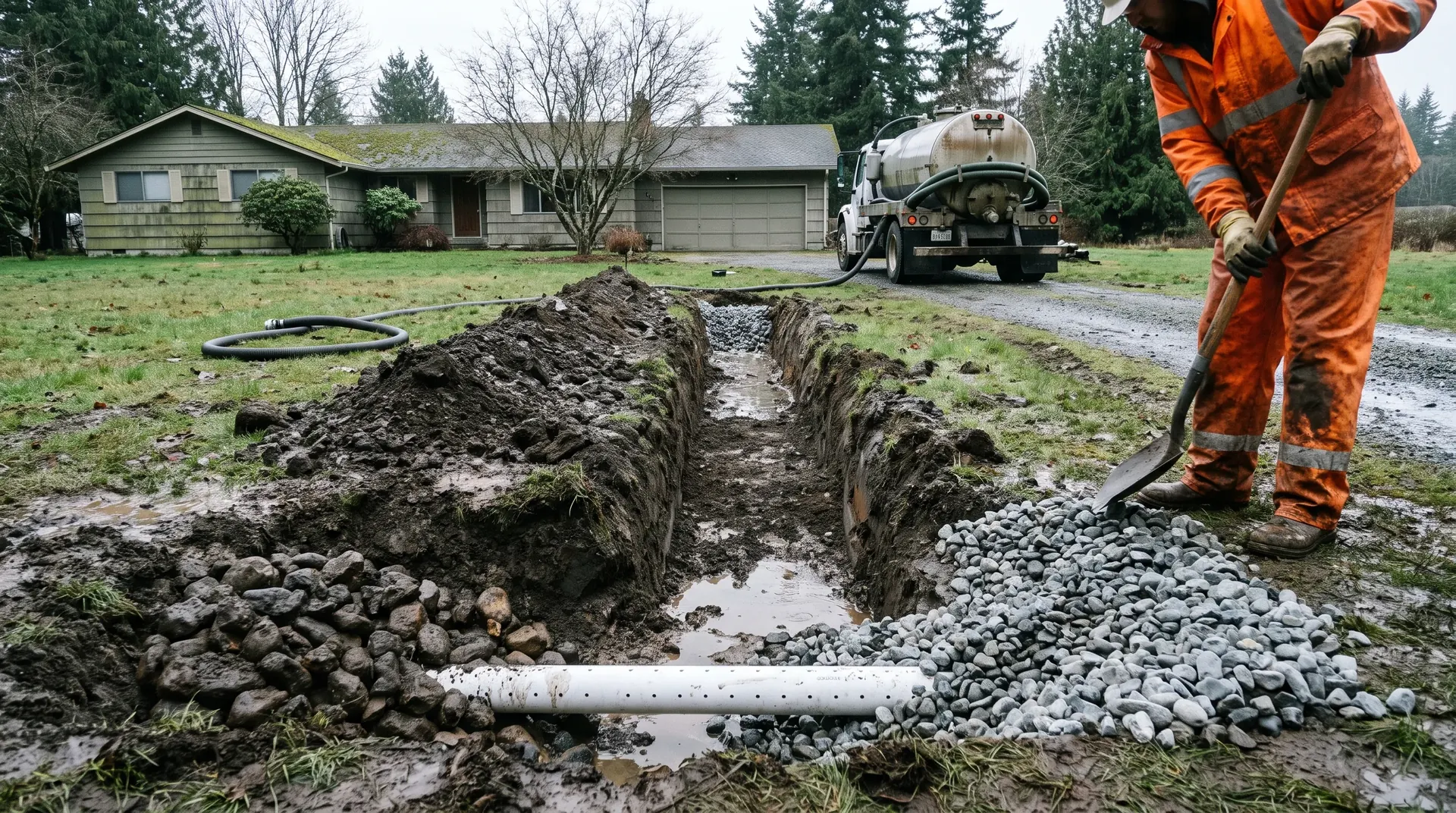
Ground condition, evidence of surfacing or saturation, and how the system accepts flow. This is what usually decides the outcome.
Components
On pressurised, mound and sand filter systems: pump, floats, alarm and controls all tested.
The report
Written up, and depending on the requirement, filed with the county as well as given to you and the buyer.
What actually causes a problem
A surfacing or saturated drain field
The most serious finding, and the one that costs the most to resolve. Worth knowing this is also where a winter inspection can mislead: on flat wet ground a field can look worse in February than it is.
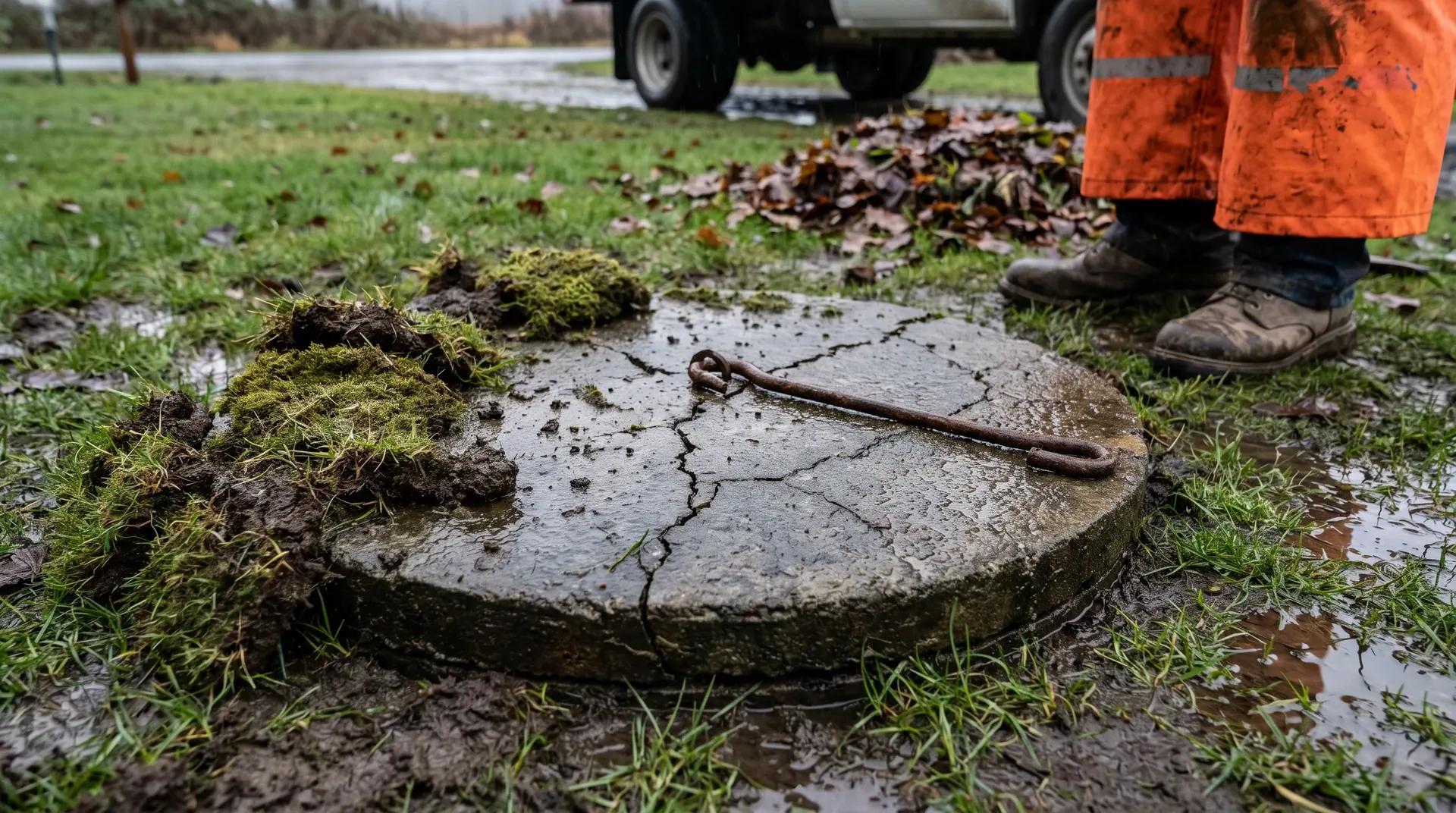
Structural failure in the tank
Cracks, collapse, or missing and broken baffles.
An undersized system
A system sized for fewer bedrooms than the house now has. Extensions cause this, and it is common on older rural property.
No records and no locatable system
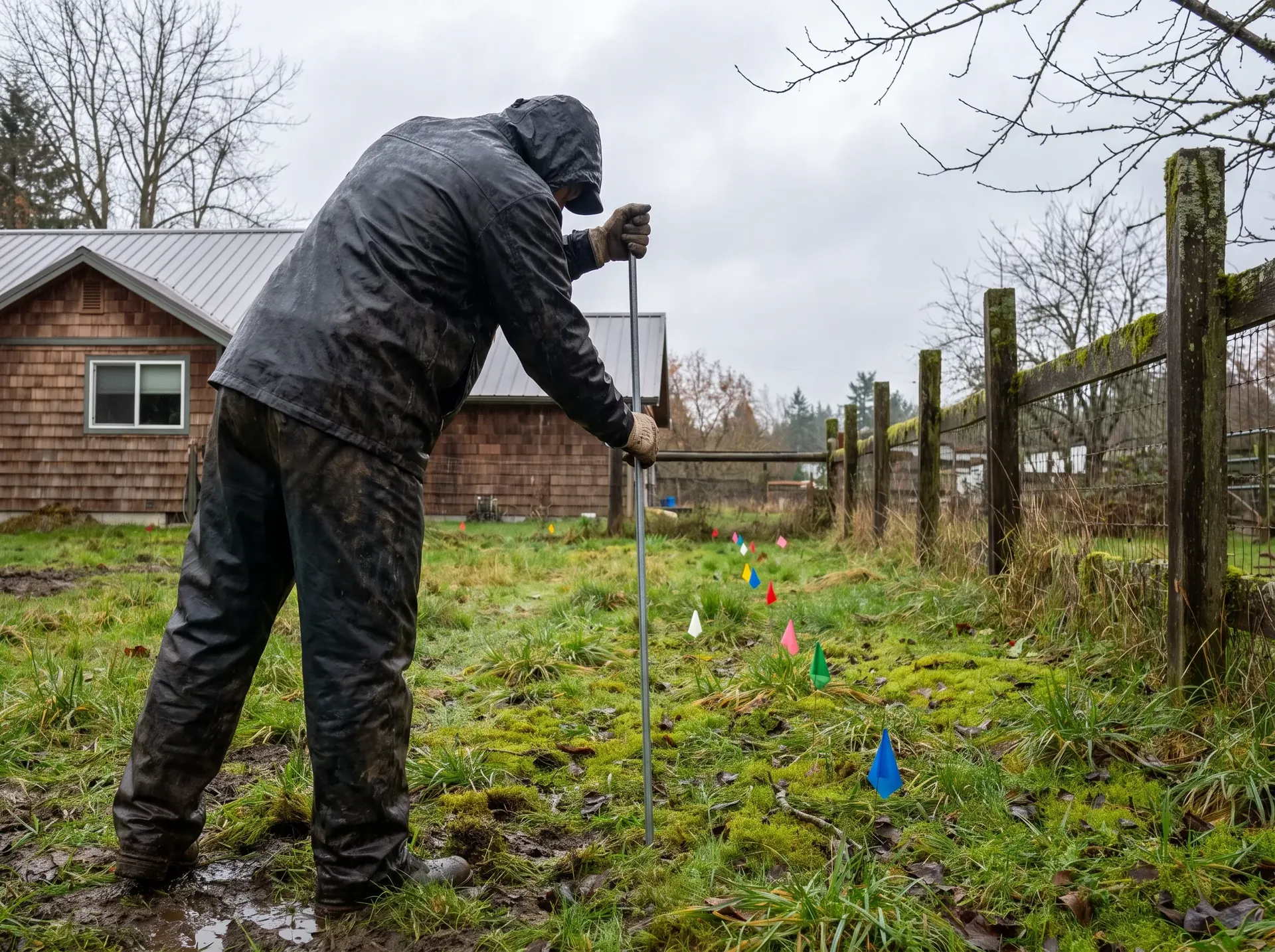
Not a failure in itself, and a serious practical obstacle. It has to be found and documented before anything else can happen.
Evidence of a system being patched rather than repaired
Repeated surface repairs on a failing field tend to be visible, and they raise questions about what is underneath.
When to start, and why late is expensive
Start before you list. Not when you accept an offer, and certainly not two weeks before closing.
Three things can each take longer than people expect. Locating a system with no records can take a visit on its own. Getting on an inspector’s schedule during a busy season is not instant. And if the inspection turns up something that needs repair, the repair has to be scheduled, done and sometimes re-inspected.
Stacked up against a closing date, that sequence is where sales get delayed and where sellers end up accepting a price reduction simply because there is no time left to fix the problem properly.
Done early, the same finding is just a job. You get it repaired, you get it documented, and it becomes a selling point rather than a negotiation.
Getting it done
If you are thinking about selling in the next year, get the records together and get the system inspected now while there is no deadline attached. If you are already under contract, tell us the closing date when you book so we can schedule around it.
If you are buying rather than selling, a buyer side inspection is worth doing. On a rural property here the septic system is one of the largest single financial risks you are taking on.
Start with our septic inspections page for what a transfer inspection covers, septic tank locating if nobody knows where the system is, and our guide to finding your septic records in Whatcom County for the paperwork side.