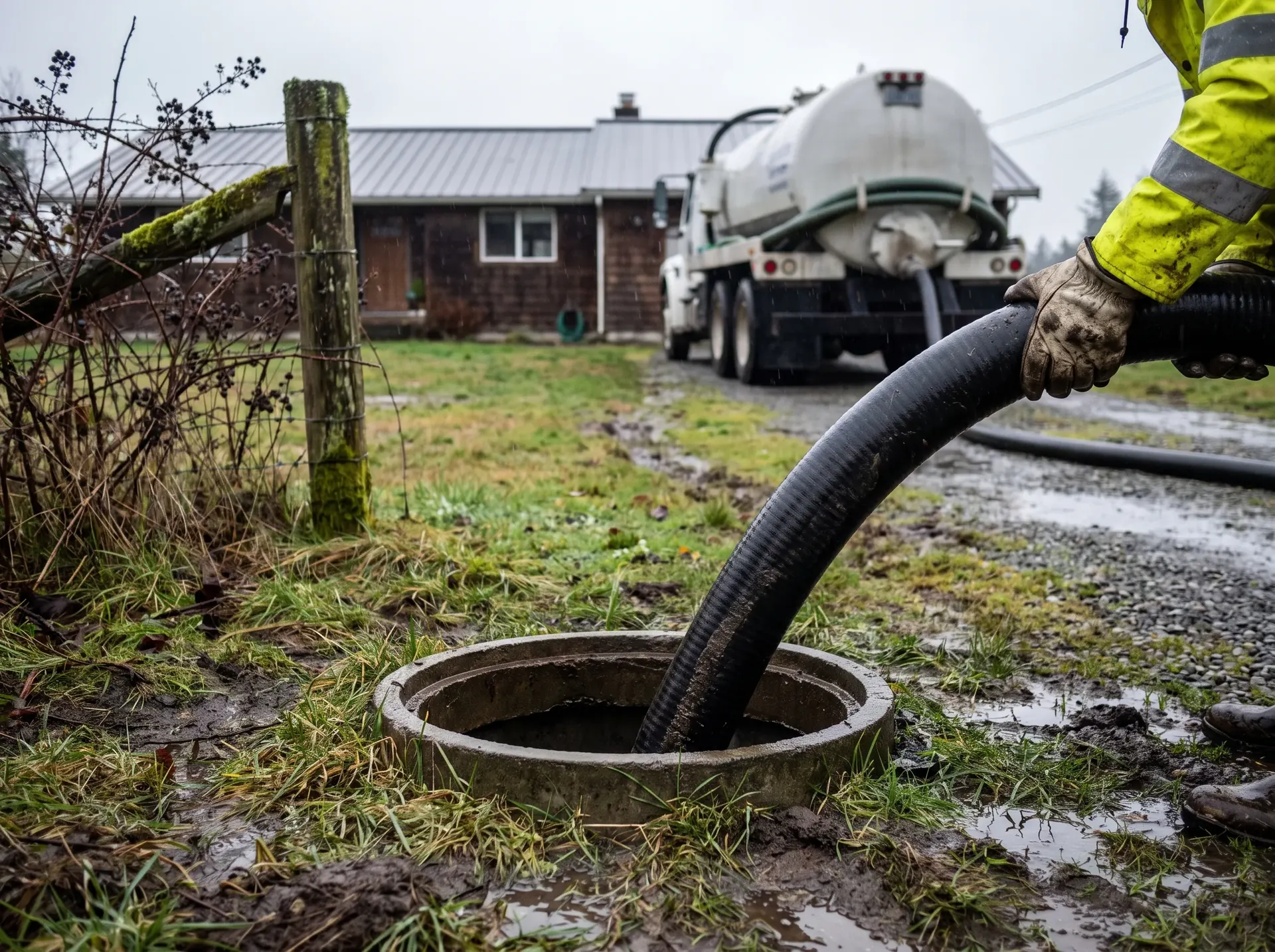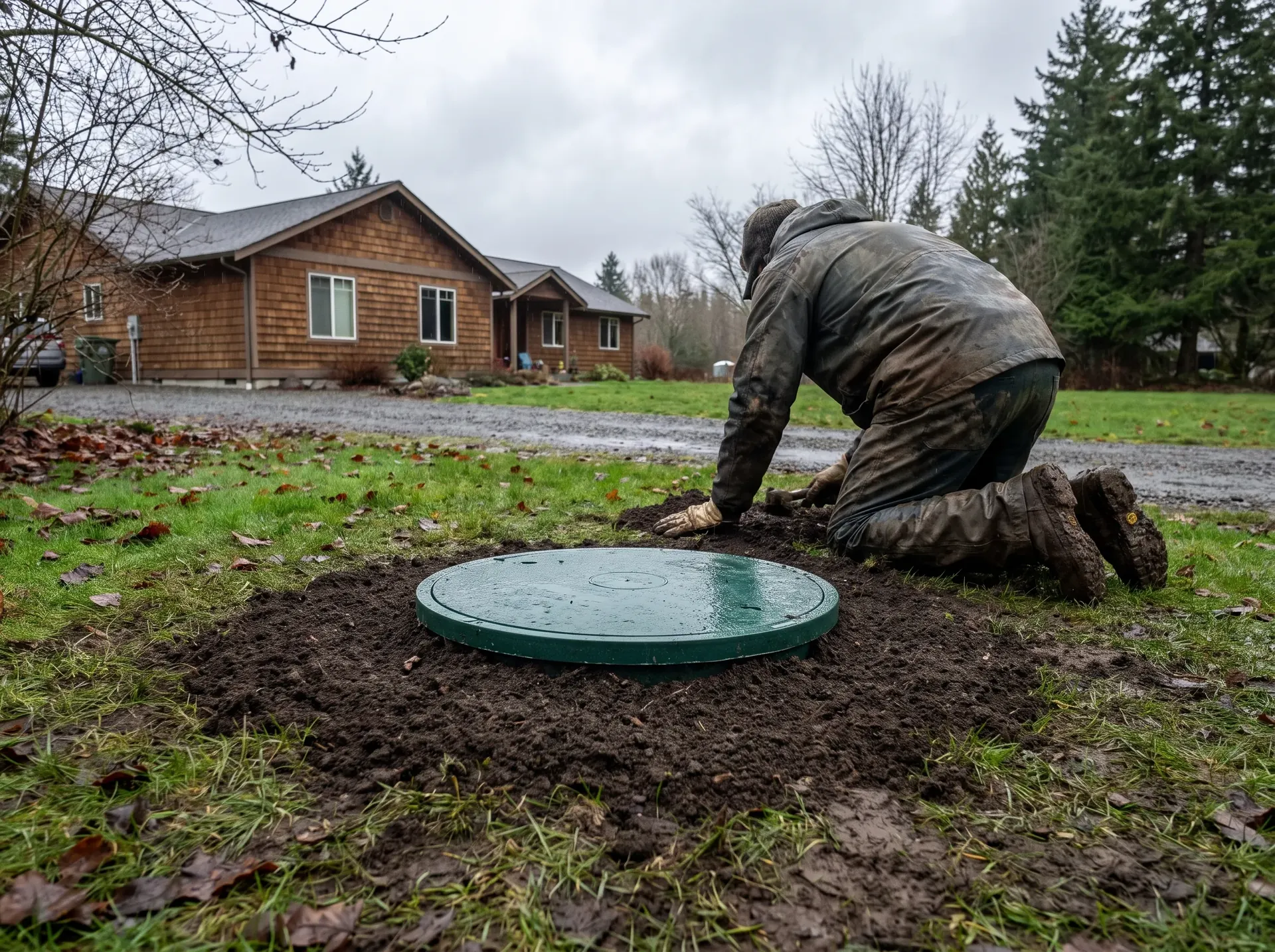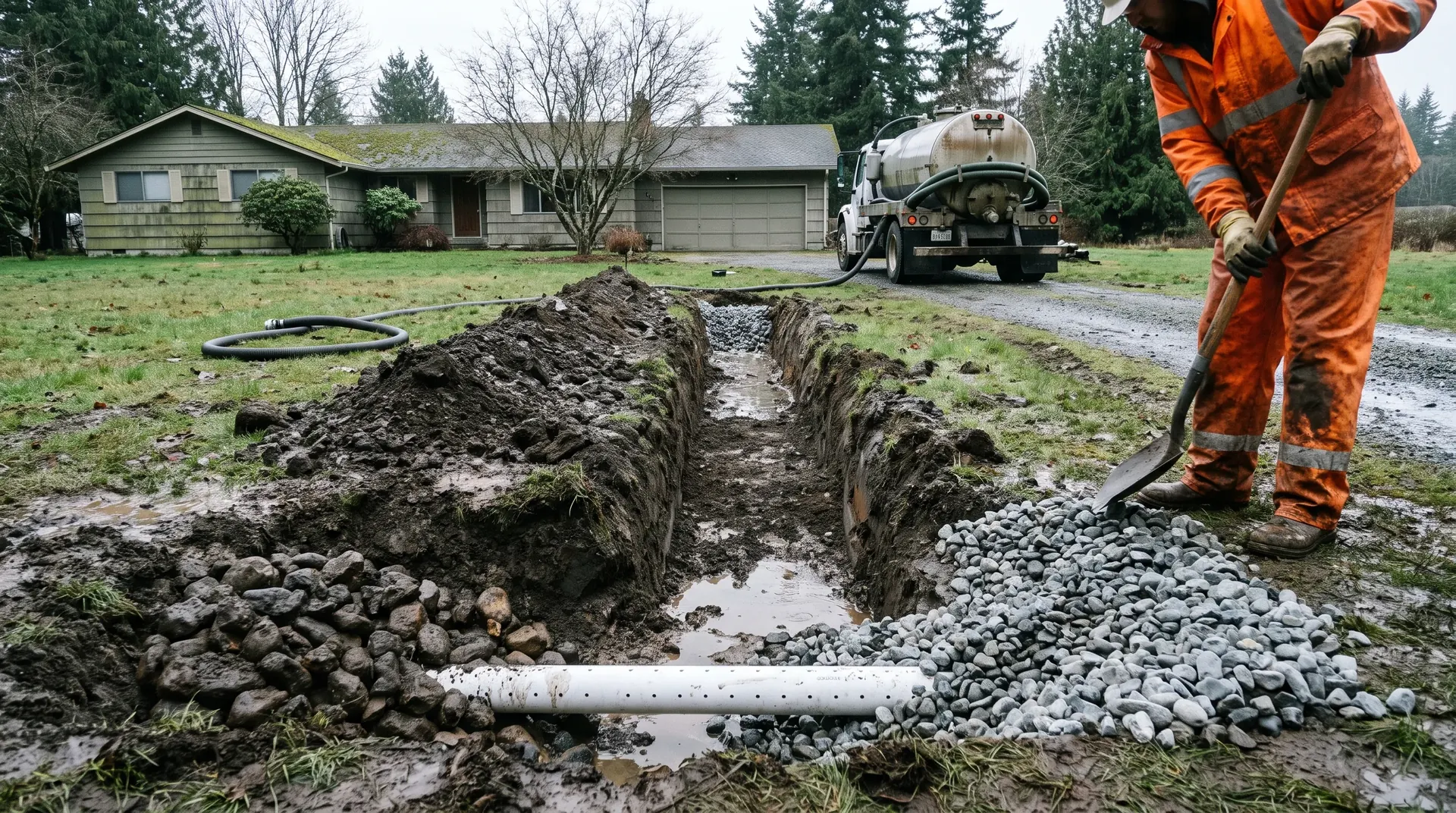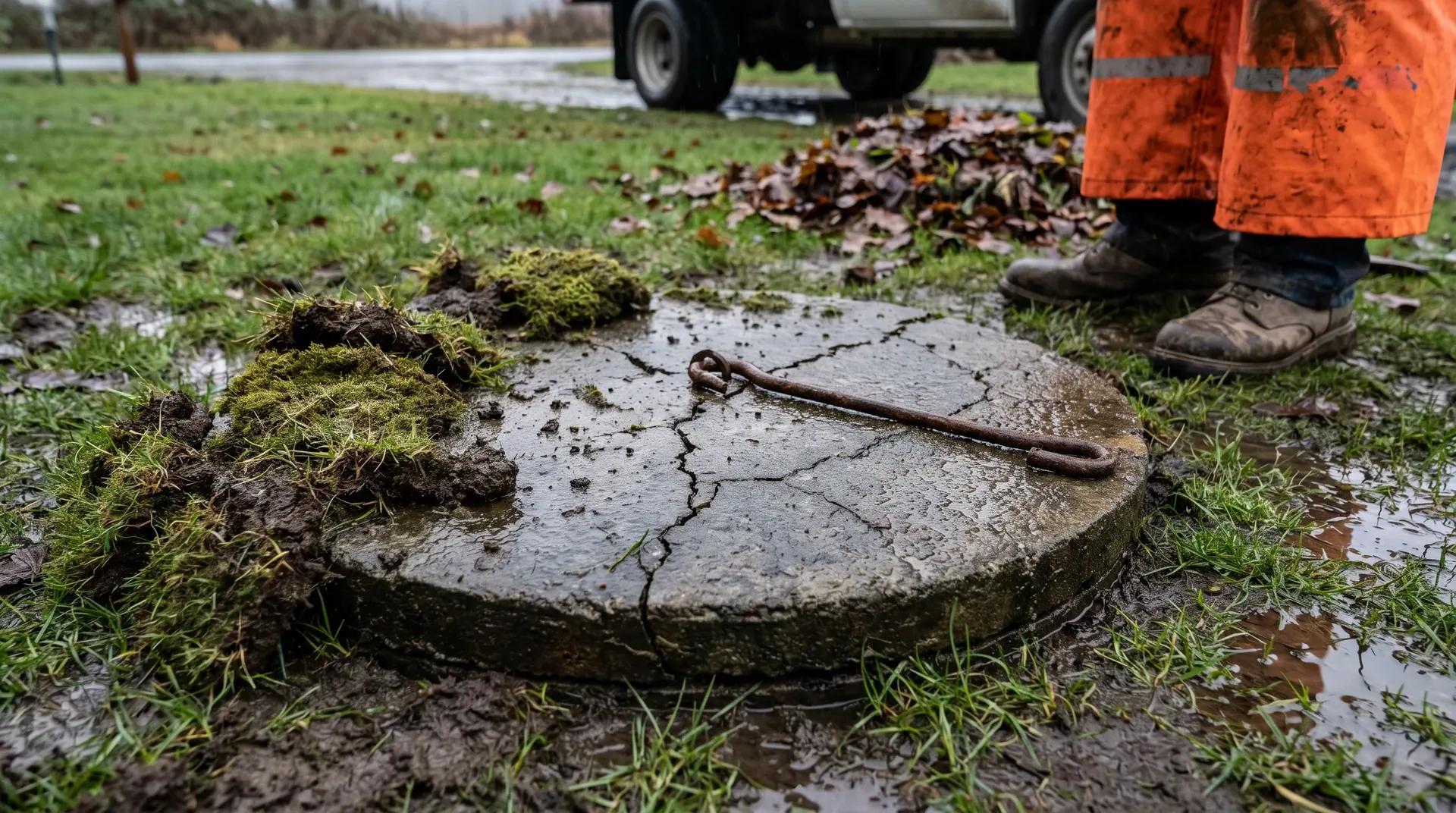
A straightforward residential pump out on an accessible tank is one of the cheaper pieces of home maintenance you will ever pay for, and it is the one that prevents the most expensive one.
The reason nobody publishes a single number is that the same job on two properties a mile apart can differ by a factor of two, and almost all of that difference comes down to how easy the tank is to get to rather than how much is in it.
Here is what actually drives the price.
What actually moves the number
Tank size
The obvious one and not the biggest one. A 1500 gallon tank costs more to empty than a 1000 gallon tank, but the difference is smaller than most people assume.
Whether the lids are accessible
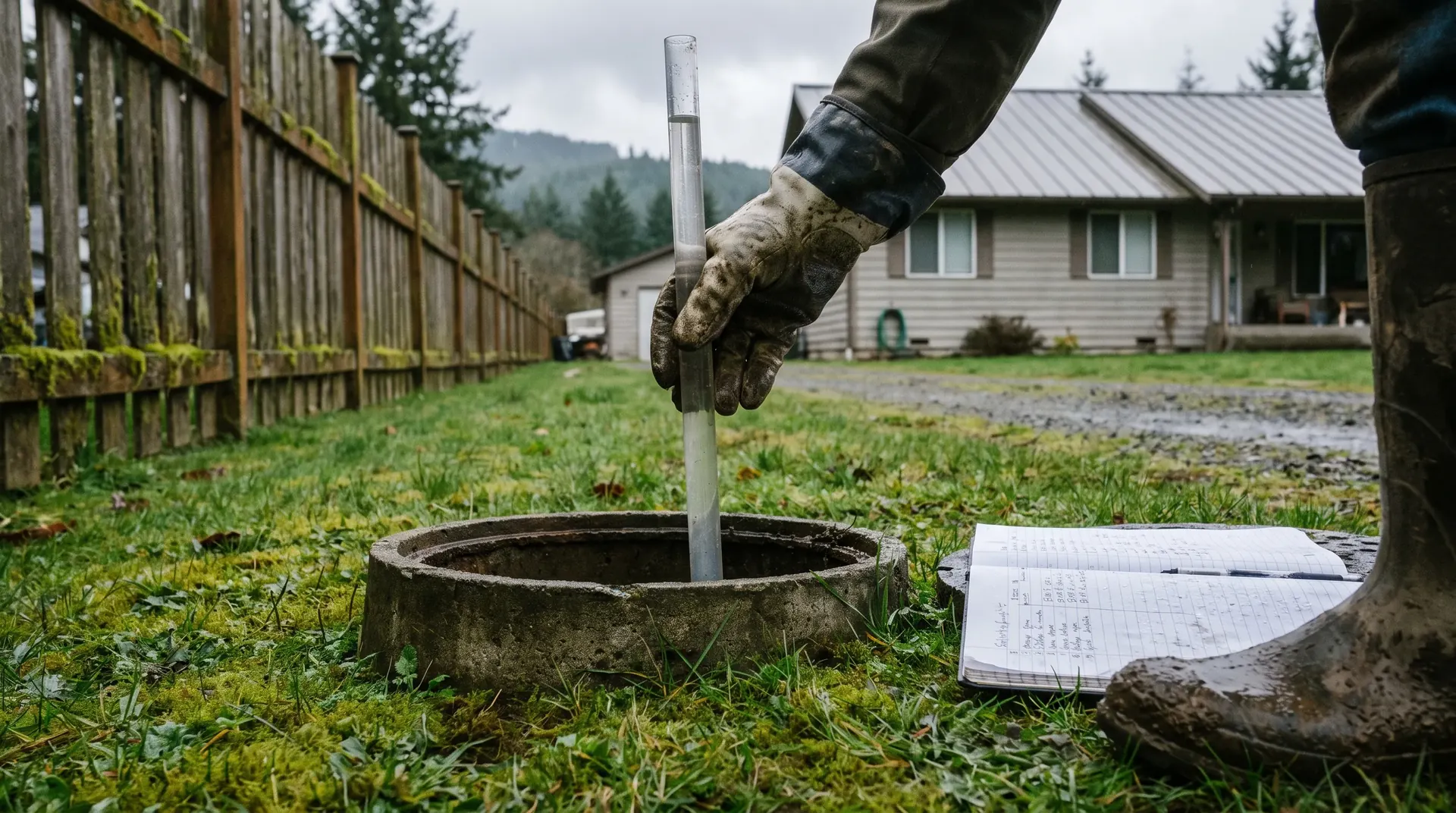
This is the big one. If the lids are at grade, we arrive and start. If they are under a foot of turf, someone spends the first part of the visit finding and digging them out, and that is labour on your invoice. It is also entirely fixable, permanently, with risers.
How overdue it is
A tank pumped on schedule is a straightforward job. A tank that has not been touched in fifteen years can have hardened solids that need breaking up, sometimes requiring the tank to be refilled with water and pumped again. That is a longer visit.
Access for the truck
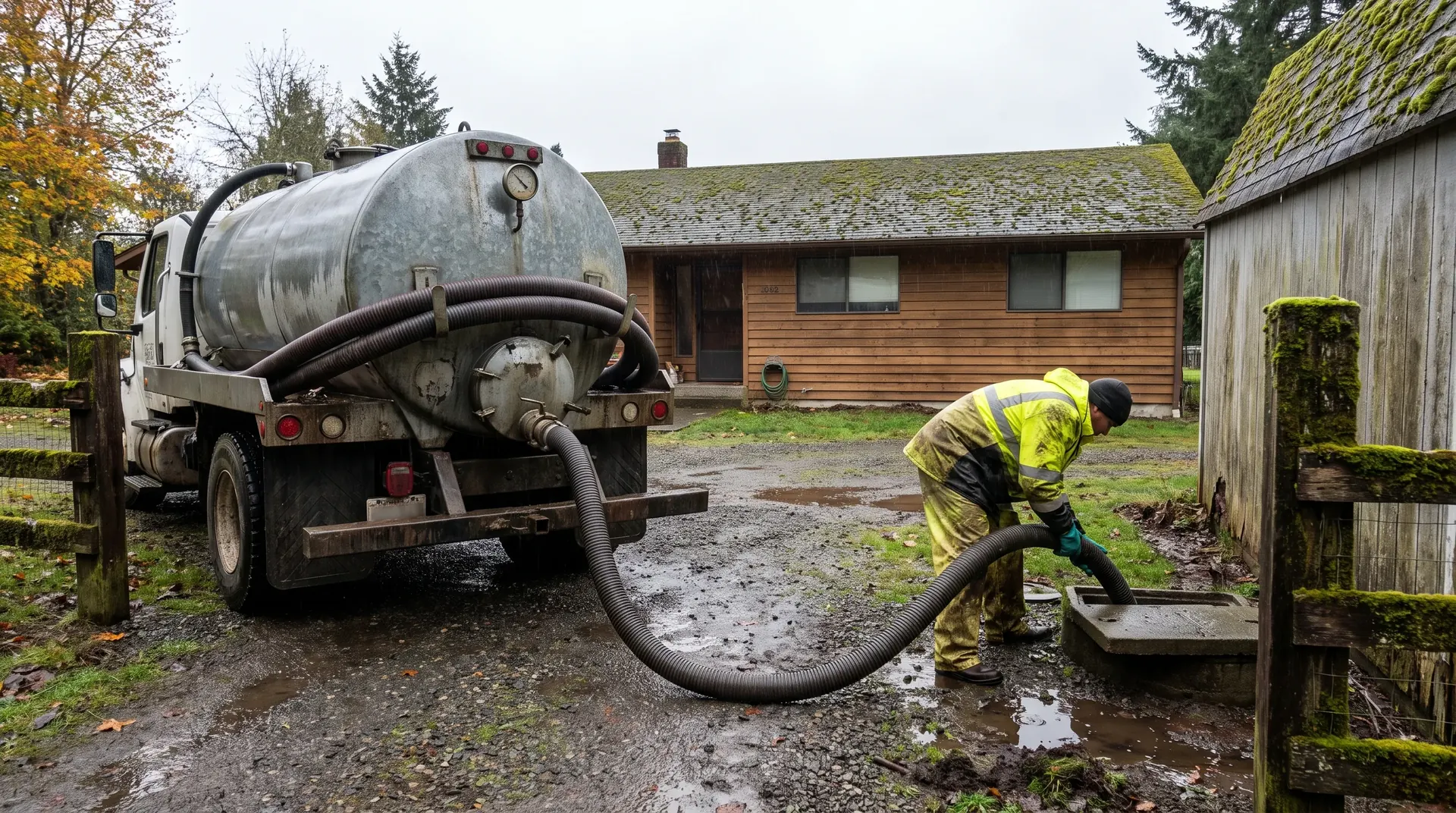
A vacuum truck is heavy and the hose only reaches so far. A short firm driveway is easy. A long soft rural drive in February, a gated property, or a tank a hundred feet from anywhere a truck can park all add time and sometimes require different equipment.
Where you are
Point Roberts is the obvious example, and anywhere well out toward the eastern county takes real travel time. Most of the populated county is unremarkable in this respect.
What else is found
A blocked effluent filter cleaned during the visit is trivial. A broken baffle discovered while the tank is open is a repair, and you will be told before anything is done.
Why the cheapest quote is often not the cheapest job
There are two ways to make a pump out cheaper on paper.
The first is to pump only the first compartment. Most tanks have two chambers, and emptying only the inlet side is quicker and uses less capacity in the truck. It also leaves solids sitting in the second chamber, right next to the outlet that feeds your drain field. You have paid for a pump out and you have half a tank of solids in the worst possible place.
The second is to skip the inspection. If the truck arrives, the hose goes in, and the truck leaves, nobody has looked at your baffles, your filter or your sludge levels. That is the only moment anyone can see inside the tank, and it has been spent.
Neither of those is visible on the invoice. Both are visible three years later when something fails that should have been caught.
Ask any company two questions: do you pump both chambers, and do you inspect the tank while it is open. The answers tell you what you are actually buying.
How to genuinely reduce what you pay
Fit risers. If your lids are buried, you are paying to dig them out every visit. Risers usually pay for themselves in two or three pump outs.
Stay on schedule. An overdue tank costs more to pump and risks a drain field that costs orders of magnitude more.
Book outside the rush. Late autumn is busy here, for obvious reasons. Booking in a quieter period is easier to schedule and sometimes cheaper.
Know where the tank is. Even without risers, being able to point at it saves the first part of the visit. Our records guide covers finding the as-built.
Do not buy additives instead. Money spent on additives is money not spent on pumping, and additives do not remove the solids that pumping exists to remove.
When to book
If you cannot remember when it was last done, it is due. If you have just bought the property and nobody told you, it is due. If the drains are getting slower, it is overdue.
Tell us the tank size if you know it, whether you know where the lids are, and what the driveway is like. With those three answers we can give you a real price on the phone rather than a range. Our septic tank pumping page covers what is included.